The Adolescent Dog
When Your Perfect Puppy Hits Puberty
A naturalist's note on the great regression — synaptic pruning, hormonal surges, and the quiet truth that adolescent dogs test the bond because they have one.
It's a Tuesday evening. Your nine-month-old Labrador — the same dog who graduated puppy class with flying colours, who could hold a sit-stay while you answered the door, who hadn't had a toilet accident in four months — has just eaten half a couch cushion, ignored your recall so thoroughly that three strangers at the park gave you sympathetic looks, and peed on the kitchen floor while maintaining direct eye contact. You stand in your hallway, holding a soggy piece of foam, and think: what happened to my dog?
Nothing happened to your dog. Something happened inside your dog. Your puppy hit puberty. And just like the human version, canine adolescence is a neurologically distinct developmental phase that temporarily rewires the brain in ways that make previously reliable behaviour genuinely harder to produce. The good news? It's temporary, it's normal, and everything you've learned in this course has prepared you for exactly this moment.
The Adolescent Brain · What's Actually Happening
If your adolescent dog seems like a different animal, there's a neurobiological reason. Between roughly six and eighteen months of age (varying by breed — smaller breeds maturing earlier), the canine brain undergoes a period of dramatic reorganisation that mirrors, in surprising detail, what happens in human teenage brains.
Three key processes are at work. Synaptic pruning is the brain's "use it or lose it" editing process. During puppyhood the brain overproduced neural connections. Now, during adolescence, connections that haven't been reinforced are eliminated while well-used pathways are strengthened and myelinated. This is why all that early training and socialisation from earlier chapters matters so profoundly: you were literally building the neural architecture your dog needs to navigate this period.
The second process is a hormonal surge. Rising levels of testosterone, oestrogen, and other sex hormones don't just trigger physical maturation — they reshape brain circuitry. Hormones amplify activity in the amygdala (the brain's threat-detection and emotional arousal centre), while the prefrontal cortex (responsible for impulse control and decision-making) is still maturing. Cross-species neuroscience research confirms that this amygdala-prefrontal imbalance is a hallmark of adolescence across mammals, creating a period of heightened emotional reactivity and reduced self-regulation (Tottenham & Galván, 2016).
The third process is a temporary weakening of prefrontal cortex function. Your dog's ability to inhibit impulses, delay gratification, and make "good decisions" under arousal genuinely decreases during this period. When your adolescent dog "chooses" to chase a squirrel instead of responding to your recall, they aren't being defiant — their brain's braking system is literally under construction.
The landmark study by Asher et al. (2020) provided the first empirical evidence for adolescent-phase conflict behaviour in dogs. Their research demonstrated that dogs at eight months of age showed significantly reduced obedience to their caregivers — but crucially, not to strangers. This mirrors human teenage behaviour, where conflict is directed specifically at attachment figures. Dogs with insecure attachments to their caregivers showed even more pronounced disobedience during this phase. The study confirmed what dog trainers had long suspected: canine adolescence is real, measurable, and relationship-specific.
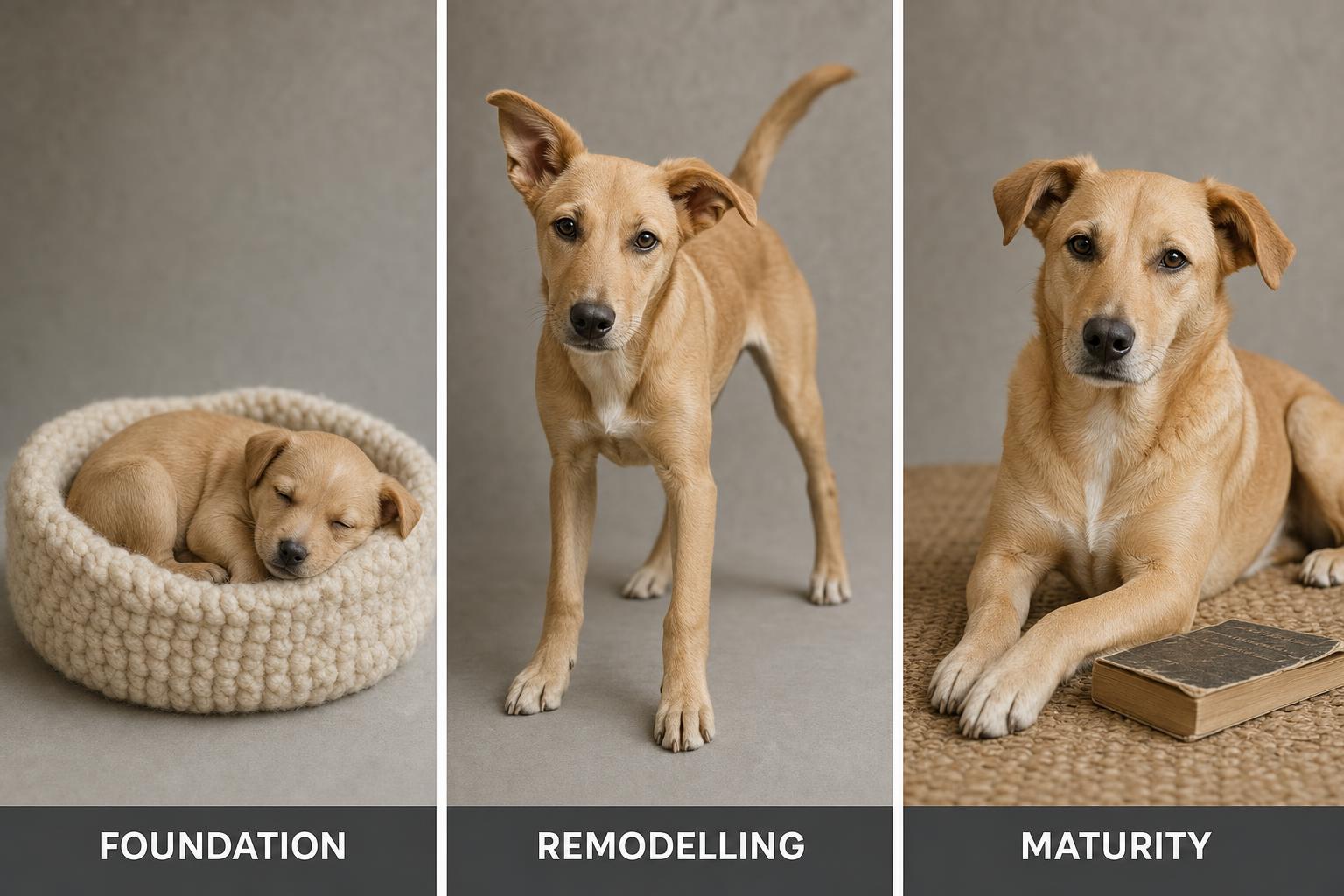
Longitudinal research tracking cognitive development in dogs from nine weeks to twenty-one months has shown that executive function — the cognitive toolkit that includes impulse control, working memory, and flexible thinking — continues to develop throughout this period (Bray et al., 2021). The encouraging finding is that individual differences in social cognition appear early and remain stable. The temperament and social skills your puppy developed during those critical early months aren't erased by adolescence; they're the foundation that will re-emerge as the brain completes its remodelling.

The Adolescent Behavioural Catalogue
Understanding the neuroscience helps, but you still need to know what to expect when it arrives in your living room. Here are the most common adolescent behavioural changes — each one connected to its underlying mechanism and the earlier chapter concepts that prepared you for it.
Reduced Recall Reliability
Your puppy who bounded back to you at the park now treats your recall cue like background noise. This isn't a training failure — it's the predictable result of increased environmental motivation (everything is more interesting to an adolescent brain), combined with reduced impulse control. The fix isn't louder commands; it's higher-value reinforcers, shorter distances, and a long line for safety. Go back to the positive reinforcement principles from Chapter 1, but upgrade your rewards. If you were using kibble, switch to roast chicken. If you were using chicken, try tripe. Meet the adolescent brain where it is.
New Fears in Previously Confident Dogs
A dog who walked past rubbish bins without a second glance at four months may suddenly find them terrifying at ten months. This second fear period — typically occurring between six and fourteen months — reflects the brain's heightened threat-detection system. The amygdala is running hot while the prefrontal cortex isn't fully online to provide perspective. The counter-conditioning principles you learned in Chapter 3 apply here: create positive associations with the feared stimulus at a distance that keeps the dog under threshold, and never force exposure.
Research by Serpell and Duffy (2016) found that frightening experiences during the juvenile and adolescent periods had significant associations with lasting fear and aggression. Adolescent fears aren't just annoying — they require careful management to prevent them from becoming permanent.
House Training Regression
Yes, it happens. A dog who was reliably toilet-trained may start having accidents again. The hormonal changes of adolescence can genuinely affect bladder control and marking behaviour. Go back to the fundamentals from Chapter 5: more frequent toilet breaks, reward successes, manage the environment to prevent practising the unwanted behaviour, and rule out urinary tract infections with a vet check if the regression is sudden or severe.
Mouthing and Destructive Chewing
Adolescent dogs often experience a resurgence of mouthing — except now it comes from a much bigger mouth with adult teeth. Adult teeth are also settling into the jaw between four and seven months, which can cause gum discomfort and renewed chewing motivation. The arousal management strategies from Chapter 4 become critical: structured rest, appropriate chew outlets, and removing yourself from interaction when mouthing occurs. For destructive chewing specifically, environmental management (don't leave temptation accessible) is your most reliable tool.
Lead Reactivity and Barrier Frustration
Adolescence is the period when breed-typical behaviours often emerge with full force. A herding breed may start lunging at bicycles. A terrier may become fixated on small animals. A guardian breed may begin barking at strangers near the home. Additionally, barrier frustration — the emotional escalation that occurs when a dog on lead cannot reach something they want — frequently intensifies during adolescence, and can be mistaken for aggression. The heightened emotional arousal of the adolescent brain means your dog's frustration tolerance is genuinely lower than it was at five months.
Regression vs. Red Flag · Knowing the Difference
Most adolescent behavioural changes are normal and temporary. But some warrant professional attention. The critical distinction lies not just in what the behaviour is, but in its trajectory. Normal adolescent regression tends to be inconsistent — good days and bad days — context-specific, and responsive to patient retraining. Behaviours that escalate steadily, generalise across contexts, or involve significant aggression may indicate something beyond typical adolescence.
According to the American Animal Hospital Association (2015), behavioural health checks at six months and twelve months are recommended specifically to catch problems during this critical developmental window. Importantly, the guidelines emphasise that dogs do not simply "grow out" of behavioural problems — early intervention produces significantly better outcomes.
When to Seek Professional Help
Consider consulting a qualified veterinary behaviourist if you observe any of the following: aggression that is escalating in frequency or intensity; fear responses so severe that your dog cannot recover within a reasonable timeframe; self-injurious behaviour such as excessive licking, tail chasing, or self-mutilation; sudden dramatic behaviour changes that could indicate pain or medical issues; or any behaviour that makes you feel unsafe.
In Australia, look for veterinarians who are Registered Specialists in Veterinary Behavioural Medicine (recognised by the relevant state veterinary board), members of the Australian Veterinary Behaviour Interest Group, or who hold additional qualifications in animal behaviour from recognised institutions. For trainers, look for those who use evidence-based, reward-based methods and hold qualifications from organisations such as the Pet Professional Guild Australia or equivalent bodies.
The Desexing Decision, Revisited
Adolescence is typically when the desexing conversation becomes urgent. In Australia, local council regulations often require desexing by six months unless an exemption is obtained. But the research picture has become significantly more nuanced in recent years, and the "desex at six months" default is no longer considered best practice for all dogs.
Hart et al. (2020) conducted a comprehensive breed-specific analysis across thirty-five breeds and found that early neutering (before twelve months) was associated with increased joint disorders in many large breeds — two to four times the rate seen in intact dogs. However, for small dogs under twenty kilograms, neutering at six months showed no increased health risks. The desexing decision must be individualised based on breed, size, and individual circumstances.
From a behavioural perspective, McGreevy et al. (2018) found that male dogs neutered before twelve months showed increased levels of fear, anxiety, and aggression compared to intact dogs or those neutered later. Dogs neutered between thirteen and eighteen months showed behavioural profiles closest to intact dogs. This suggests that allowing at least some hormonal exposure during adolescence may support behavioural development — though the benefits must be weighed against reproductive risk, council requirements, and individual circumstances.
The bottom line: have this conversation with your veterinarian, not the internet. If your vet isn't familiar with the breed-specific research, it's reasonable to seek a second opinion or ask for a referral.
Social Maturity · The Light at the End of the Tunnel
When does adolescence end? The honest answer is: it depends. Bray and Harvey (2021) established rational age groupings for dogs based on developmental processes, and the research suggests that social maturity — the point at which a dog's brain has completed its major developmental remodelling — occurs between twelve and thirty-six months, depending on breed and individual variation. Larger breeds tend to mature later. Giant breeds may not reach full behavioural maturity until age three.
According to the American Animal Hospital Association (2015), most dogs relinquished to shelters are between one and three years old — precisely the social maturity period. This tells us that adolescence and early adulthood are the highest-risk period for the human-dog bond. Many owners, exhausted by months of regression and challenging behaviour, give up right before the corner is turned.
Understanding the timeline helps set realistic expectations. Your dog's behaviour at eight months is not their permanent personality. The research by Bray et al. (2021) showed that executive function continues to improve through the second year of life. The dog your puppy is becoming is still under construction, and the foundation you've been building all along is the scaffolding that supports the finished structure.
A Note for the Humans
We need to talk about how adolescence feels — for you. Because the research on canine adolescence, while reassuring, doesn't fully capture the experience of living with an adolescent dog. The intrusive thought of "Did I make a mistake getting this dog?" is so common among owners of adolescent dogs that it might as well be a developmental milestone of its own.
Here's what we know: the Asher et al. (2020) finding that adolescent dogs are specifically less obedient to their caregivers — the people who have invested the most time, effort, and love — means that the person who feels the brunt of adolescent behaviour is, by definition, the person the dog is most attached to. This isn't a sign that you've failed. It's a sign that your dog has formed a secure enough bond to test the boundaries of it.
Your dog isn't acting out because you did something wrong. They're acting out because you did something right.
A working puppy-raiser's reflection
Guilt, frustration, exhaustion, and even grief for the "easy" puppy you used to have — these are all normal emotional responses to a genuinely difficult phase. Acknowledge them. Talk to other dog owners who've been through it. And remember that your emotional state affects your dog's behaviour: research consistently shows that anxious, frustrated owners tend to have more anxious, reactive dogs. Taking care of your own wellbeing isn't selfish — it's part of the training plan.
The Three Things That Matter Most Right Now
If adolescence has you feeling overwhelmed, simplify. The three things that will carry you through this period are:
Management. Prevent your dog from practising unwanted behaviour. Long lines, baby gates, crate time, and environmental control aren't training failures — they're your most powerful tools right now.
Consistency. Keep your criteria clear, your rewards high-value, and your responses predictable. An inconsistent response to adolescent behaviour makes it worse.
Patience. This is temporary. Every day that passes is a day closer to a mature brain. The foundation you built in those early months hasn't disappeared — it's just buried under construction scaffolding. It will re-emerge.
The final message of this course is the same as the first: you don't have to be perfect. You just have to be consistent, kind, and willing to keep learning. You chose to take an evidence-based approach to raising your dog. You invested in understanding the science behind behaviour, in building positive associations, in creating a relationship founded on trust rather than punishment. That foundation doesn't crumble during adolescence. It's exactly what adolescence is testing — and it's exactly what carries you through.
The Course, in One Line
The bond you've built — the one tested and strengthened by every challenge in this course — is what remains.
The Almanac · ClassBuild
You've reached the final chapter, but your journey with your dog is just beginning. The skills, science, and strategies you've learned across these eight classes form a foundation that will serve you through adulthood, into your dog's senior years, and — if you're lucky — into a lifetime of adventures together. The adolescent phase will pass. The bond will not. Keep learning, keep adapting, and above all, keep enjoying your dog. They're worth it.
Key Takeaways
- Canine adolescence (roughly 6–18 months) involves genuine neurobiological changes: synaptic pruning, hormonal surges, and temporary prefrontal-cortex weakening that reduce impulse control and increase emotional reactivity.
- Adolescent dogs are specifically less obedient to their primary caregivers — not strangers. This is a sign of attachment, not failure (Asher et al., 2020).
- Behavioural regressions in house training, recall, mouthing, and lead walking are normal and temporary. Respond by revisiting earlier training foundations with increased management and higher-value reinforcement.
- New fears during the second fear period require careful counter-conditioning. Frightening experiences during adolescence can have lasting effects on behaviour (Serpell & Duffy, 2016).
- Desexing decisions should be breed-specific and made in consultation with your veterinarian — considering the latest research on health and behavioural outcomes (Hart et al., 2020; McGreevy et al., 2018).
- Social maturity occurs between twelve and thirty-six months. The most common age for dogs to be surrendered to shelters is during this period. Persistence matters.
- Seek professional help from a qualified veterinary behaviourist if behaviour is escalating, involves significant aggression, or doesn't improve with consistent management.
- Management, consistency, and patience are the three pillars that carry you through adolescence. The foundation you've built throughout this course is exactly what this stage requires.
This is the last field note. The skills you've gathered across the eight chapters — body-language reading, environmental management, positive reinforcement, routine, counter-conditioning, cooperative care, arousal regulation — don't expire when adolescence ends. They become the working grammar of your life with this dog. Keep observing. Keep recording. Keep the chew toys within reach.
References
American Animal Hospital Association. (2015). Canine and feline behavior management guidelines.
Asher, L., England, G. C. W., Sommerville, R., & Harvey, N. D. (2020). Teenage dogs? Evidence for adolescent-phase conflict behaviour and an association between attachment to humans and pubertal timing in the domestic dog. Biology Letters, 16(5), 20200097.
Bray, E. E., Gnanadesikan, G. E., Horschler, D. J., Levy, K. M., Kennedy, B. S., Famula, T. R., & MacLean, E. L. (2021). Early-emerging and highly heritable sensitivity to human communication in dogs. Current Biology, 31(14), 3132–3136.
Bray, E. E., & Harvey, N. D. (2021). Rational age groupings for puppies and adolescent dogs based on developmental processes. Applied Animal Behaviour Science.
Hart, B. L., Hart, L. A., Thigpen, A. P., & Willits, N. H. (2020). Assisting decision-making on age of neutering for 35 breeds of dogs. Frontiers in Veterinary Science, 7, 388.
McGreevy, P. D., Wilson, B., Starling, M. J., & Serpell, J. A. (2018). Behavioural risks in male dogs with minimal lifetime exposure to gonadal hormones may complicate population-control benefits of desexing. PLOS ONE, 13(5), e0196284.
Serpell, J. A., & Duffy, D. L. (2016). Aspects of juvenile and adolescent environment predict aggression and fear in 12-month-old guide dogs. Frontiers in Veterinary Science, 3, 49.
Tottenham, N., & Galván, A. (2016). Stress and the adolescent brain: Amygdala-prefrontal cortex circuitry and ventral striatum as developmental targets. Neuroscience & Biobehavioral Reviews, 70, 217–227.