One Leaf, Ten Thousand Cups: The Science and Art of Tea
This course tells the story of tea from a single botanical species—Camellia sinensis—through its astonishing transformation into thousands of distinct beverages that have shaped cultures, economies, and daily rituals acr…
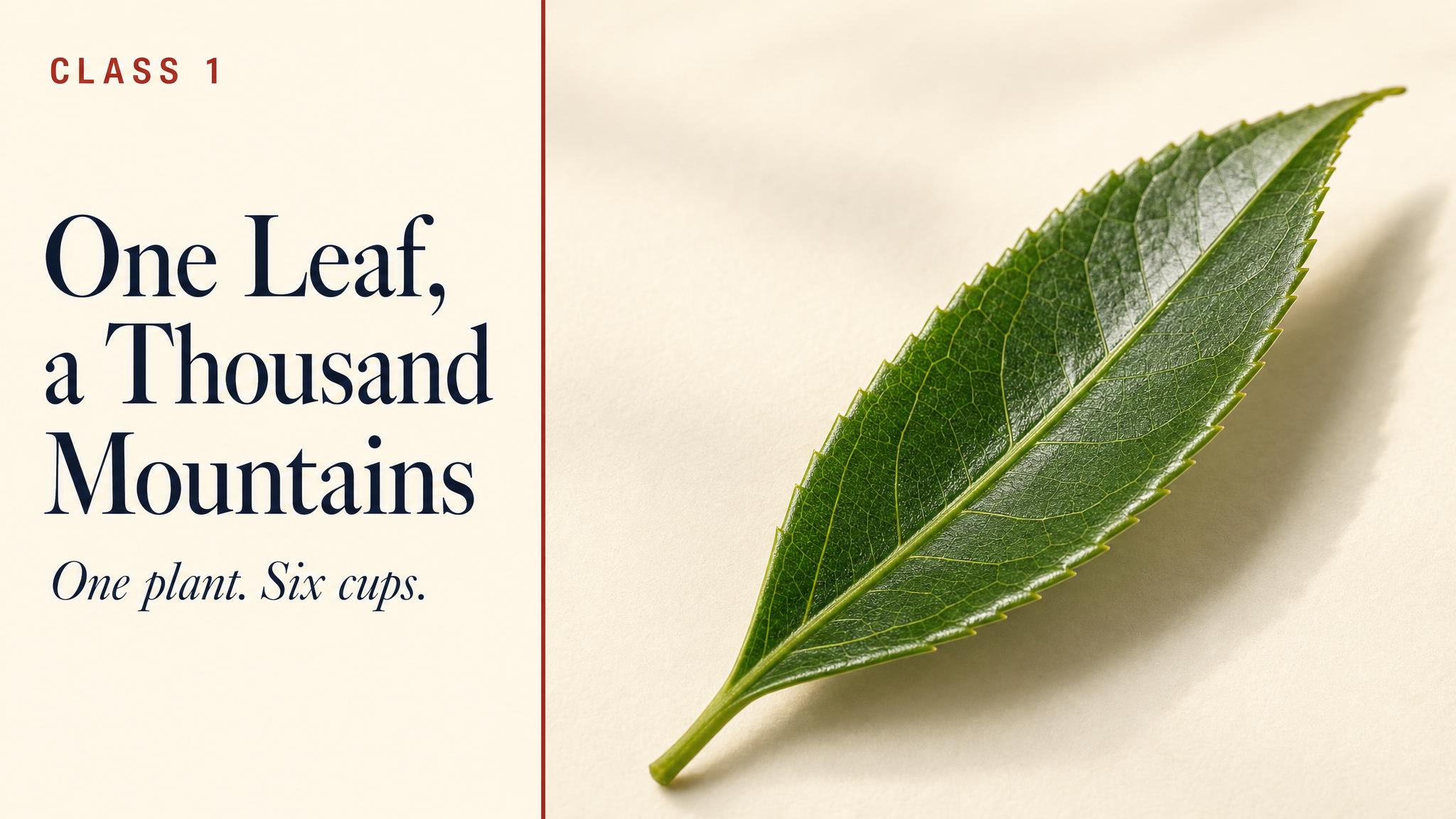
One Leaf, a Thousand Mountains
Everything begins with a plant. This opening chapter introduces Camellia sinensis—a species so genetically flexible that it has adapted to misty highlands in Yunnan, volcanic slopes in Japan, and equatorial gardens in…
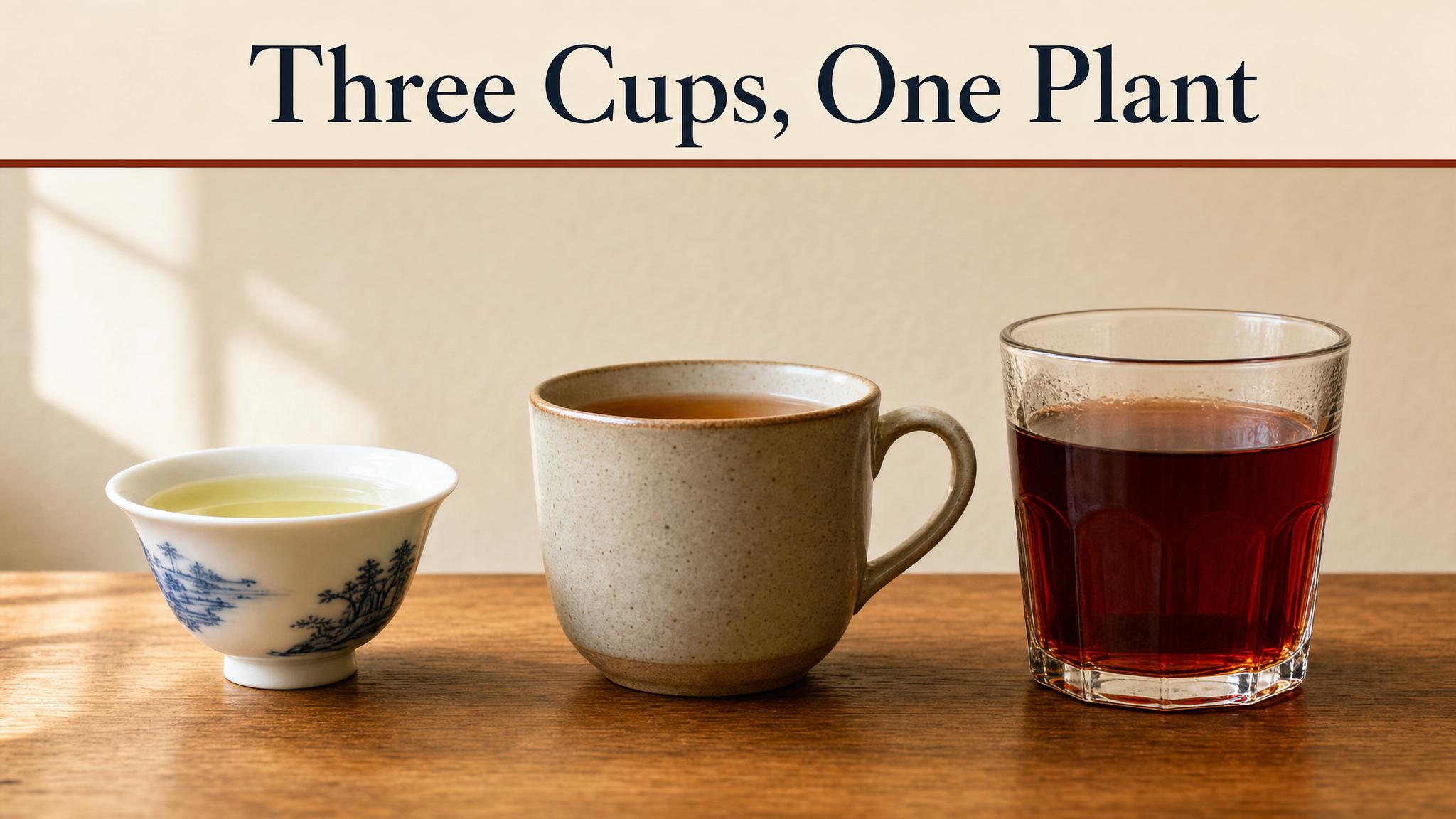
If green tea and black tea come from the exact same plant, is one of them a scam?
Wait, what?
Would you rather give up coffee forever or never drink tea again for the rest of your life?
Would you rather
Real talk: Does expensive tea actually taste better or are we just paying for fancy packaging and vibes?
Hot take
Do you think where tea grows actually changes how it tastes, or is that just wine snob logic applied to leaves?
Debate time
Is tea secretly just as caffeinated as coffee but we pretend it's 'calmer' because of the aesthetic?
Unpopular opinion?
Would you pay $50 for a single cup of tea? What would it have to taste like to be worth it?
Real talk
Tea Tasting Triangle Test
15-20 minutesEach student receives 3 small cups of brewed tea (2 identical, 1 different - e.g., two green teas and one white tea). Working with their immediate neighbor, they taste all three, discuss differences in color, aroma, and flavor, then identify which sample is different and hypothesize why. Instructor polls the room on results, then reveals the answer and explains the processing differences that created distinct characteristics. Students then switch roles with their neighbor to analyze a second set focused on terroir (same category, different growing regions).
Terroir Detective: Flavor Profile Analysis
10-12 minutesDisplay 4 detailed flavor profiles on screen (e.g., 'mineral, crisp, bright green notes' vs 'malty, full-bodied, slight astringency'). Students have 2 minutes to individually match each profile to environmental factors (high altitude vs low, fog-prone valley vs sunny plateau, volcanic soil vs limestone, etc.) using a worksheet. Then, they turn to 2-3 neighbors to debate their choices for 5 minutes. Instructor facilitates whole-class discussion, revealing answers and explaining mechanisms (UV exposure → catechin production, cool temps → slower growth → more complex volatiles).
The Category Sort Sprint
8-10 minutesRapid-fire visual identification game. Project 15-20 images of dry leaf, wet leaf, and tea liquor on screen, one at a time (10-15 seconds each). Students use colored cards (provided at start of class) or a mobile polling app to vote on which of the six major categories each image represents. After each vote, immediately show the correct answer with a 30-second explanation highlighting key visual markers (oxidation level, leaf appearance, liquor color). Track individual scores; offer small prize to highest scorers to incentivize engagement.
Chemical Compound Speed Dating
12-15 minutesEach student is assigned one of four chemical compounds (catechins, caffeine, L-theanine, or volatiles) via random distribution of colored papers at the start. In 3-minute rounds, students turn to their left/right neighbors and rapid-fire discuss: (1) What does your compound do in tea? (2) What affects its concentration in fresh leaf? (3) How does processing change it? After 3 rounds, instructor cold-calls students to share the most interesting thing they learned about a compound that isn't 'theirs.' Concludes with instructor synthesizing how all four interact.
Sinensis vs. Assamica: Spot the Difference Challenge
10-12 minutesProject side-by-side images of C. sinensis and C. assamica plants (leaves, growth habit, buds). Students individually spend 2 minutes listing every visual difference they notice on a worksheet. Then, in groups of 3-4 (formed with immediate neighbors), they compare lists and discuss which differences might relate to: (a) climate adaptation, (b) flavor chemistry, (c) ideal tea types. Groups generate hypotheses. Instructor reveals answers, explaining evolutionary adaptations (assamica's larger leaves = shade adaptation, higher catechin content) and why each variety suits different tea categories.
Tea Myth Tribunal: Debate and Vote
10-15 minutesPresent 5-6 common tea myths on screen (e.g., 'White tea has the least caffeine,' 'Green tea is always healthier than black tea,' 'All tea from China is green tea,' 'Terroir doesn't matter as much as processing'). For each myth, students vote TRUE or FALSE using hand signals (thumbs up/down) or polling app. Instructor tallies votes, then facilitates a 2-minute micro-debate: randomly call on 1-2 students from each side to defend their position using course concepts. Reveal the answer with scientific explanation referencing specific compounds, varieties, or processing steps. Award points to the 'winning' side of each debate.
Transcript
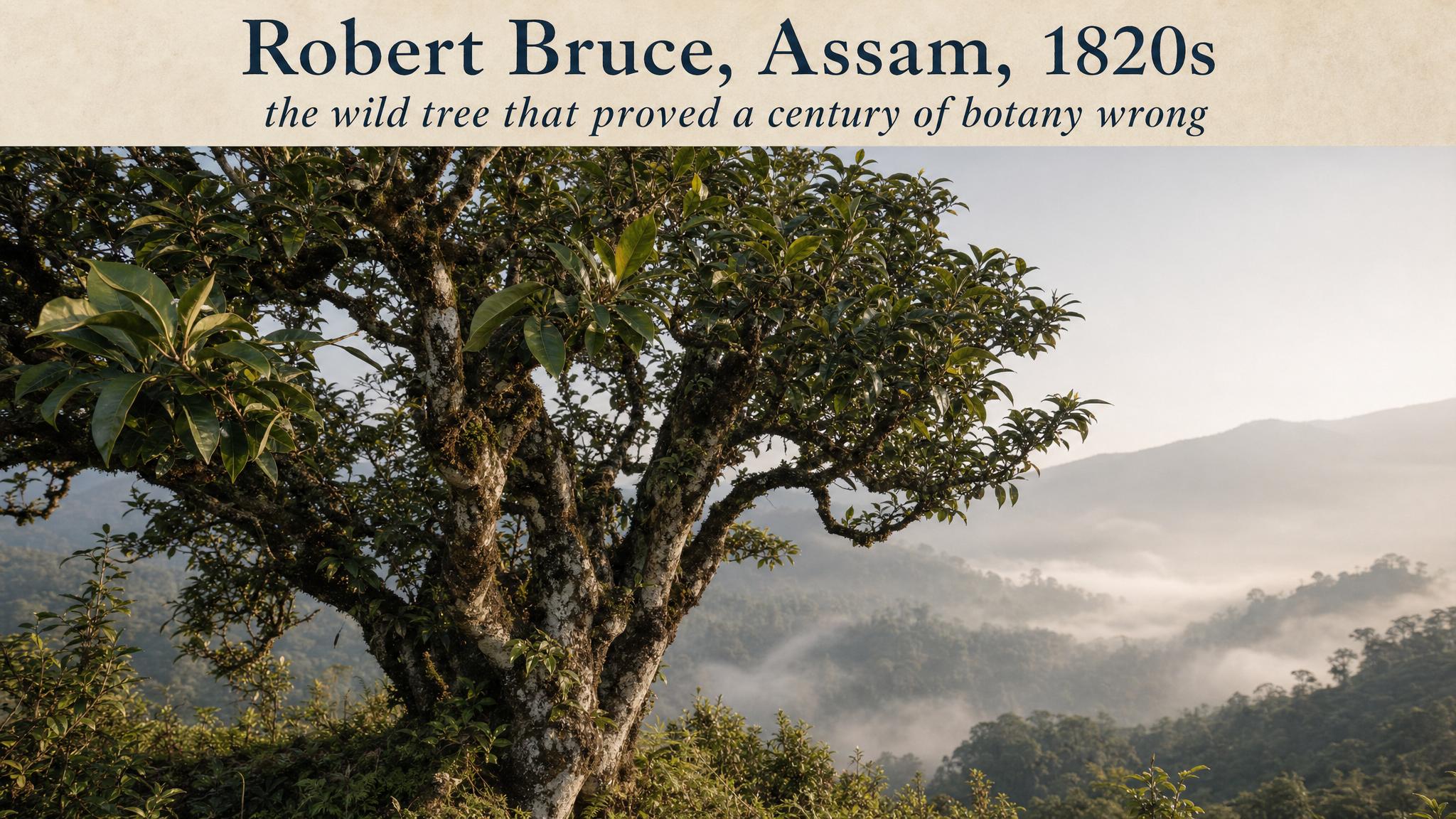
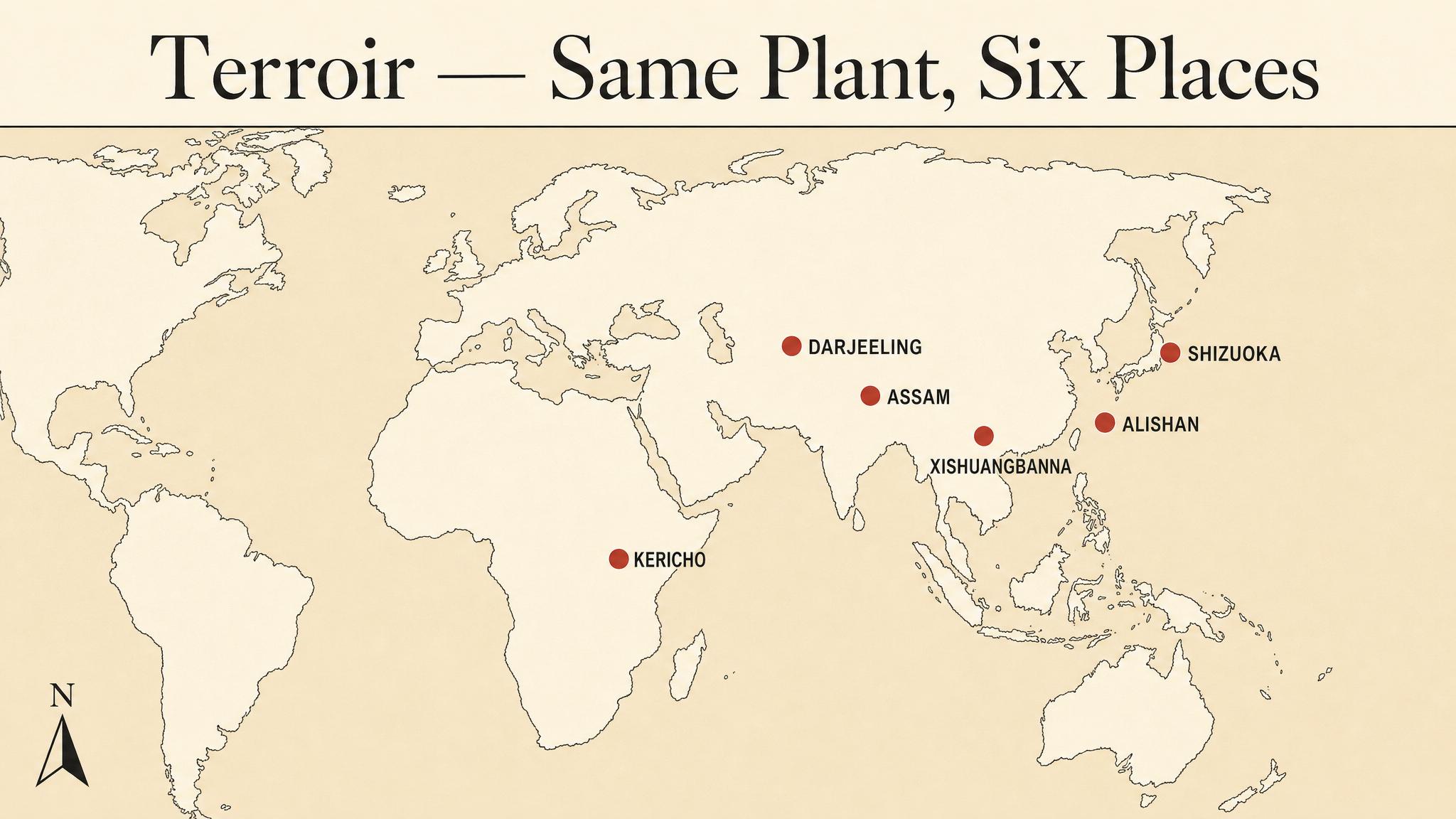
Deep in the Xishuangbanna Prefecture of southern Yunnan, there are tea trees that were already old when the Ming Dynasty fell. Their trunks are thick enough that a person cannot wrap their arms around them, and their canopies stretch ten meters skyward—a far cry from the waist-high hedgerows most people picture when they think of a tea garden. A single leaf plucked from one of these ancient giants, withered in the afternoon sun and dried over charcoal, will produce a brew that is dark, thick-bodied, and sweet in the throat, with a fragrance that lingers like forest air after rain.
Now fly six thousand kilometers east and north to Shizuoka, Japan, where the same species—the very same CAMELLIA SINENSIS—has been pruned into immaculate green rows curving along volcanic hillsides. A leaf from these bushes, steamed within hours of harvest and rolled into tight needles, yields a cup that is vivid jade, grassy, and bristling with umami. Same species. Radically different cup. How is this possible? The answer involves botany, chemistry, geography, and centuries of human ingenuity—and it begins right here.
[short pause]
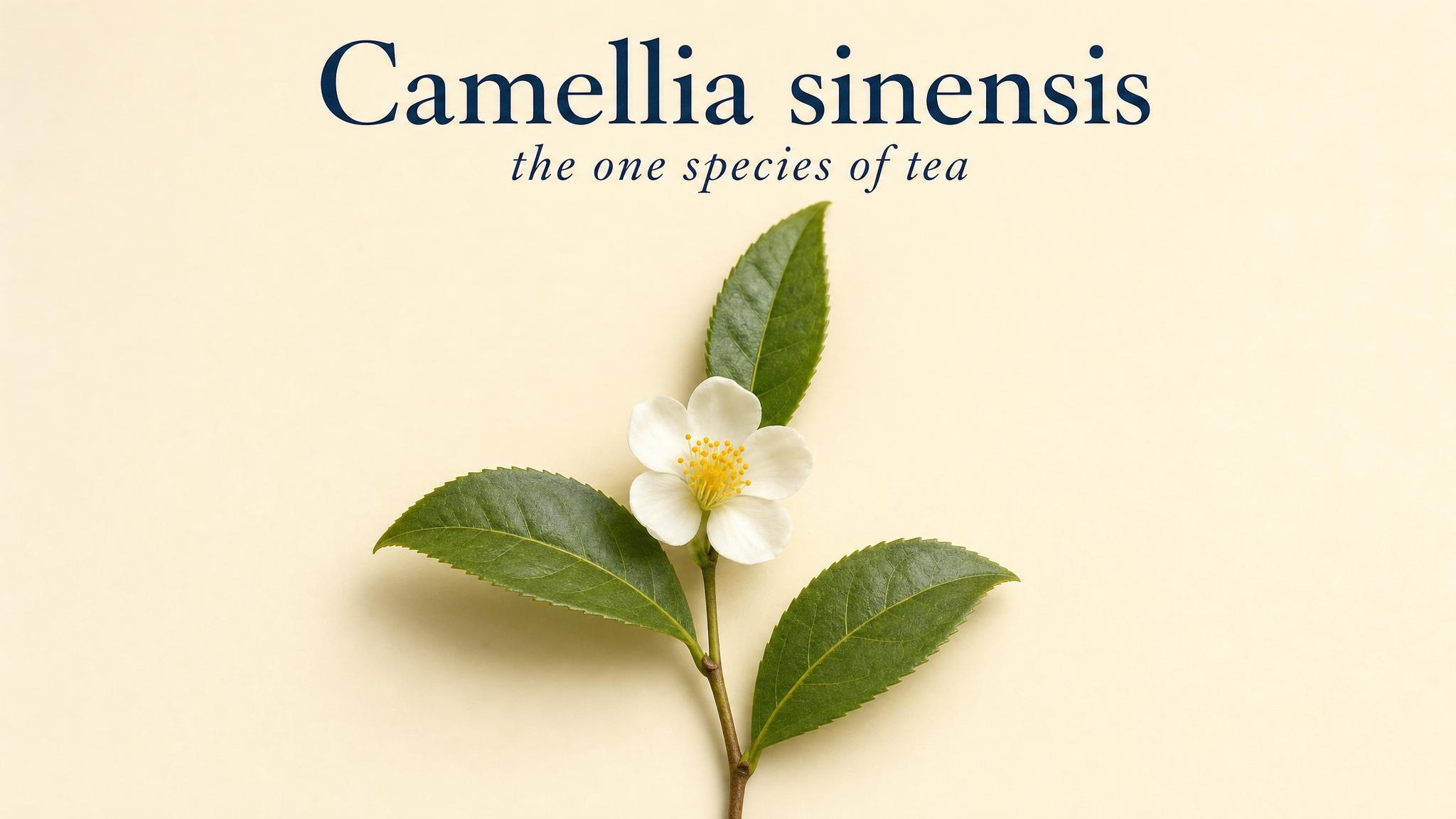
Every tea you have ever tasted—every jasmine pearl, every smoky Lapsang Souchong, every frothy bowl of matcha—comes from the same botanical species: CAMELLIA SINENSIS. This is not a metaphor. The genus Camellia contains some two hundred plus species, many prized as ornamental flowers, but only one has been cultivated for drinking on a global scale, as Zhao noted in 2024. Understanding tea means understanding this plant first: its anatomy, its genetic flexibility, and its remarkable willingness to express different flavors depending on where and how it grows.
Camellia sinensis is an evergreen belonging to the family Theaceae, native to the highlands of what is now southwest China and parts of northern Southeast Asia, according to Banerjee in 1992. Left unpruned, it can grow into a tree exceeding fifteen meters. Under cultivation, it is typically maintained as a shrub for ease of harvest. Its leaves are glossy, serrated at the edges, and slightly leathery—a design refined over millions of years of evolution to thrive in humid, subtropical mountain forests.
[short pause]
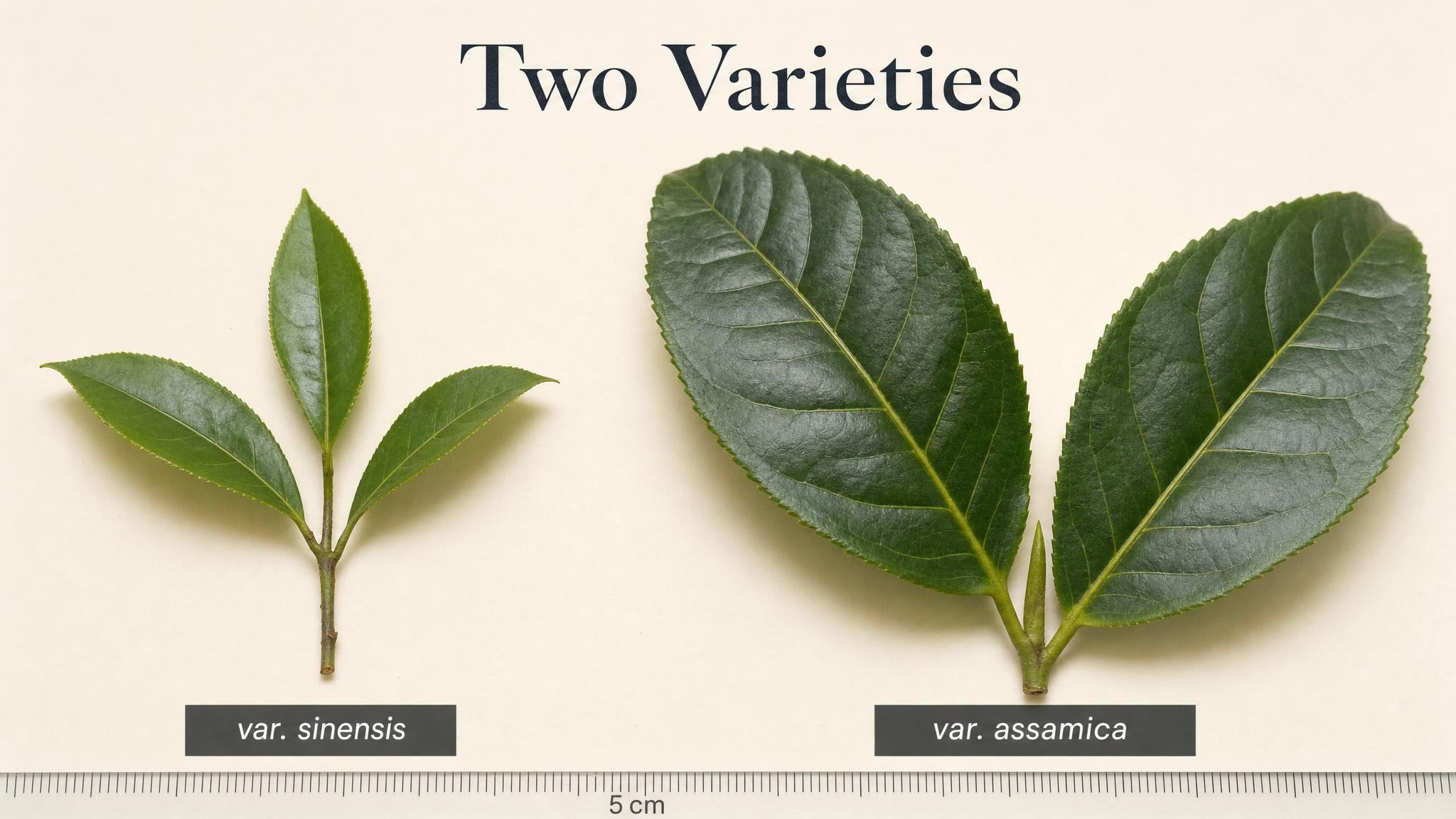
Within this single species, two major botanical varieties dominate the world's tea gardens, and learning to distinguish them is one of the first steps toward reading a cup of tea with understanding.
Camellia sinensis variety sinensis—often called the "Chinese variety"—is a smaller-leafed, cold-tolerant bush that grows well at higher elevations and cooler latitudes. Its leaves are typically five to twelve centimeters long, relatively thick, and rich in aromatic precursors. This is the variety behind most Chinese green teas, Taiwanese oolongs, and Japanese teas. Genomic analysis has revealed that variety sinensis and its cousin evolved along independent evolutionary paths, with distinct selection pressures shaping their chemistry, as Zhang and colleagues described in 2021.
Camellia sinensis variety assamica—the "Assam variety"—is a larger-leafed, heat-loving plant that thrives in tropical lowlands and warm, wet environments. Its leaves can stretch fifteen to twenty-five centimeters, are thinner and softer, and contain higher concentrations of catechins and polyphenols. This is the variety that built the British tea industry in India and that still dominates production in Assam, Sri Lanka, and East Africa. Its vigor and high yield also make it the backbone of most commercial blends worldwide.
These two varieties are not locked in separate boxes. Large-scale genomic studies of over thirteen hundred Camellia accessions from fourteen tea-producing countries have revealed extensive hybridization between them, producing a rich spectrum of intermediate cultivars with blended traits, according to recent research in 2025. Many modern tea cultivars are, in fact, genetic mosaics—part sinensis, part assamica—selected by growers over centuries for specific flavor profiles or resilience to local conditions. Recognizing the two poles of this continuum, however, gives you a powerful starting framework: when someone tells you a tea is made from assamica-type material, you can already anticipate a bolder, more astringent character; sinensis-type material suggests a lighter, more aromatic cup.
Here's something to consider: If all tea comes from the same species, why do you think we ended up with such different tea traditions in China and India? Think about the variety available in each region, the climate, and the colonial history. We'll revisit this question later in the course.
[short pause]
Wine lovers have long spoken of terroir—the French concept that a product's flavor reflects its environment in ways that cannot be replicated elsewhere. Tea drinkers deserve the same vocabulary. TERROIR in tea encompasses soil composition, altitude, latitude, rainfall, temperature, humidity, surrounding vegetation, and even the microorganisms in the local ecosystem, as described by Verdant Tea in 2021. Together, these factors act upon the tea plant like a sculptor acts upon stone, shaping which compounds the leaf produces, in what concentrations, and at what pace.
Consider altitude. Tea grown at high elevations—above twelve hundred meters—experiences cooler temperatures, thinner air, more ultraviolet radiation, and greater temperature swings between day and night. These stresses slow the plant's growth, allowing more time for complex flavor precursors to accumulate in each leaf. The result is a cup with greater sweetness, more nuanced aroma, and less bitterness. This is why Darjeeling, perched at six hundred to twenty-one hundred meters in the eastern Himalayas, produces teas celebrated for their floral "muscatel" character—a quality that lowland plantations in the same region simply cannot replicate, even with identical cultivars and processing, according to Verdant Tea.
Soil matters profoundly. Tea thrives in slightly acidic, well-drained soils rich in organic matter—but the specific mineral profile of that soil leaves a fingerprint on the cup. The volcanic soils of Uji, Japan, contribute to the intense umami that defines its gyokuro and matcha. The red, iron-rich laterite soils of Kenya's highlands yield brisk, coppery black teas with a clean finish. The deep, sandy loams of Yunnan support the ancient trees whose roots reach minerals inaccessible to shallower-rooted bushes, producing the complex sweetness that pu-erh lovers call huigan—a returning sweetness felt in the back of the throat.
Water is the medium through which a plant absorbs its soil. Tea-growing regions receive between twelve hundred and six thousand millimeters of rain annually, and the pattern matters as much as the total. Assam's monsoon climate—over twenty-five hundred millimeters of rain concentrated in intense bursts—pushes explosive leaf growth and high yields, producing a bold, malty cup. Taiwan's Alishan, by contrast, is shrouded in cool mist for much of the year, creating a gentler, steadier hydration that contributes to the silky, floral quality of high-mountain oolongs.
[short pause]
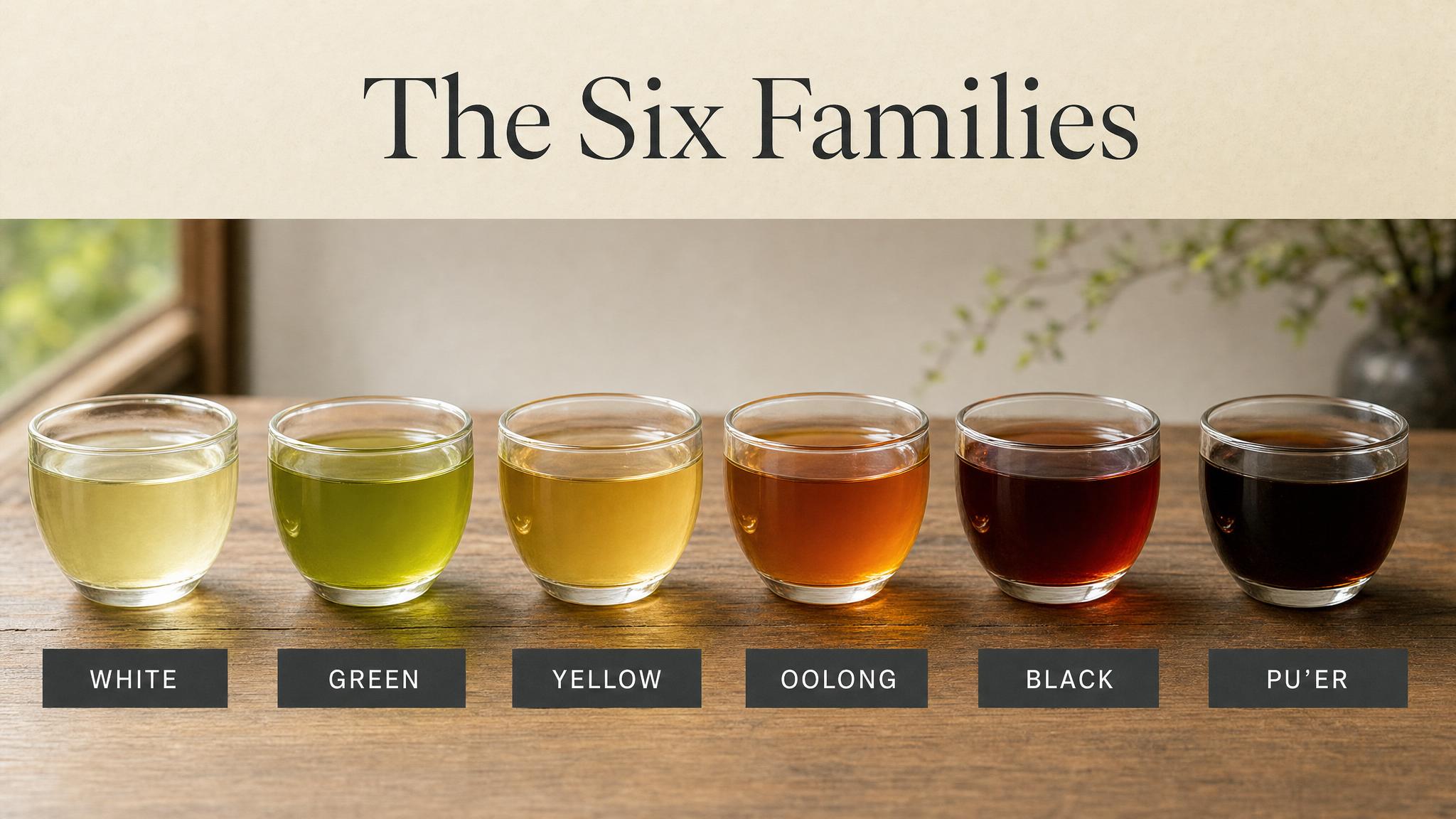
Walk into a well-stocked tea shop and you might see hundreds of teas, each with its own name—Longjing, Silver Needle, Tieguanyin, Keemun, Gyokuro, Shou Pu-erh. It can feel overwhelming. But here is the essential insight that simplifies the entire world of tea: every one of these teas belongs to one of six major categories, and the categories are defined not by the plant but by what happens to the leaf after it is plucked. The fresh leaf is the starting material. Processing is the script. The six categories are the resulting performances.
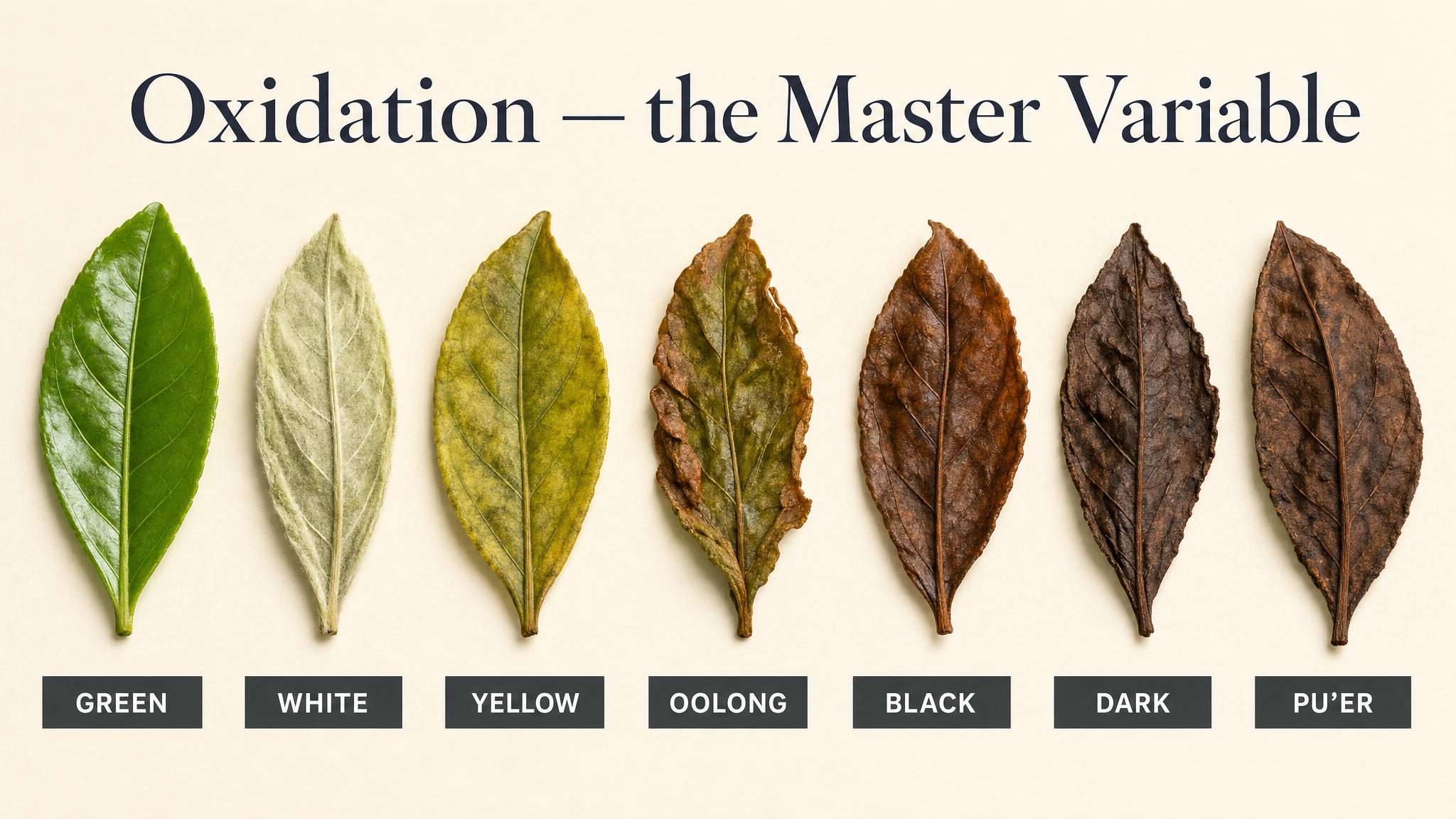
The key variable is OXIDATION—a chemical process in which enzymes in the leaf, especially polyphenol oxidase, react with oxygen to transform catechins into new compounds, darkening the leaf and fundamentally changing its flavor. Think of it as the tea equivalent of an apple browning after you bite it. How much oxidation a tea master allows—and how they control it—is the primary axis along which the six categories are arranged, as Wong and colleagues explained in 2022.
Green tea: Oxidation is halted almost immediately through heat, using steaming in Japan or pan-firing in China. The leaf stays green; the cup is fresh, vegetal, sometimes nutty.
White tea: Minimal processing. Leaves are gently withered and dried with little or no heat intervention. Oxidation is slight and natural. The cup is delicate, sweet, sometimes hay-like.
Yellow tea: Similar to green tea, but with an additional step called men huan, or "sealed yellowing," in which warm, damp leaves are covered and allowed to slowly oxidize under gentle heat. This rare step mellows the grassy edge and adds a smooth sweetness.
Oolong tea: Partially oxidized, anywhere from roughly fifteen percent to eighty-five percent. This is the broadest category, ranging from light, floral oolongs barely darker than green tea to heavily roasted, deeply oxidized oolongs that approach black tea in body.
Black tea: Fully oxidized. Leaves are withered, rolled to rupture cell walls, allowed to oxidize completely, and then dried. Catechins convert into theaflavins and thearubigins, giving the liquor its amber-to-mahogany color and its malty, sometimes fruity character.
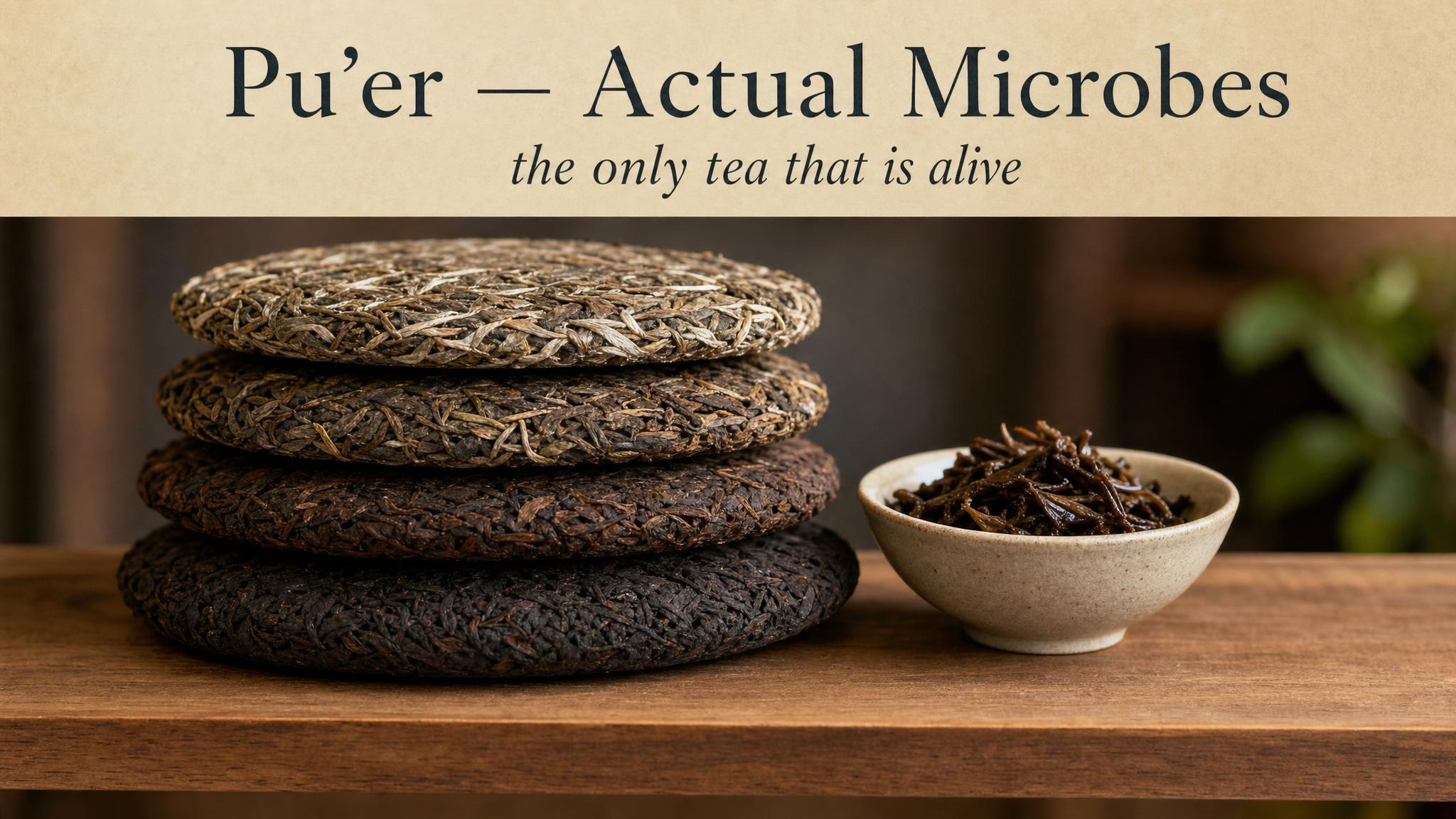
Dark tea, including pu-erh: A distinct category involving microbial fermentation, not just enzymatic oxidation. Leaves are piled while moist and inoculated with beneficial microorganisms that transform the chemistry over weeks, months, or years. The cup can be earthy, smooth, and complex in ways no other category achieves.
Notice that this is a spectrum, not a set of rigid boxes. A lightly oxidized oolong may share more in common with a green tea than with a heavily roasted oolong. A well-aged white tea may develop earthy notes that remind you of dark tea. The categories are useful maps, but the territory is fluid. Keep this flexibility in mind throughout the course—it will serve you well.
Think about this: If you had a basket of freshly plucked tea leaves in front of you right now, what single processing decision would most dramatically change the final flavor? Why? The answer lies in the relationship between cell damage and oxidation.
[short pause]
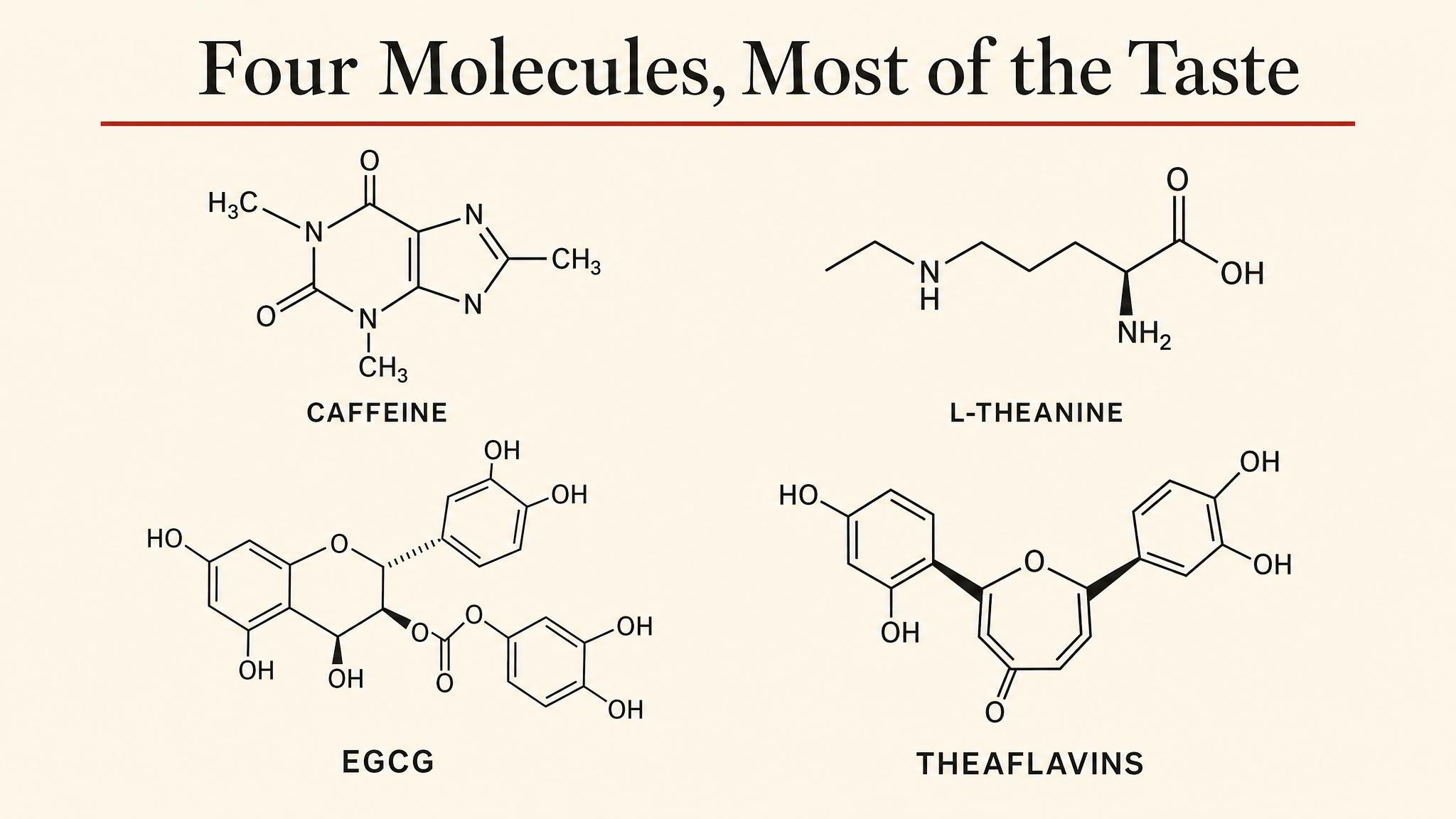
Inside every fresh tea leaf, before any human hand intervenes, a cast of chemical characters is already assembled. Understanding who they are and where they reside in the leaf is crucial, because it is the interaction between these compounds—triggered by processing—that creates every flavor you will encounter in this course. We introduce four principal groups here. They will return, in increasing depth, throughout the course.
CATECHINS are a family of polyphenolic compounds concentrated in the leaf's cell vacuoles—those large, fluid-filled compartments that occupy the center of plant cells. They are the leaf's chemical defense system against U-V radiation and herbivores, and they are responsible for the astringency and bitterness of tea. In a green tea, where oxidation is halted early, catechins remain largely intact and dominate the flavor. In a black tea, enzymes have converted them into theaflavins and thearubigins—the compounds that give black tea its color and its smoother, rounder mouthfeel, as Wong and colleagues noted in 2022.
CAFFEINE is an alkaloid distributed throughout the leaf's cytoplasm. It contributes bitterness, but more importantly for most drinkers, it provides the stimulating effect for which tea has been prized for millennia. Caffeine content in commercial teas varies widely—Boros and colleagues measured significant variation across white, green, oolong, and black teas in 2016—but the fresh leaf typically contains between two percent and five percent caffeine by dry weight. Contrary to popular belief, processing category is a poor predictor of caffeine level; bud-heavy teas tend to contain more caffeine regardless of whether they become white tea or green tea.
L-THEANINE is an amino acid nearly unique to the tea plant. It is synthesized in the roots and transported to the leaves, where it accumulates especially when the plant is shaded from direct sunlight—which is why shade-grown Japanese teas like gyokuro are so rich in umami. L-theanine contributes a savory sweetness and a characteristic "calming alertness" that tempers the jitteriness of caffeine. Boros and colleagues found in 2016 that mean L-theanine content was relatively stable across categories, ranging from about five to seven milligrams per gram, suggesting it survives processing reasonably well.
The aroma of tea is staggeringly complex. Over six hundred VOLATILE ORGANIC COMPOUNDS have been identified across different tea types, including linalool, which is floral; geraniol, which is rosy; limonene, which is citrusy; and scores of others, according to recent research in 2025. Many of these volatiles do not exist in the fresh leaf as free molecules—they are locked up as non-volatile precursors bound to sugars in cell walls and membranes. It is only when the leaf is damaged, withered, heated, or fermented that enzymes liberate these precursors and transform them into the aromatic compounds you smell rising from your cup. This is why the way you process a leaf—how much you bruise it, how long you let it oxidize, what temperature you apply—determines which of those six hundred plus possibilities make it into the final tea.
Here is the essential drama: in the intact leaf, these compounds are separated by membranes. Catechins sit in the vacuole. Polyphenol oxidase enzymes sit in the cytoplasm. Aroma precursors sit in cell walls. They do not interact until the leaf is damaged—by plucking, by withering, by rolling, by cutting. Processing is, at its core, a controlled act of cellular destruction. How much destruction, how fast, and under what conditions determines whether you end up with a green tea or a black tea, a floral oolong or an earthy pu-erh. This concept—processing as controlled cell damage—is the single most important idea in this course, and we will build on it extensively in later chapters.
[short pause]
Let us return to where we started—those ancient trees in Xishuangbanna and those manicured hedgerows in Shizuoka. We can now begin to explain why the same species yields such different cups. The Yunnan tree is variety assamica, genetically primed for higher polyphenol content; it grows in deep, mineral-rich soil at moderate elevation in a subtropical climate; and its leaves are processed with long, gentle withering followed by sun-drying and sometimes years of microbial aging. The Shizuoka bush is variety sinensis, bred for aromatic amino acids; it grows in volcanic soil in a temperate maritime climate with cool, misty springs; and its leaves are steamed within hours to lock in that fresh, green chemistry.
Different variety. Different terroir. Different processing. Same species. This three-part framework—plant, place, and process—is the mental model we will carry through the entire course. In the next chapter, we follow the leaf from garden to withering trough and explore how the very first stage of processing begins to unlock the chemical potential you met today.
As a traditional saying among Wuyi Mountain tea producers reminds us: "The leaf does not decide what it will become. The mountain, the weather, and the tea maker's hands decide together."
[short pause]
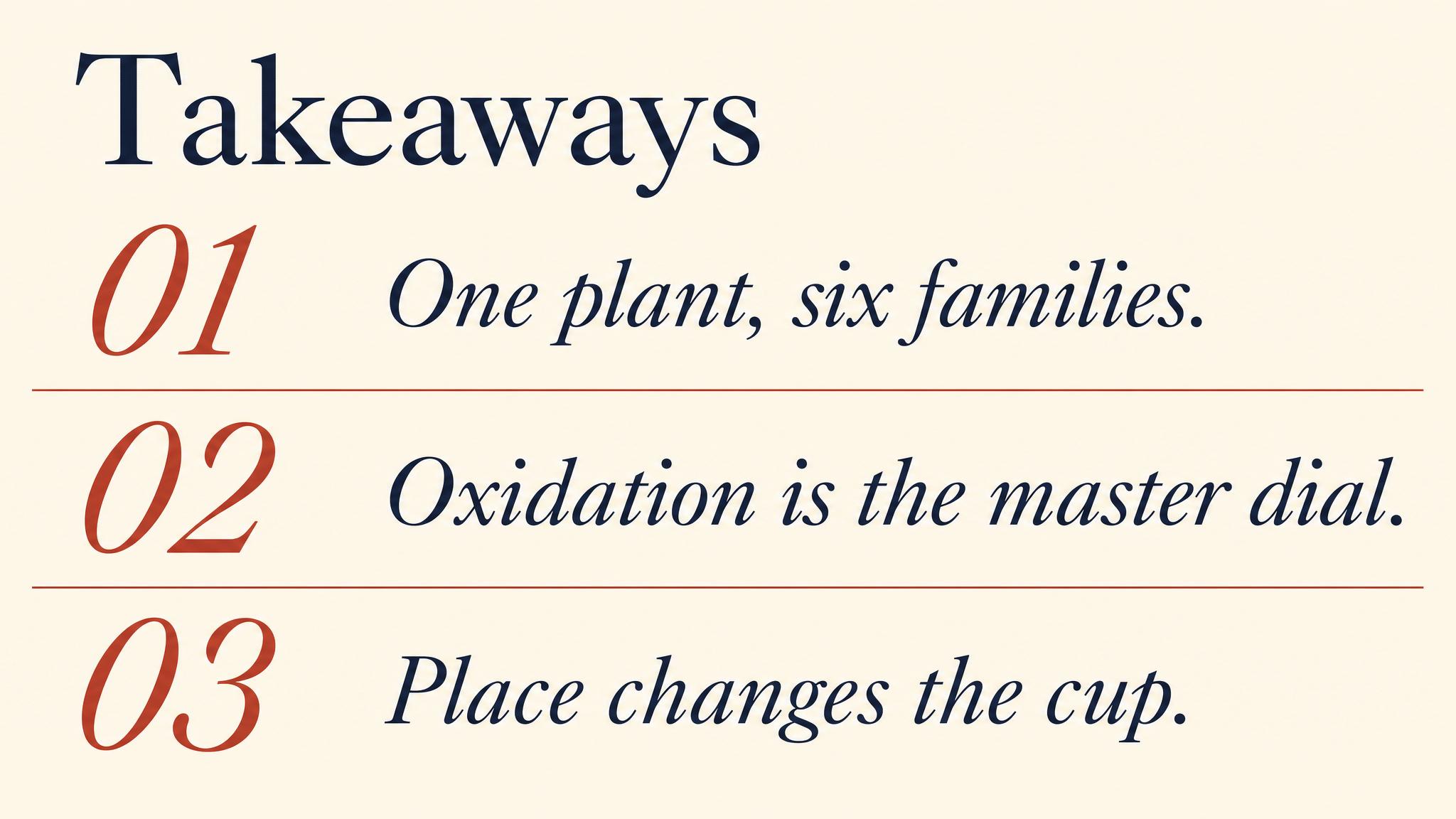
To summarize the key points: All tea comes from a single species, Camellia sinensis, whose remarkable genetic flexibility enables enormous diversity in the cup. The two major varieties—variety sinensis, which is small-leafed, aromatic, and cold-tolerant, and variety assamica, which is large-leafed, polyphenol-rich, and heat-loving—represent two poles of a genetic continuum, with many cultivars blending traits from both. Terroir—the combination of soil, altitude, rainfall, latitude, and microclimate—shapes which compounds a leaf produces and in what concentration, making geography a powerful determinant of flavor.
The six major tea categories—green, white, yellow, oolong, black, and dark—are defined primarily by degree of oxidation and type of processing, not by the plant variety itself. Four key compound groups—catechins, caffeine, L-theanine, and volatile aroma precursors—reside in separate compartments of the intact leaf. Processing is controlled cell damage that allows these compounds to interact, creating flavor. The foundational mental model for the course is plant times place times process: variety, terroir, and human craft together determine what ends up in your cup.
[short pause]
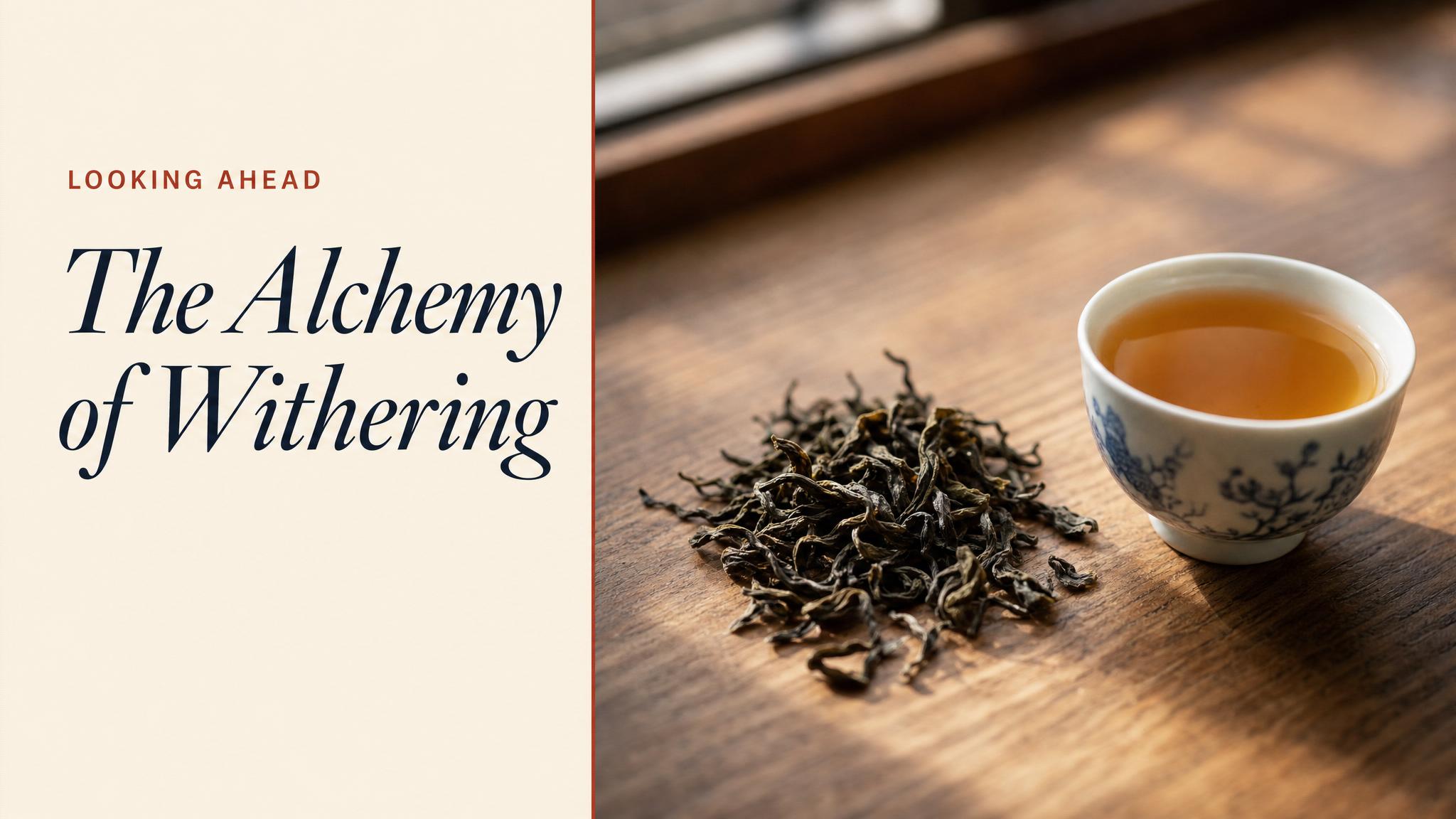
Looking ahead: In the next chapter, From Garden to Withering Trough, we follow the freshly plucked leaf through its first transformation. Withering is far more than simple drying—it is a carefully managed phase of moisture loss and early chemical change where the leaf begins to exhale its grassy notes and develop new aromatic complexity. We will examine what happens at the cellular level during withering, why indoor and outdoor withering produce different results, and how the tea maker's decisions in these first hours set the trajectory for everything that follows.
The Alchemy of Withering
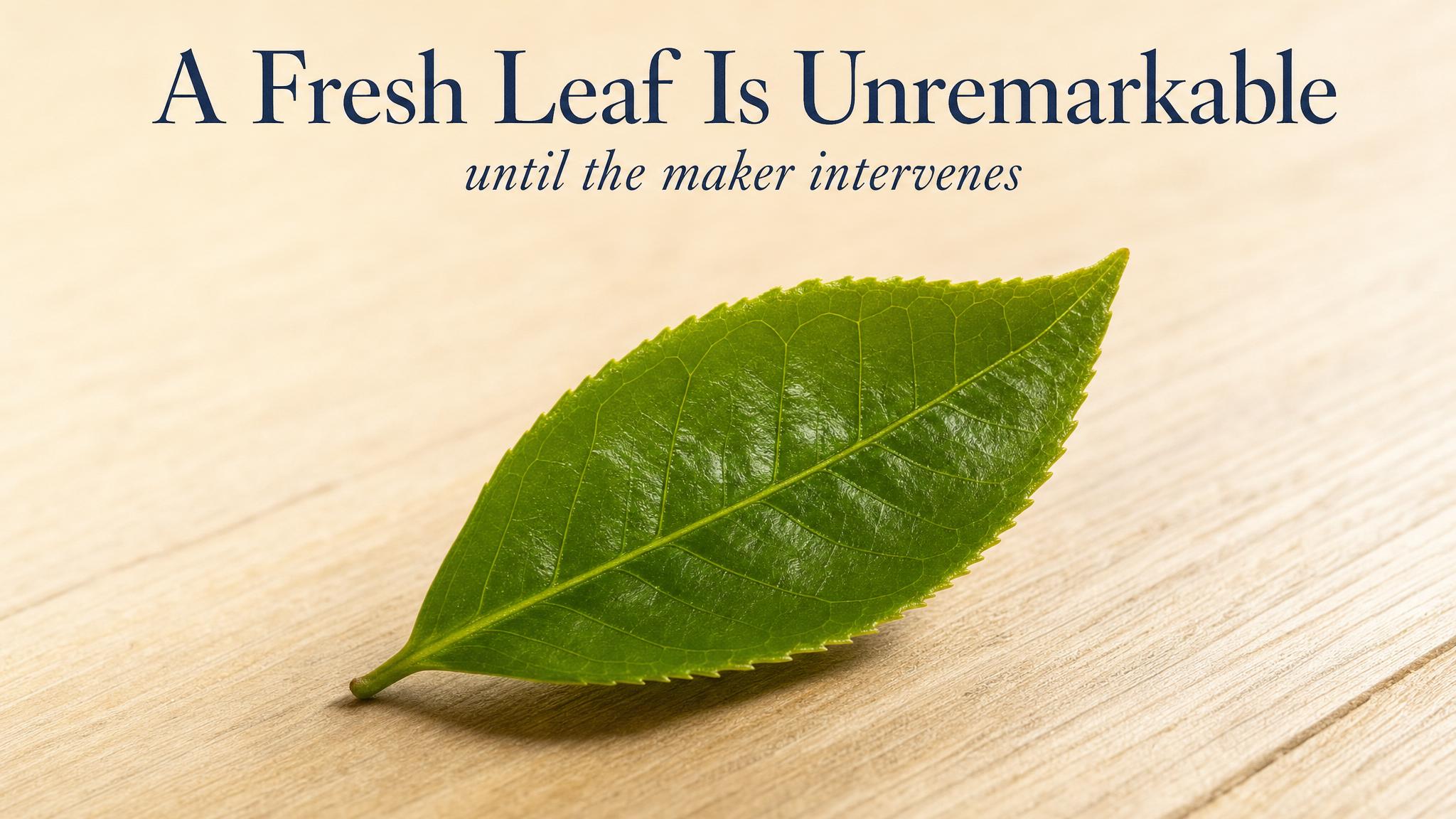
A freshly plucked leaf is unremarkable—vegetal, grassy, mildly bitter. What happens next is where the magic lives. This chapter follows the leaf through the major processing steps—withering, rolling or shaping,…
Tea snobs are way more pretentious than coffee snobs. Agree or disagree?
Hot take
Would you trust a tea maker who goes by smell and touch over one who uses precise lab instruments?
Would you trust
If you honestly can't taste the difference between $5 tea and $50 tea, is the expensive stuff just a scam?
Real talk
Would you rather have tea that tastes exactly the same every single time, or tea that's sometimes incredible but sometimes just okay?
Would you rather
If a machine can make tea faster and more consistently than a master craftsperson, should we still pay extra for the hand-made version?
Debate time
You'll drop $8 on a fancy coffee but think $8 for loose leaf tea is highway robbery. What's up with that?
Double standard?
Tea Tasting Triangle Test: Processing Detective
15-20 minutesInstructor passes small cups of 3 tea samples along each row (same tea, different oxidation levels: green/oolong/black). Students turn to their neighbor to compare color, aroma, and taste. Each pair writes down hypotheses about which processing steps differed. Instructor reveals answers and discusses how oxidation time creates theaflavins (brightness) vs thearubigins (depth). Pairs share which sensory clue was most revealing.
The Kill-Green Countdown: Live Decision Debate
10-12 minutesInstructor presents a scenario: 'Your tea leaves are 40% withered. Humidity just spiked. Do you: A) Continue withering, B) Kill-green now, C) Increase airflow?' Students turn to neighbors for 90 seconds to debate. Instructor polls each section of the theatre (left/center/right) by show of hands. Each section defends their choice. Instructor reveals industry best practice and the chemistry behind it (e.g., halting polyphenol oxidase activity). Repeat with 2-3 rapid-fire scenarios.
Fermentation vs. Oxidation: Myth Court
12-15 minutesInstructor displays 5 common statements about tea processing (e.g., 'Black tea is fermented,' 'Oxidation requires microbes'). Students stand if they think each statement is TRUE, stay seated if FALSE. After each vote, call on standing and seated students to defend their position—creating mini-debates across the theatre. Instructor clarifies the science (enzymatic oxidation vs microbial fermentation) after each round. Students track how many they got correct.
Master's Dilemma: Processing Under Pressure
15-18 minutesInstructor presents a case study: 'You're producing competition-grade oolong. Day 1 went perfectly—50% oxidation achieved. Overnight, temperature dropped 10°C. You have 4 hours until the buyer arrives. What's your move?' Students discuss with neighbors (3 minutes), then instructor cold-calls pairs to share their solutions. Class votes on best approach. Instructor shares what the actual tea master did and the resulting tea's competition placement. Discuss how human judgment compensates for uncontrollable variables.
Oxidation Timeline Prediction Challenge
8-10 minutesInstructor shows tea leaves at Hour 0 (freshly withered) and Hour 6 (fully oxidized black tea). Students work with neighbors to sketch or describe what the leaves look like at Hours 1, 2, 3, 4 (color, texture, aroma). Instructor reveals actual photos at each time point while explaining the chemical cascade (catechins → theaflavins → thearubigins). Pairs that came closest to actual progression earn recognition. Discuss what surprised them about the non-linear progression.
Processing Step Auction: Resource Allocation Game
12-15 minutesEach theatre section receives 1000 points to 'invest' in four processing steps (withering, rolling, oxidation, drying) to create either: premium green tea, competition oolong, or robust black tea. Sections huddle (turning to neighbors) to allocate points, then submit via show of hands or quick poll. Instructor reveals optimal distributions from actual tea factories and explains the chemistry behind each choice (e.g., green tea needs 800+ points in kill-green timing precision). Section closest to professional formula wins. Debrief: Why do different tea types demand radically different resource priorities?
Transcript
Picture a tea maker named Lin standing in the pre-dawn darkness of a processing shed in Fujian's Wuyi Mountains. She has just received forty kilograms of freshly plucked leaves—identical in variety, from the same hillside, harvested within the same hour. Over the next two days, she will transform half of that harvest into a lightly oxidized Tieguanyin oolong and the other half into a fully oxidized Zhengshan Xiaozhong, also known as Lapsang Souchong. The finished teas will share no discernible resemblance. One will be fragrant with orchid-like florality, the other dense with malt and dark fruit. Same leaf. Same plant. Radically different cups.
How is that possible? The answer lies in PROCESSING—the deliberate sequence of physical and chemical manipulations that a tea maker applies to raw leaf material. If the first chapter established that chemistry is the language of flavor, this chapter reveals that processing is the grammar: the rules and choices that arrange those chemical elements into coherent, expressive sentences.
[short pause]
The Fresh Leaf: A Chemical Arsenal in Waiting
Before we follow the leaf through its transformation, recall from the first chapter the key actors inside Camellia sinensis tissue. The leaf is loaded with CATECHINS—polyphenolic compounds responsible for astringency and bitterness—alongside amino acids like L-theanine, volatile aroma precursors, caffeine, and a suite of enzymes. The most important enzyme for our story is POLYPHENOL OXIDASE, or P-P-O, a copper-containing protein that, when given access to oxygen, begins oxidizing catechins into entirely new molecules. As Abudureheman and colleagues described in 2022, in an intact leaf, P-P-O and catechins are separated in different cellular compartments—an arrangement that keeps the system inert. Processing disrupts that architecture, and the chemistry begins.
Crucially, the raw material arriving in the processing shed is not chemically uniform. As Li and colleagues demonstrated in 2022, a high-altitude leaf with abundant catechins but lower astringent E-G-C-G responds differently to oxidation than a lowland leaf rich in bitter E-C-G. The terroir concepts from the first chapter thus remain active players: processing choices always interact with the chemistry the environment has already written into the leaf.
[short pause]
Withering: The Quiet Beginning
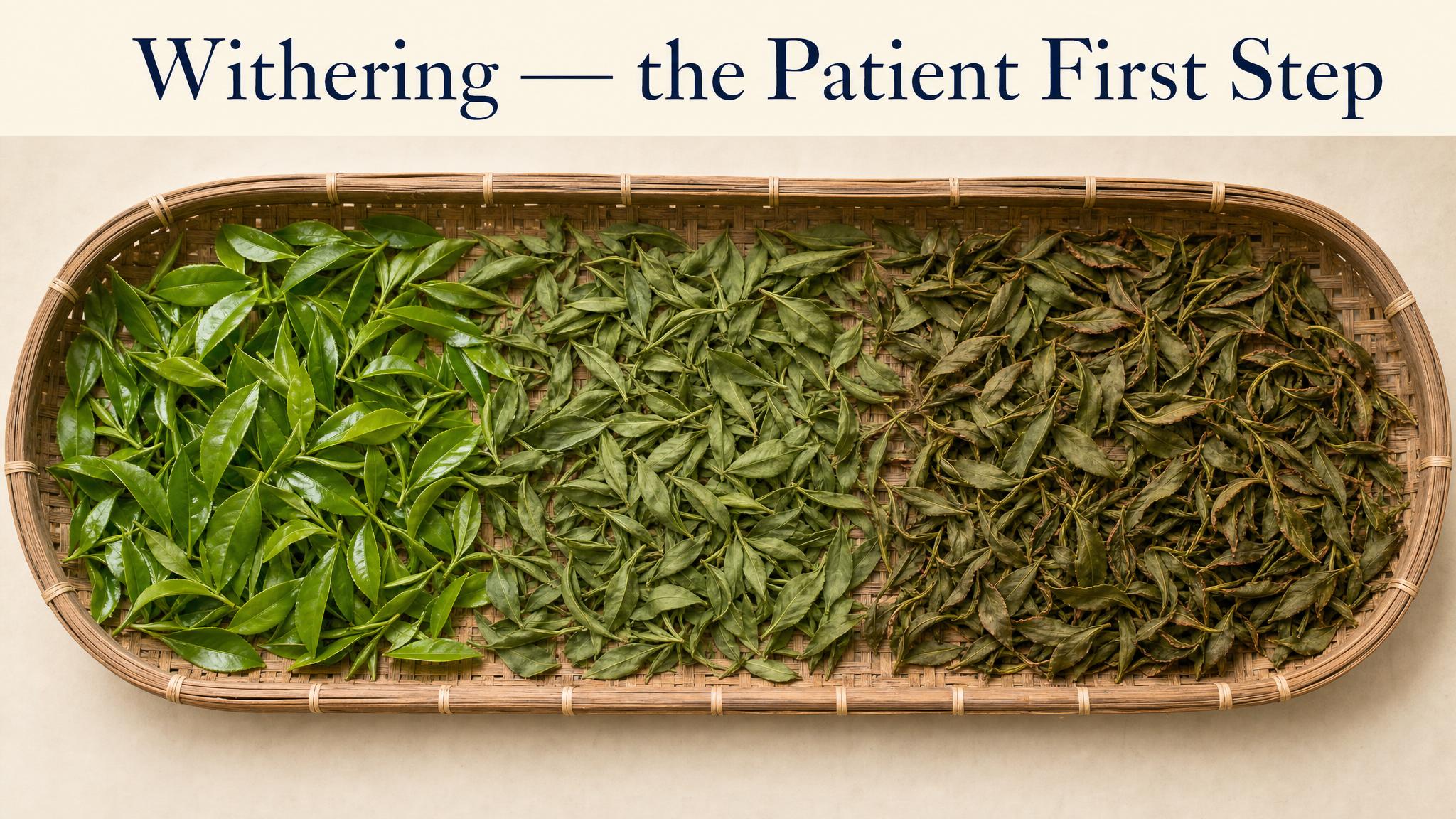
The first step in nearly all tea production is WITHERING—the controlled loss of moisture from freshly plucked leaves. Laid out on bamboo trays, mesh racks, or withering troughs, the leaves are allowed to lose between twenty and seventy percent of their water content over a period that may last a few hours to an entire day. According to recent tea processing documentation, the process seems passive, even boring. It is neither.
As water evaporates, cell membranes weaken and become more permeable. Volatile aroma compounds begin to develop. The leaf, once turgid and snappy, becomes soft, pliant, and slightly fragrant. More subtly, enzymatic activity begins stirring: low-level oxidation starts at the margins of damaged cells, and amino acids begin interacting with sugars in early Maillard-type reactions. For the tea maker, withering is a judgment call. Under-withered leaves resist rolling and yield harsh, grassy flavors. Over-withered leaves lose vitality and can produce flat, lifeless tea, as Heiss and Heiss described in 2010.
The degree of withering also sets the stage for what follows. Black teas are typically withered heavily—sometimes losing over half their moisture—to prepare the leaves for vigorous rolling. Delicate white teas are withered gently and for extended periods, with minimal physical manipulation afterward. In Japanese green tea production, withering is often skipped entirely; leaves go almost straight from the field to the steaming apparatus, preserving every ounce of their fresh, vegetal energy.
[short pause]
Rolling and Shaping: Breaking Open the Cells
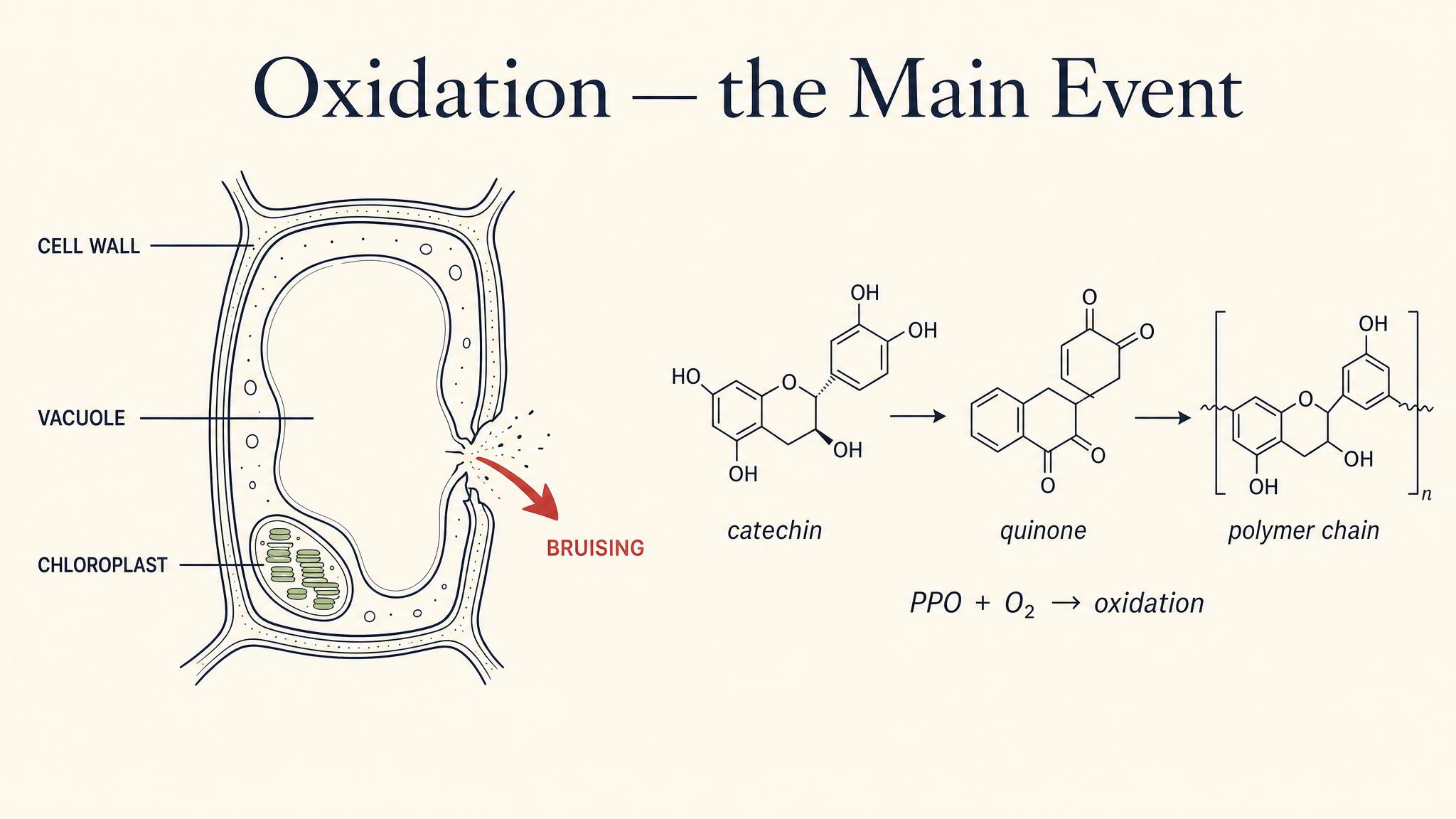
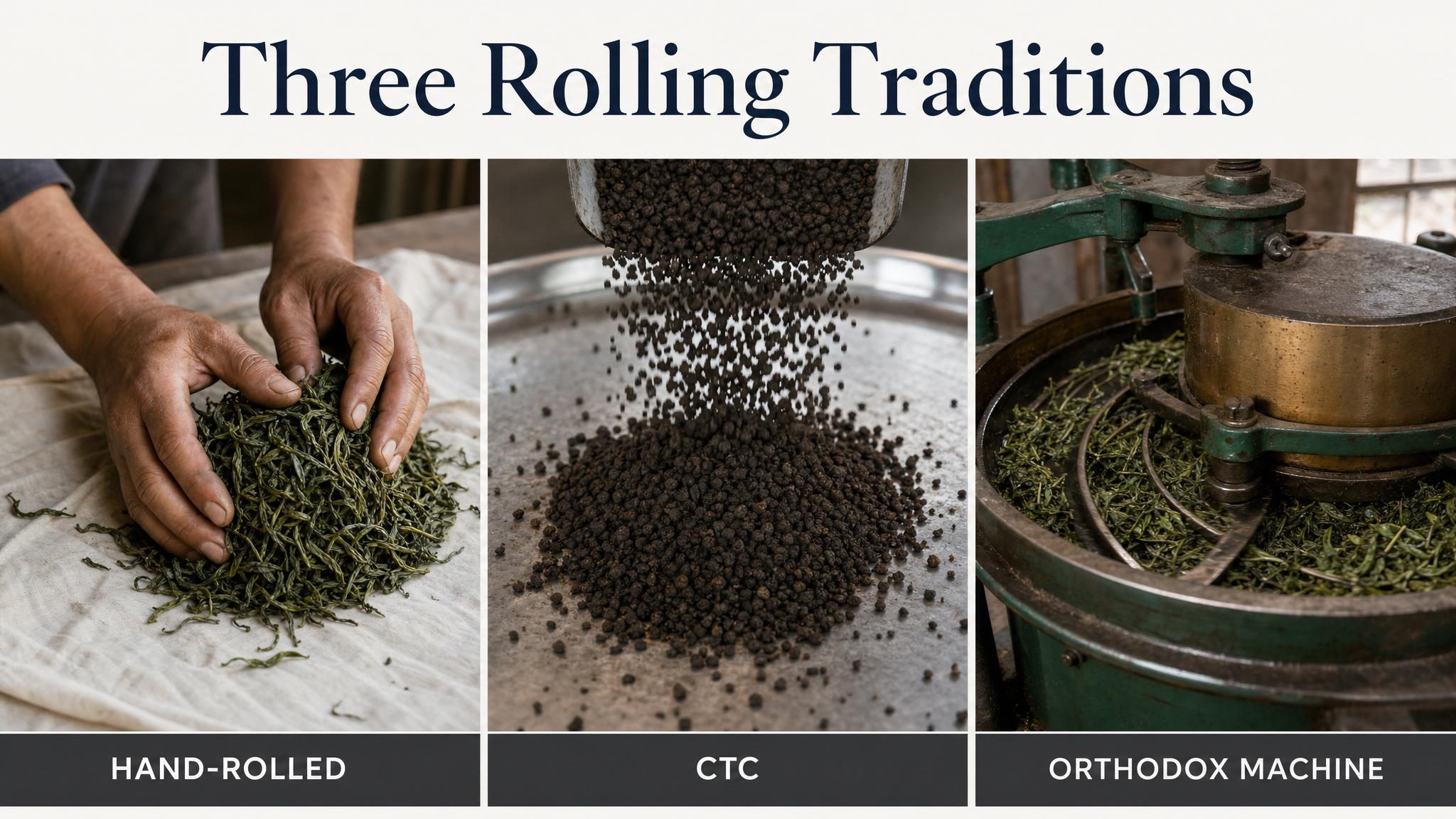
Rolling is where the chemistry is physically unleashed. Whether done by hand on bamboo mats or by machine between ridged metal plates, rolling bruises and ruptures the leaf's cellular structure. Cell walls crack open. Vacuolar contents spill into the cytoplasm. P-P-O meets catechins. Oxygen rushes in. The oxidation engine has been started.
But rolling serves a dual purpose. It also shapes the leaf: tight pearls for gunpowder green, twisted strips for orthodox black, long curled needles for certain oolongs. The tightness of the roll matters chemically. A tightly rolled leaf oxidizes more slowly after rolling because less surface area is exposed to air. A loosely rolled or heavily macerated leaf—as in C-T-C production, that is, Crush, Tear, Curl production for commercial black tea bags—oxidizes rapidly because more cell content is exposed to oxygen. The tea maker, in deciding how vigorously to roll, is also deciding how fast and how uniformly oxidation will proceed, as Heiss and Heiss noted in 2010.
Consider this: if two batches of the same leaf are rolled—one lightly and one aggressively—and then both allowed to oxidize for the same amount of time, which would you expect to show more theaflavin development? The answer lies in surface area and oxygen exposure.
[short pause]
The Heart of the Matter: Enzymatic Oxidation
If withering is the prologue and rolling the inciting incident, then ENZYMATIC OXIDATION is the central drama of tea processing. This is the process that separates a green tea from an oolong from a black tea, and understanding it is essential for making sense of the entire tea spectrum.
The Mechanism
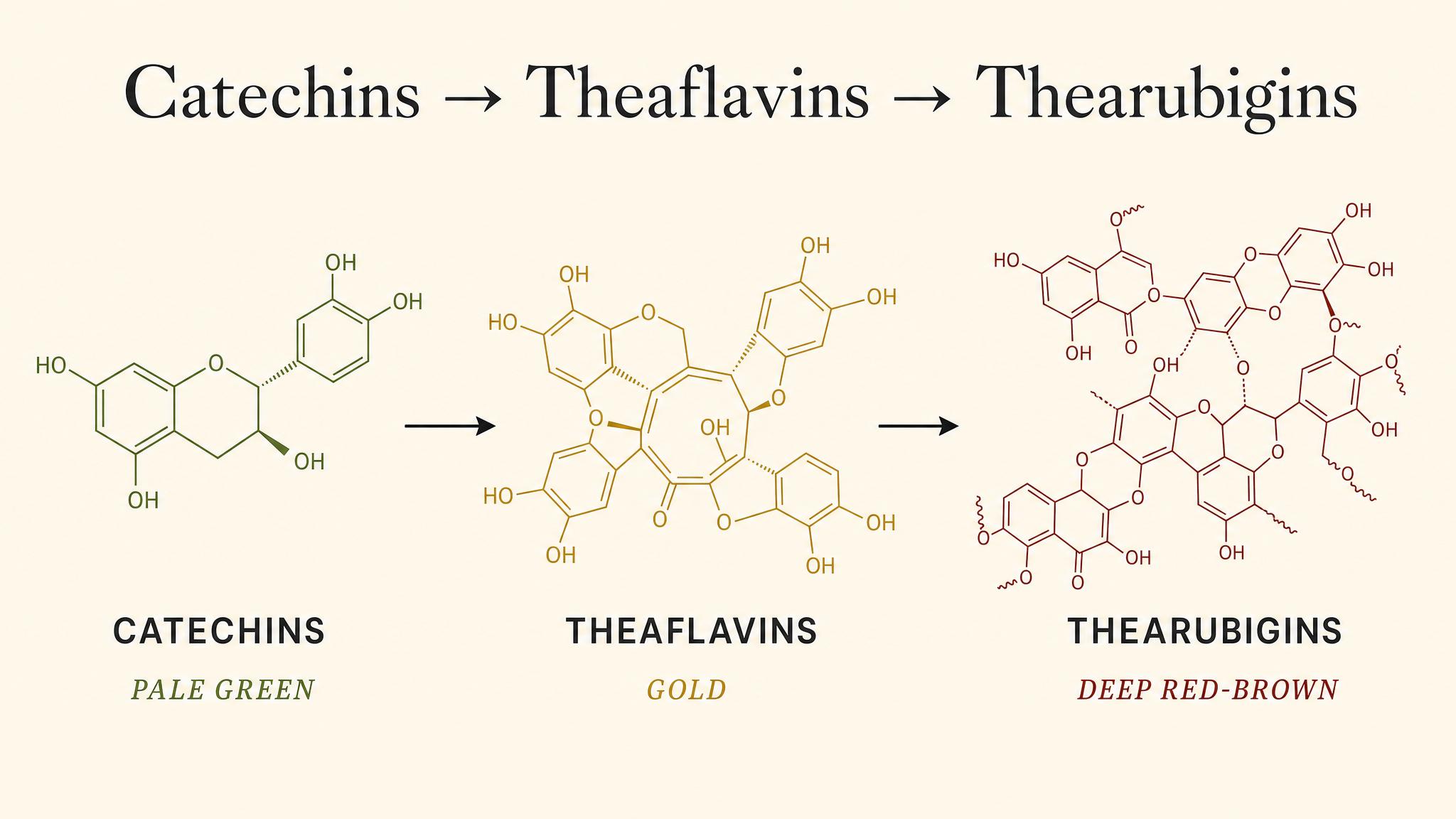
Once P-P-O encounters catechins in the presence of oxygen, it catalyzes their oxidation. The first major products are THEAFLAVINS—bright, orange-gold dimers formed by the coupling of specific catechin pairs. Research by Kuhnert and colleagues in 2014 has shown that theaflavin formation requires the pairing of a dihydroxy-B-ring catechin, like epicatechin, with a trihydroxy-B-ring catechin, like epigallocatechin. Two catechins of the same type will not produce theaflavins. The reaction likely proceeds through a quinone intermediate: P-P-O first oxidizes one catechin into its quinone form, which then reacts with a non-oxidized partner to form the theaflavin.
Simultaneously, P-P-O generates hydrogen peroxide as a by-product. A second enzyme, PEROXIDASE, or P-O-D, uses this peroxide to drive further oxidation of theaflavins into THEARUBIGINS—a vastly more complex family of polymeric compounds that are responsible for the deep brown-red color and full-bodied mouthfeel of black tea. As Sang and colleagues found in 1999, using advanced mass spectrometry, Kuhnert and colleagues identified in 2010 an astonishing five thousand plus individual thearubigin components in a single black tea, ranging in molecular mass from one thousand to two thousand one hundred daltons. They proposed an "oxidative cascade hypothesis" in which thearubigins form through successive rounds of oxidative coupling—catechin dimers combining with other dimers and trimers in an ever-branching molecular tree.
The enzymatic oxidation cascade works like this: P-P-O converts catechins into theaflavins, while P-O-D drives the further conversion of theaflavins into the complex thearubigin polymers that define black tea.
What Changes as Oxidation Progresses
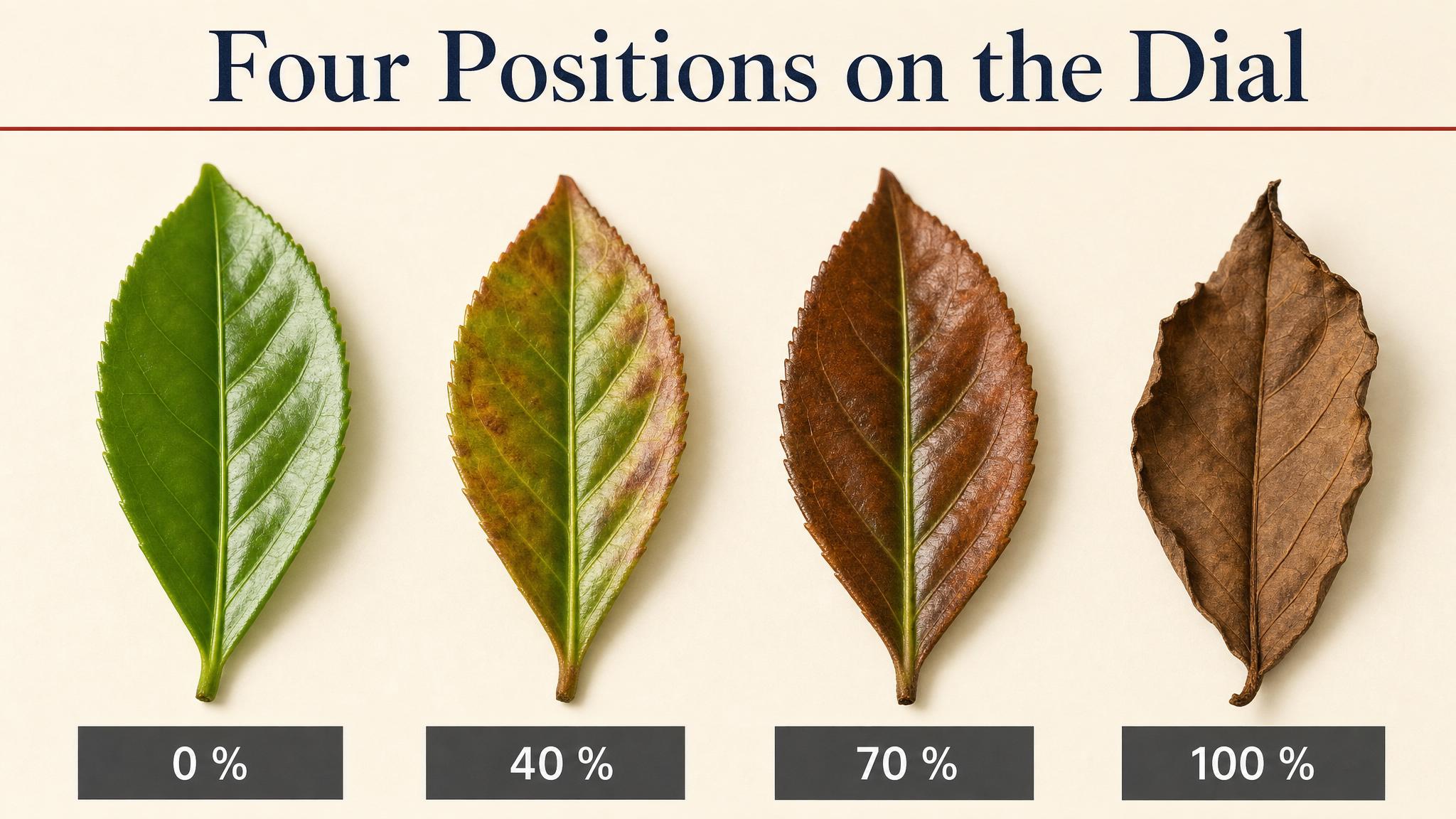
As oxidation advances, the leaf undergoes a visible metamorphosis. Green catechins—which are colorless to pale yellow in solution—give way to golden theaflavins and then dark-hued thearubigins. The aroma shifts too: fresh, grassy notes are replaced first by floral compounds, then by fruity esters, and finally by malty, biscuity Maillard reaction products as the chemical environment changes. The astringency of raw catechins mellows as they polymerize into smoother-tasting thearubigins. Thearubigins can constitute up to sixty percent of the dry weight of black tea extract, despite their chemical structures remaining only partially characterized, as Abudureheman and colleagues noted in 2022.
The degree of oxidation thus determines the tea type. Stopping oxidation near the beginning—say, at five to fifteen percent—preserves most catechins and yields a tea with bright green character and grassy freshness. Allowing oxidation to run through the middle range—roughly twenty to seventy percent—produces the extraordinary diversity of oolong teas, from the barely-oxidized, floral Baozhong to the deeply-oxidized, roasty Da Hong Pao. Letting oxidation run to near completion produces black tea, called hong cha, meaning "red tea" in Chinese for the color of its liquor, with its characteristic copper-brown leaf, amber infusion, and malty richness.
[short pause]
Kill-Green: Arresting the Transformation
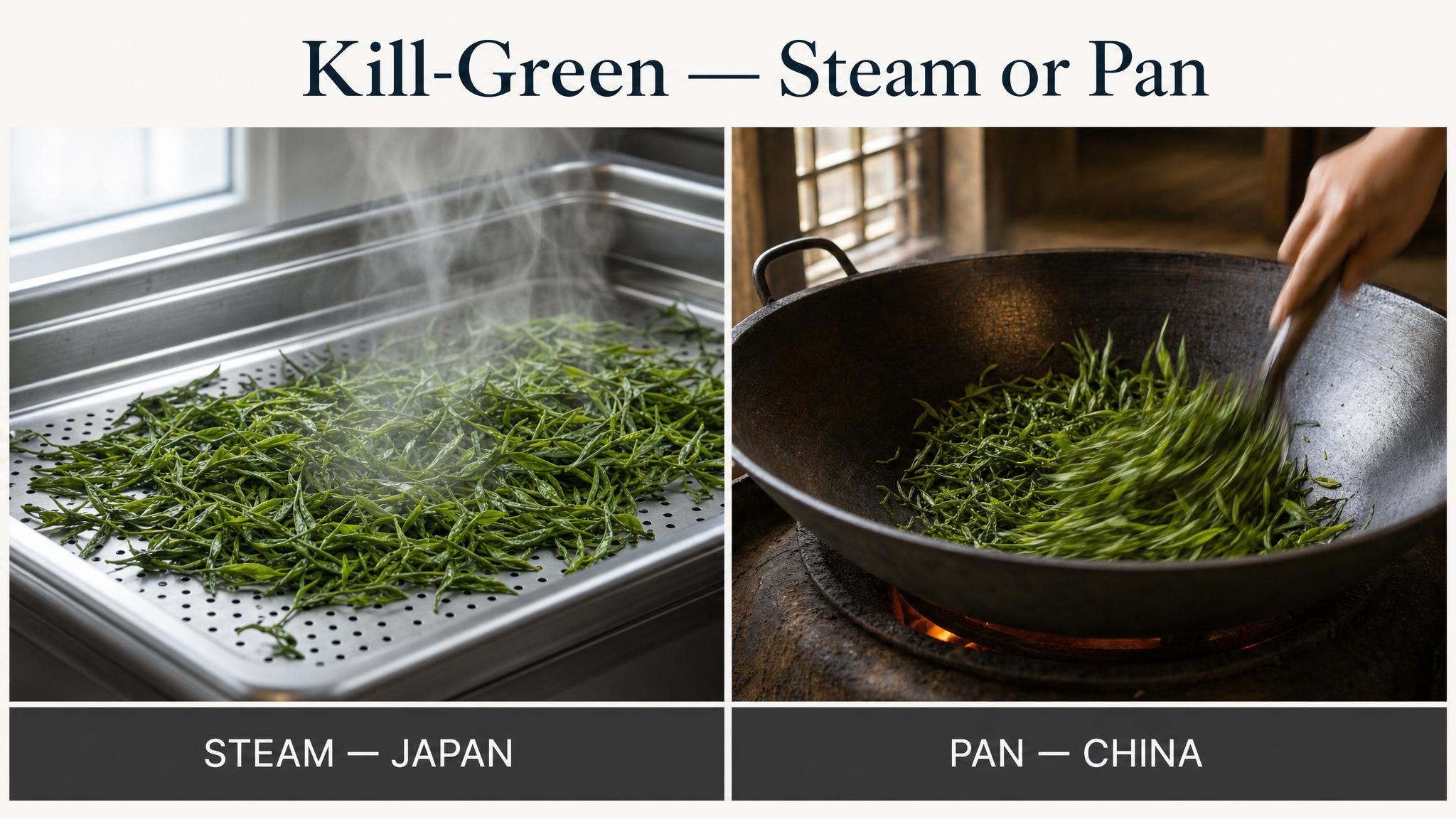
If oxidation is the engine, then KILL-GREEN, or sha qing, is the brake. This critical step applies heat to the leaves to denature P-P-O and P-O-D, permanently halting enzymatic oxidation. The timing of kill-green is what fixes the tea at its intended point on the oxidation spectrum.
Two dominant traditions exist for kill-green, and each leaves an unmistakable flavor signature. Pan-firing, the Chinese method, involves tumbling leaves in a heated wok or rotating drum at temperatures around two hundred to two hundred eighty degrees Celsius. The brief contact with dry, intense heat produces a characteristic toasty, nutty note—think of the chestnut sweetness in a Longjing, also known as Dragon Well. Steaming, the Japanese method, blankets the leaves in steam for fifteen to forty-five seconds, denaturing enzymes without adding any roasted character. The result preserves a vivid marine-green color, a vegetal aroma, and an umami-rich sweetness entirely distinct from pan-fired teas.
For green teas, kill-green comes before rolling, locking in the fresh-leaf chemistry. For oolongs, kill-green comes after the desired level of oxidation is reached—sometimes through multiple rounds of alternating rolling and resting. For black teas, kill-green is typically not applied at all; instead, the fully oxidized leaves are dried at high temperature, which incidentally halts remaining enzyme activity. That distinction—whether and when heat is applied—is one of the most consequential decisions in all of tea making.
Consider this comparison: a Japanese gyokuro and a Chinese Longjing are both green teas with minimal oxidation. Yet they taste profoundly different. Given what you've just learned about steaming versus pan-firing, you might predict specific chemical and sensory differences between them. The steamed gyokuro retains marine, vegetal notes and bright umami, while the pan-fired Longjing develops toasty, nutty sweetness.
[short pause]
Drying: Sealing the Transformation
The final universal step is DRYING—reducing the leaf's moisture content to around two to five percent to render it shelf-stable and prevent microbial growth. Drying can be accomplished through oven-drying, charcoal roasting, sun-drying, or hot-air tumbling. Like every other step, it is not chemically neutral: the heat of drying drives Maillard reactions between amino acids and sugars, producing additional flavor compounds. A charcoal-roasted Wuyi oolong owes much of its caramel-rock complexity to the drying stage, not just to oxidation.
[short pause]
Microbial Fermentation: The Other Transformation
Here we must pause and address one of the most persistent sources of confusion in the tea world: the word "fermentation." In casual tea parlance, black tea is routinely described as "fermented." This is, strictly speaking, incorrect. Black tea undergoes enzymatic oxidation—a reaction driven by the leaf's own enzymes in the presence of oxygen. No microorganisms are involved.
True MICROBIAL FERMENTATION occurs in the production of dark teas, or hei cha, most famously pu-erh. In this process, tea leaves that have already been heat-treated and dried are deliberately exposed to communities of bacteria and fungi—Aspergillus niger, Eurotium species, Blastobotrys, among others—that colonize the leaf and metabolize its compounds over weeks, months, or even decades, as Zhang and colleagues found in 2016, and as Lv and colleagues noted in 2013.
Shou versus Sheng: Two Paths to Pu-erh
Traditional sheng, meaning raw pu-erh, involves pressing dried, minimally processed tea into cakes and allowing it to age naturally. Microbial communities slowly colonize the compressed leaves over years and decades, gradually transforming catechins and other polyphenols into new compounds. The flavor evolves from sharp and astringent into something smooth, earthy, and complex—a patience-dependent alchemy.
Shou, meaning ripe pu-erh, developed in the nineteen seventies to simulate aged sheng, accelerates this process through pile fermentation, called wo dui. Large quantities of sun-dried tea are piled together, moistened, and covered. The heat and humidity trigger explosive microbial growth. Zhang and colleagues found in 2016 that while fungal diversity drops during pile fermentation, bacterial diversity rises dramatically—the microbial ecology is actively reshaped. Over forty-five to sixty days, the tea develops its signature dark liquor, earthy aroma, and smooth, almost chocolatey character.
The distinction is chemically fundamental. Enzymatic oxidation is an aerobic reaction catalyzed by the plant's own enzymes, producing theaflavins and thearubigins. Microbial fermentation involves living organisms breaking down and resynthesizing organic compounds, producing an entirely different suite of metabolites. Conflating the two is like confusing caramelization with composting—both transform organic matter, but through utterly different mechanisms, as Lv and colleagues emphasized in 2013.
[short pause]
The Tea Maker's Craft: Where Science Meets Art
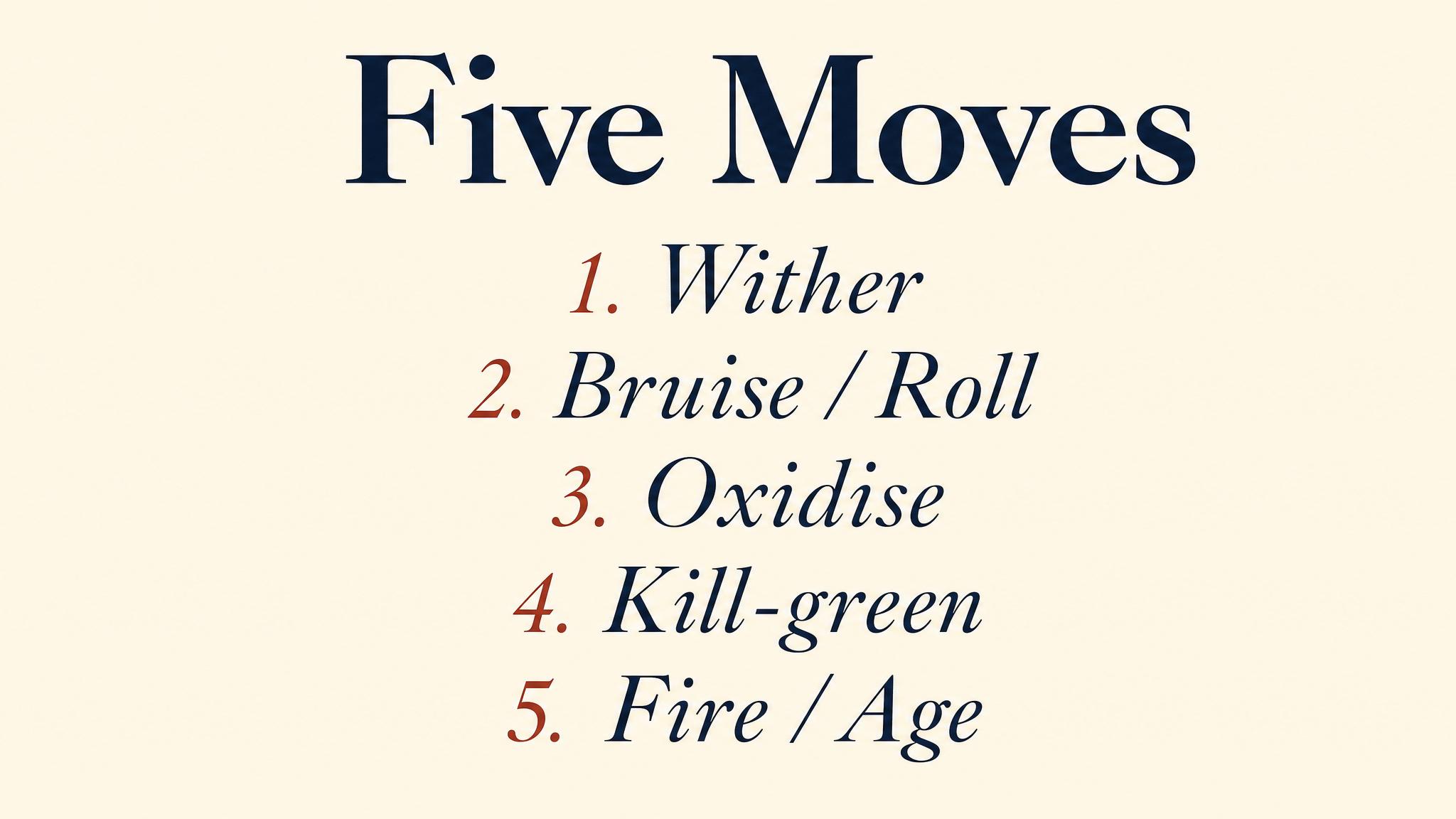
Listing the processing steps—wither, roll, oxidize, kill-green, dry—can make tea production sound like following a recipe. It is not. Each step involves a cascade of sensory judgments that cannot be fully captured in a manual. As Heiss and Heiss emphasize in 2010, master tea makers rely on sight, smell, touch, and even hearing to guide their decisions. They feel the leaf between their fingers to judge withering progress. They watch the color of the bruised edges to gauge oxidation. They listen to the sound of leaves hitting the wok to calibrate kill-green temperature. They smell constantly—evaluating the shift from cut-grass to floral to fruity—to determine the exact moment to apply heat.
As Heiss and Heiss wrote: "No two batches of even the 'same' tea are ever exactly alike, because the raw material changes daily with the weather, and the maker's response must change with it."
This is why the same cultivar, grown in the same garden, processed in the same shed, can yield strikingly different teas when handled by different makers. One may wither slightly longer, sensing that the morning's harvest was more turgid than yesterday's due to overnight rain. Another may roll more gently, adjusting for a particularly tender spring flush. These are not factory settings toggled by computer—they are embodied knowledge, learned through years of apprenticeship and thousands of batches.
Terroir Revisited: Nature Meets Craft
The interplay between raw material and processing is the great theme of this course. A high-altitude leaf rich in catechins, but with a lower ratio of the most astringent forms like E-G-C-G, can handle longer oxidation because it has abundant substrate for theaflavin production without tipping into excessive bitterness, as Li and colleagues showed in 2022. A lowland leaf with a higher polyphenol-to-amino acid ratio may need more careful management—shorter oxidation, tighter rolling—to avoid harsh astringency. The tea maker reads the leaf and responds. Nature proposes; the artisan disposes.
The tea maker's sensory toolkit includes sight, smell, touch, and hearing—all guiding artisanal decisions that shape the final cup.
Consider a tea maker processing leaves from the same garden on two consecutive days—one sunny, one rainy. The rainy-day leaves arrive with higher moisture content. How might the maker adjust withering time, rolling pressure, and oxidation duration to compensate? What would happen if they didn't adjust? The answer involves careful calibration of every parameter to account for the changed starting conditions.
[short pause]
Key Takeaways
All tea types come from the same species, Camellia sinensis. The differences between green, oolong, black, and dark teas are created by processing, not by different plants.
Enzymatic oxidation—catalyzed by the leaf's own polyphenol oxidase—converts catechins first into theaflavins, which are golden and brisk, and then into thearubigins, which are dark and smooth, progressively shifting color, flavor, and mouthfeel.
Kill-green, or sha qing, halts oxidation by denaturing enzymes with heat. Its timing determines where on the green–oolong–black spectrum a tea falls.
Steaming, the Japanese method, and pan-firing, the Chinese method, are two kill-green techniques that produce distinctly different flavor profiles even when applied at the same oxidation level.
Microbial fermentation, as in pu-erh, is a biologically distinct process from enzymatic oxidation—it involves living microorganisms transforming the leaf over weeks to decades.
Tea making is an artisanal craft: the tea maker's sensory judgments at every stage interact powerfully with the terroir-driven chemistry of the raw leaf.
Processing choices and growing conditions are inseparable—a high-altitude leaf responds differently to oxidation than a lowland leaf, and skilled makers adjust accordingly.
[short pause]
Looking Ahead
Now that we can trace any tea from fresh leaf to finished product, the next chapter invites us to explore the major tea families one by one—green, white, yellow, oolong, black, and dark—tasting exemplary teas from each category and mapping their flavor profiles to the chemical and processing principles we've just learned. We'll begin to build a personal tasting vocabulary and discover how regional traditions have shaped each family's identity over centuries. Bring your cups; we're about to drink our way through the spectrum.

Water Is the Other Ingredient
You can source the finest single-origin oolong on Earth, but brew it with the wrong water at the wrong temperature for the wrong duration, and it will taste like a punishment. This chapter is about the science of…
Be honest: have you ever actually tasted the difference between tap water and filtered water in your tea?
Real talk
Would you rather wait 10 minutes for perfectly brewed tea, or have decent tea ready in 30 seconds?
Would you rather
Cold brew tastes better than hot tea and I will die on this hill.
Fight me
Which is worse: weak, watery tea from not steeping long enough, or bitter, harsh tea from steeping too long?
Which is worse
Tea bags make just as good tea as loose leaf and anyone who disagrees is being pretentious.
Unpopular opinion?
Is someone who refuses to make tea with tap water a snob or are they actually onto something?
Snob check
Synchronized Brewing Showdown
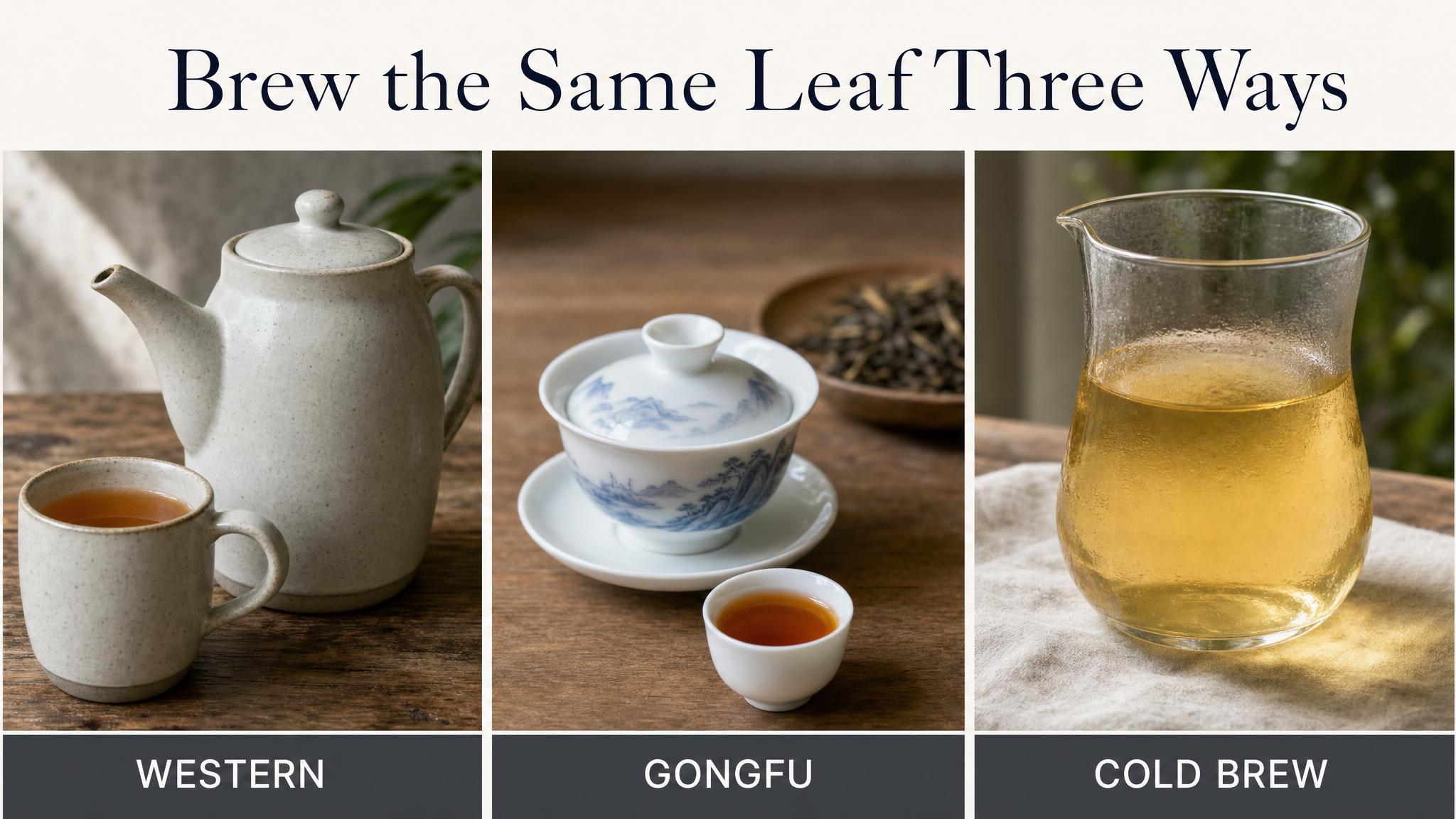
15-20 minutesInstructor simultaneously demonstrates 3 brewing methods (gongfu, Western, and pre-prepared cold brew) using identical tea. Students pair with neighbors to predict: which will extract fastest, which will taste strongest, which will be most balanced. After predictions, volunteer runners distribute small samples up each row. Pairs taste, compare actual results to predictions, and discuss why differences occurred based on temperature/time/ratio principles. Instructor leads brief whole-class debrief capturing key observations.
Water Chemistry Detective
12-15 minutesStudents receive 2-3 small samples of identical tea brewed with different water types (distilled, hard tap water, mineral-enriched). Working with neighbors, they observe color, aroma, and taste to hypothesize which water was used for each sample. Pairs jot down observations and reasoning. Instructor reveals water types and leads discussion on how specific minerals (calcium, magnesium, pH) affected extraction and perception. Class votes on most dramatic difference observed.
The Extraction Parameter Auction
10-12 minutesInstructor presents a brewing challenge (e.g., 'You want maximum caffeine but minimum bitterness'). Students have 100 imaginary 'points' to allocate across temperature, time, and ratio as their strategy. Pairs discuss and decide allocations, write on paper. Instructor collects quick show-of-hands: 'Who invested most in temperature? Time? Ratio?' Reveal actual optimal strategy with brief demonstration or data visualization. Winning pair explains reasoning. Repeat with 1-2 more scenarios (e.g., 'smoothest cold brew', 'strongest flavor in shortest time').
Steep Time Flavor Mapping
15-18 minutesDivide theatre into 6 sections (e.g., left/center/right × front/back). Each section receives the same tea steeped for different durations (30 sec, 1 min, 2 min, 4 min, 6 min, 8 min). Students in each section taste their assigned steep time, discuss with neighbors using provided flavor descriptors (astringency, sweetness, bitterness, body). Representatives from each section report key observations to class. Instructor plots findings on board to visualize extraction curve over time. Class discusses inflection points and optimal steep times for different preferences.
Temperature Forensics Challenge
10-12 minutesShow 3 samples of brewed tea with visibly different colors (actually brewed at 60°C, 80°C, 95°C). Students pair with neighbors to examine (color, if samples provided) and predict brewing temperature for each based on extraction principles. Pairs must justify reasoning using concepts of differential solubility (e.g., 'lighter color suggests lower temp because tannins extract less'). Quick pair-share time, then instructor reveals temperatures with brief explanation of which compounds extract at which temperatures. Bonus round: predict taste profile before sampling (if time allows).
Grandpa Style vs. Gongfu Debate Duel
8-10 minutesSplit theatre down the middle. Left side are 'Team Gongfu' (multiple short steeps, high precision), right side are 'Team Grandpa Style' (leaves stay in cup, continuous infusion). Present a scenario: 'You're at work with limited equipment.' Each side has 2 minutes to discuss with neighbors and prepare arguments for why their method is superior for THIS context using extraction kinetics principles. Volunteer spokespeople from each side present (1 min each). Class votes on most convincing argument. Instructor reveals trade-offs and contexts where each method shines. Optional: switch sides and debate opposite position.
Transcript
Imagine two cups of tea brewed from the same pouch of competition-grade Taiwanese Li Shan oolong—leaves that cost roughly forty dollars per ounce. The first cup is brewed gongfu style: six grams of leaf in a one-hundred-milliliter gaiwan, ninety degrees Celsius water, steeped for forty-five seconds. The liquor is luminous gold, intensely floral, with a long, buttery sweetness that seems to coat the inside of your mouth. The second cup uses the same leaf, but someone has tossed three grams into a three-hundred-fifty-milliliter mug, poured in furiously boiling water, and left it for seven minutes while checking email. The result is cloudy amber, aggressively bitter, and astringent enough to make your tongue feel like sandpaper.
[short pause]
Same leaf. Same day. Radically different cups. The difference is entirely in the brewing—and that means the difference is entirely in the chemistry of extraction. This chapter is about understanding that chemistry so well that you can make any tea sing, and diagnose what went wrong when it doesn't.
[short pause]
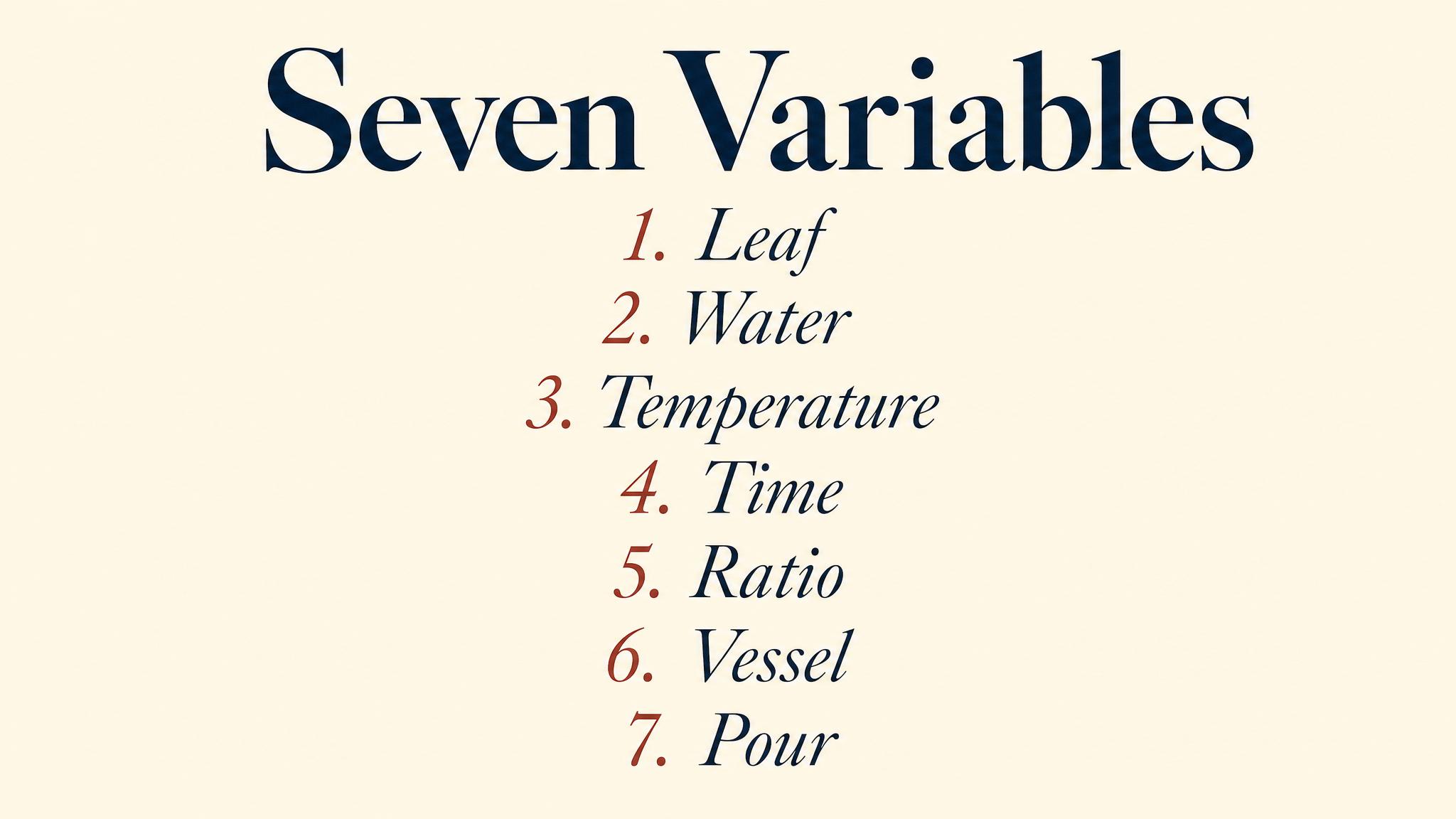
Tea brewing is, at its core, a selective dissolution problem. A processed tea leaf contains hundreds of water-soluble compounds—amino acids, alkaloids, polyphenols, sugars, organic acids, volatile aromatics—and the brewer's job is to coax the desirable ones into the water while leaving the unpleasant ones behind, or at least keeping them in balance. The three variables you control are water temperature, steeping time, and the leaf-to-water ratio. Change any one of them, and you change the cup.
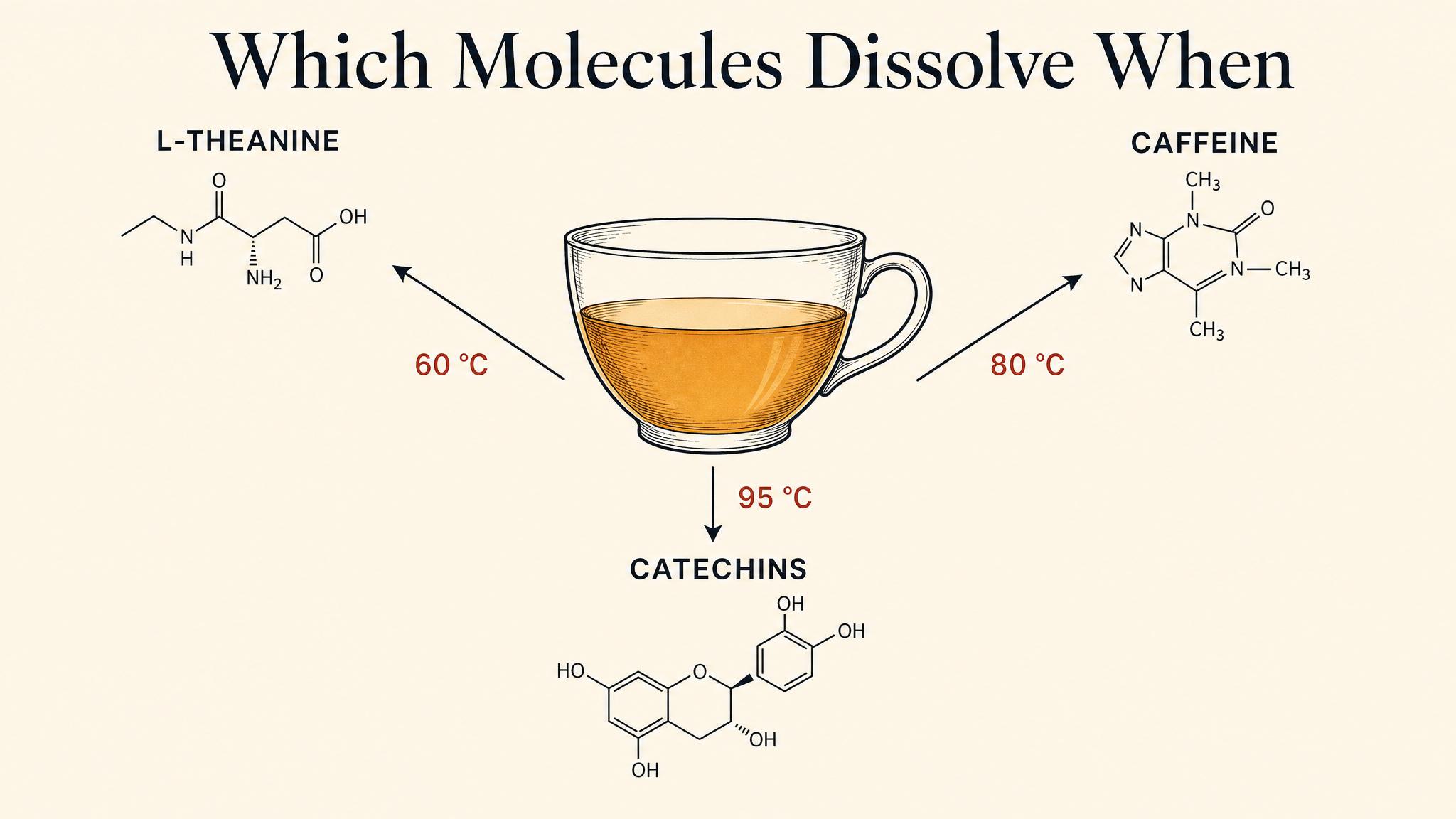
But here is the crucial insight that separates informed brewing from guesswork: different compounds dissolve at different rates and respond differently to temperature. This is what scientists call DIFFERENTIAL SOLUBILITY, and it is the single most important concept in practical tea brewing.
[short pause]
Let's focus on three families of compounds that dominate the flavor of any cup of tea.
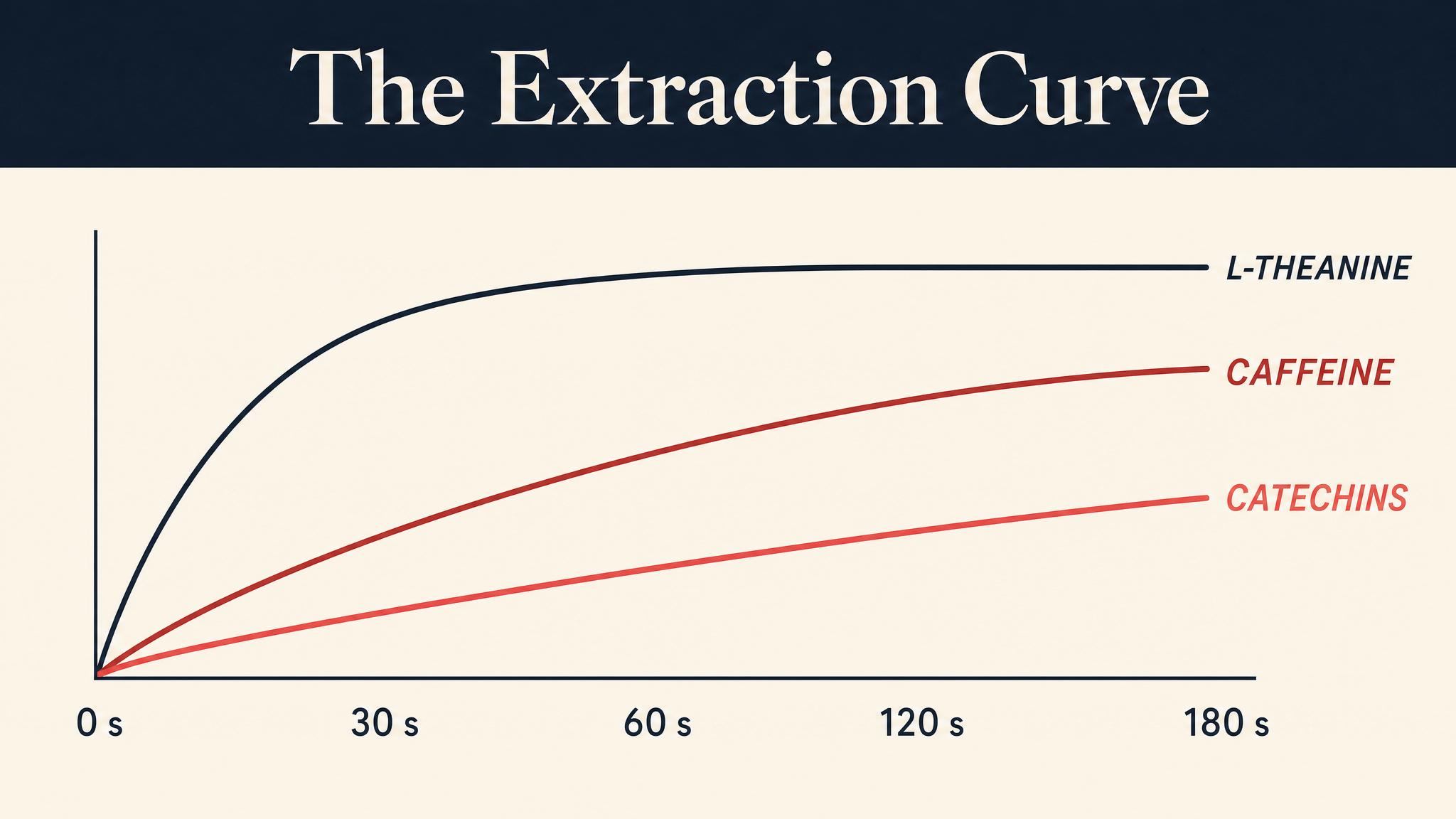
First, L-THEANINE—an amino acid nearly unique to Camellia sinensis. It contributes sweetness, umami richness, and a sensation the Japanese call kokumi—a sort of full-bodied depth. L-theanine is highly soluble and dissolves readily even in relatively cool water. Research by Koláčková and colleagues in 2024 showed that brewing temperature did not significantly affect L-theanine content; the amino acid dissolved primarily within the first five minutes regardless of whether the water was eighty degrees Celsius or one hundred degrees Celsius, and its structure remained stable across the sixty to one-hundred degree Celsius range.
Second, CAFFEINE—the alkaloid responsible for tea's stimulating effect and a contributor to perceived bitterness. Caffeine occupies a middle ground: it extracts relatively quickly—Lantano and colleagues in 2015 found it released within the first few minutes of black tea brewing—but its solubility is meaningfully temperature-dependent. Hotter water pulls more caffeine. Koláčková and colleagues in 2024 confirmed that caffeine showed significantly higher extraction at one hundred degrees Celsius compared to eighty degrees Celsius across all six tea types studied.
Third, CATECHINS—the major polyphenols in tea, responsible for bitterness, astringency, and the health-promoting antioxidant activity you've likely heard about. The catechin family is large, and its members behave differently. Labbé and colleagues in 2006 made a landmark distinction: some catechins are primarily time-dependent, dissolving steadily over longer steep periods, while others are time-and-temperature-dependent, requiring both heat and duration to extract fully. This is why a brief steep at moderate temperature yields sweetness without excessive bitterness: you've extracted the theanine and some caffeine, but left much of the catechin payload behind.
[short pause]
Şahin Nadeem and colleagues in 2015 captured this dynamic beautifully in their study of Turkish green tea: brewing at eighty-five degrees Celsius for three minutes yielded the highest E-G-C-G content—fifty point six nine milligrams per one hundred milliliters—and the highest sensory scores. Brew the same tea at ninety-five degrees Celsius for forty-five minutes, and E-G-C-G yield increases—but the panel found the tea unacceptably bitter. The chemistry is doing exactly what the math predicts; the question is what the drinker actually wants in the cup.
[short pause]
Consider this: A Japanese gyokuro is shade-grown, which dramatically increases its L-theanine content relative to catechins, as we learned in Chapter One. Given what you now know about differential solubility, why do you think the traditional brewing instructions call for water at just fifty to sixty degrees Celsius? What would change if you used boiling water?
[short pause]
Of the three brewing variables, temperature has the most dramatic effect on extraction chemistry. This is because of a principle from physical chemistry: the rate of dissolution roughly doubles for every ten degree Celsius increase in temperature. For a compound like E-G-C-G, which Labbé and colleagues in 2006 classified as time-and-temperature-dependent, the difference between seventy degrees Celsius and ninety degrees Celsius is not a gentle nudge—it is a roughly fourfold increase in extraction rate.
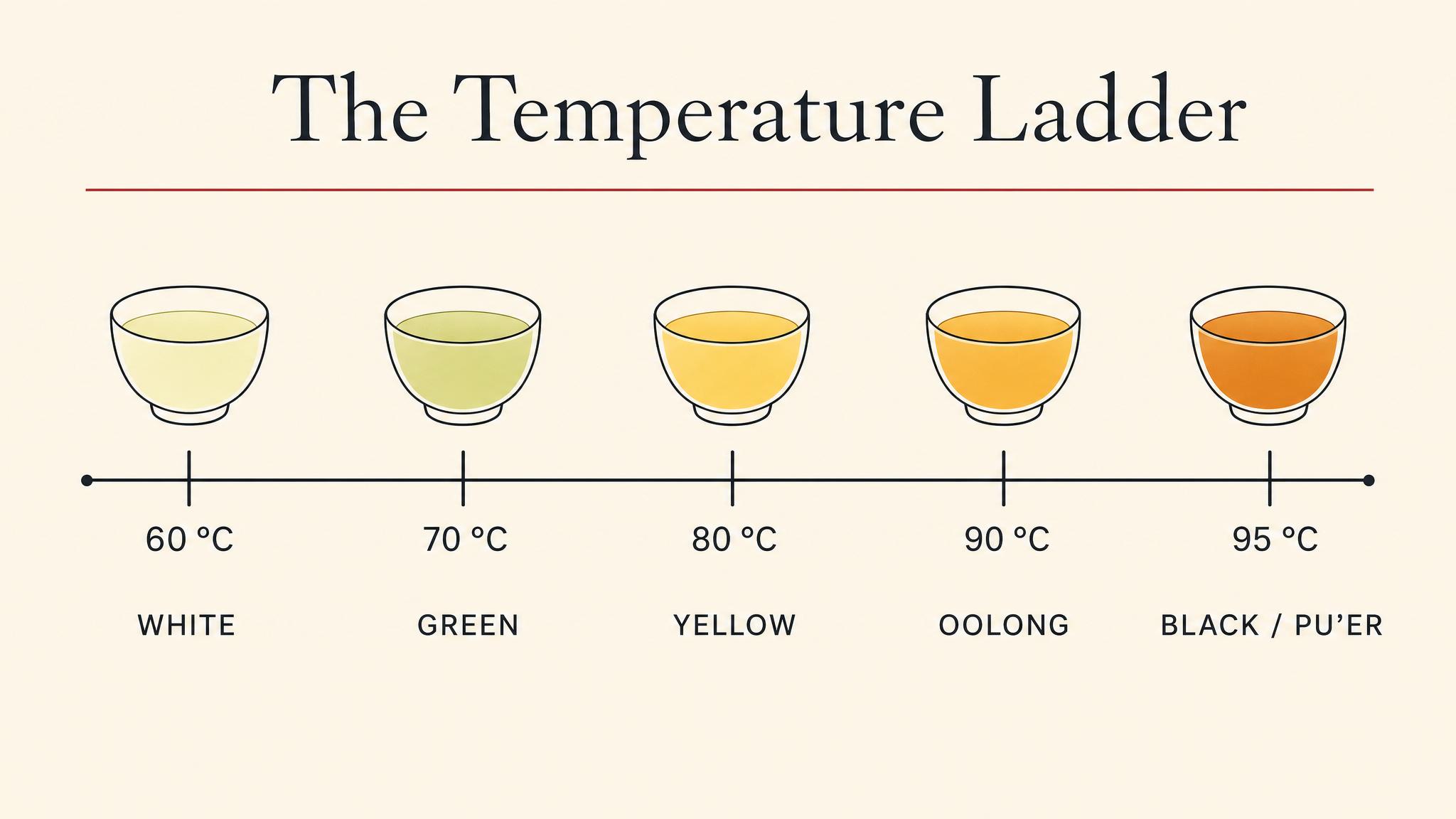
This is why temperature recommendations vary so widely across tea types. A delicate white tea or shade-grown Japanese green, loaded with L-theanine and low in catechins from its processing history, brews beautifully at sixty to seventy-five degrees Celsius: the amino acids dissolve freely, caffeine comes along gently, and the catechins remain largely in the leaf. A heavily roasted Wuyi Da Hong Pao, by contrast, has had many of its more volatile compounds transformed by fire, as Chapter Two explored. Its remaining flavor compounds—caramelized sugars, deeper phenolics, mineral-like notes—need the kinetic energy of near-boiling water to unlock. Brew it at seventy degrees Celsius and it will taste thin and muted; brew it at ninety-five degrees Celsius and it roars to life.
[short pause]
If temperature is the accelerator, time is the distance traveled. Lantano and colleagues in 2015 identified two distinct phases in black tea extraction: a rapid initial release—the first one to two minutes, when caffeine, gallic acid, and some catechins flood into solution—and a slower secondary phase, two to eight minutes, during which total polyphenols and flavonoids gradually climb. Most brewing traditions implicitly navigate these two phases. A thirty-second gongfu infusion captures the bright, aromatic first phase. A five-minute Western steep lets the second phase develop, building body and tannic structure.
[short pause]
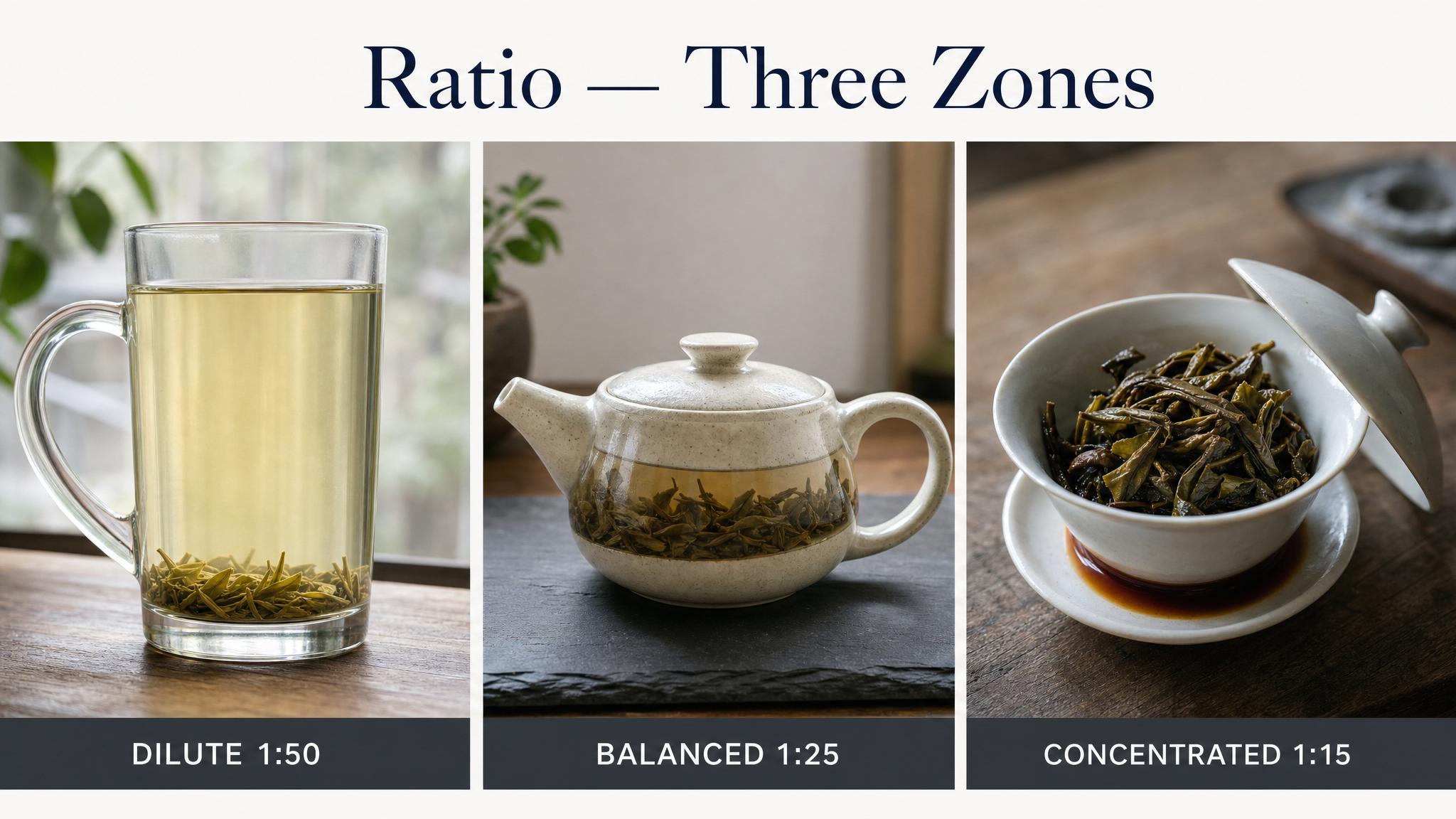
The leaf-to-water ratio determines both the concentration of the resulting liquor and the physical dynamics of extraction. More leaf in less water means each gram of leaf has less solvent available, so the solution saturates faster—producing an intense but shorter extraction. Less leaf in more water creates a dilute environment where extraction can continue longer before reaching equilibrium. Khokhar and Magnusdottir in 2002 demonstrated that the tea-to-water ratio, along with infusion time and agitation, was among the most significant preparation variables affecting final caffeine and polyphenol content in the cup.
This is the key to understanding why gongfu brewing uses a dramatically higher leaf ratio—often five to eight grams per one hundred milliliters—but very short steeps: the concentrated environment extracts flavor quickly and intensely, and the brewer controls the process by limiting time. Western-style brewing inverts this logic—a lighter ratio, roughly two grams per two hundred milliliters, and a longer steep, letting the dilute solution gradually accumulate flavor compounds.
[short pause]
Tea is roughly ninety-nine percent water. Yet most discussions about brewing obsess over leaf quality and technique while treating water as a neutral carrier. It is not. The mineral content of your brewing water is one of the most powerful—and most overlooked—influences on the final cup.
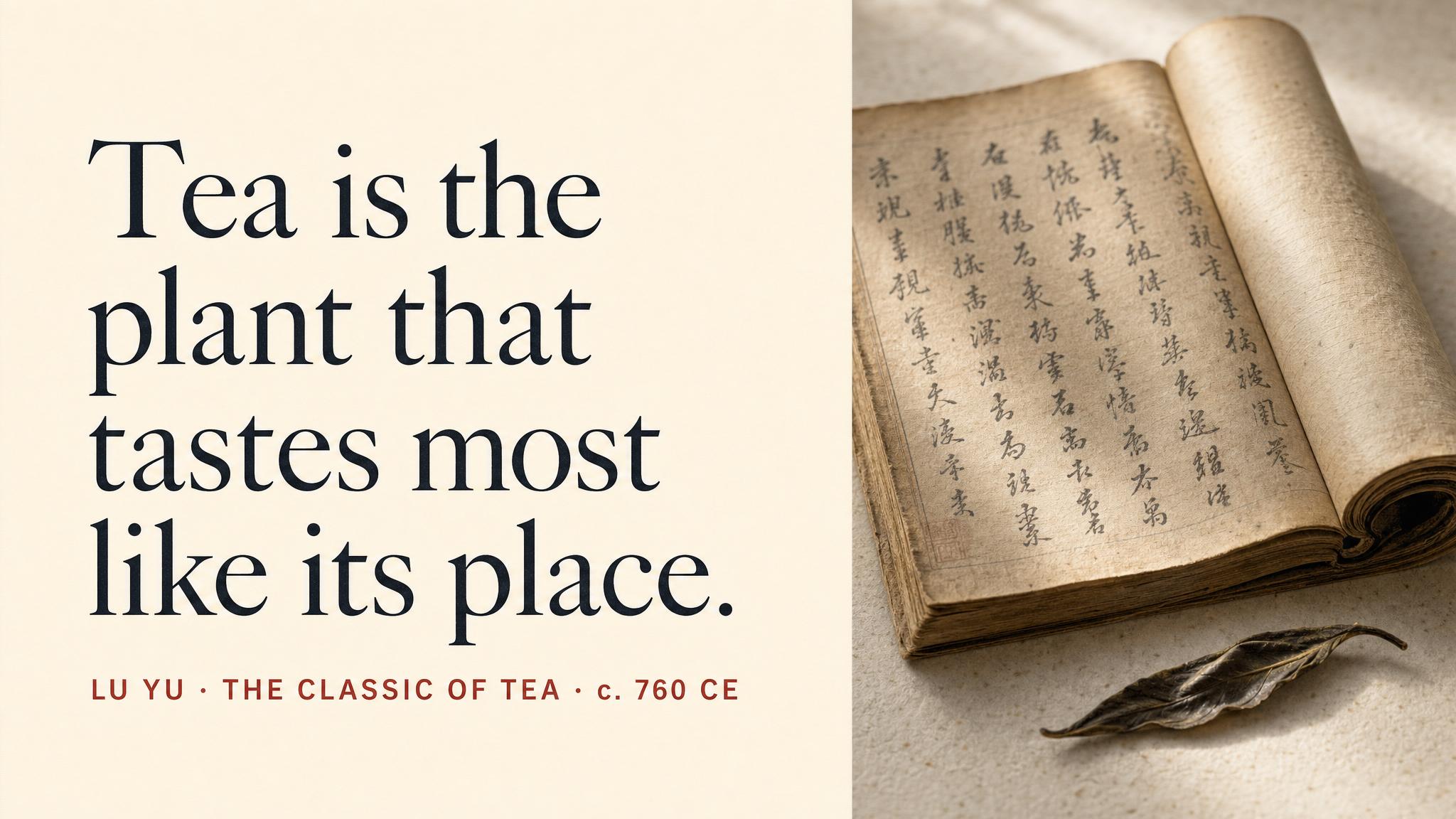
The legendary eighth-century Chinese tea sage Lu Yu devoted an entire section of his Cha Jing—Classic of Tea—to ranking water sources, placing mountain spring water first and well water last. This was not mysticism. The springs near great tea-growing regions—the Wuyi Mountains, the hills around West Lake in Hangzhou—happen to have mineral profiles that are chemically well-suited to tea extraction. Modern science has caught up to Lu Yu's intuition.
[short pause]
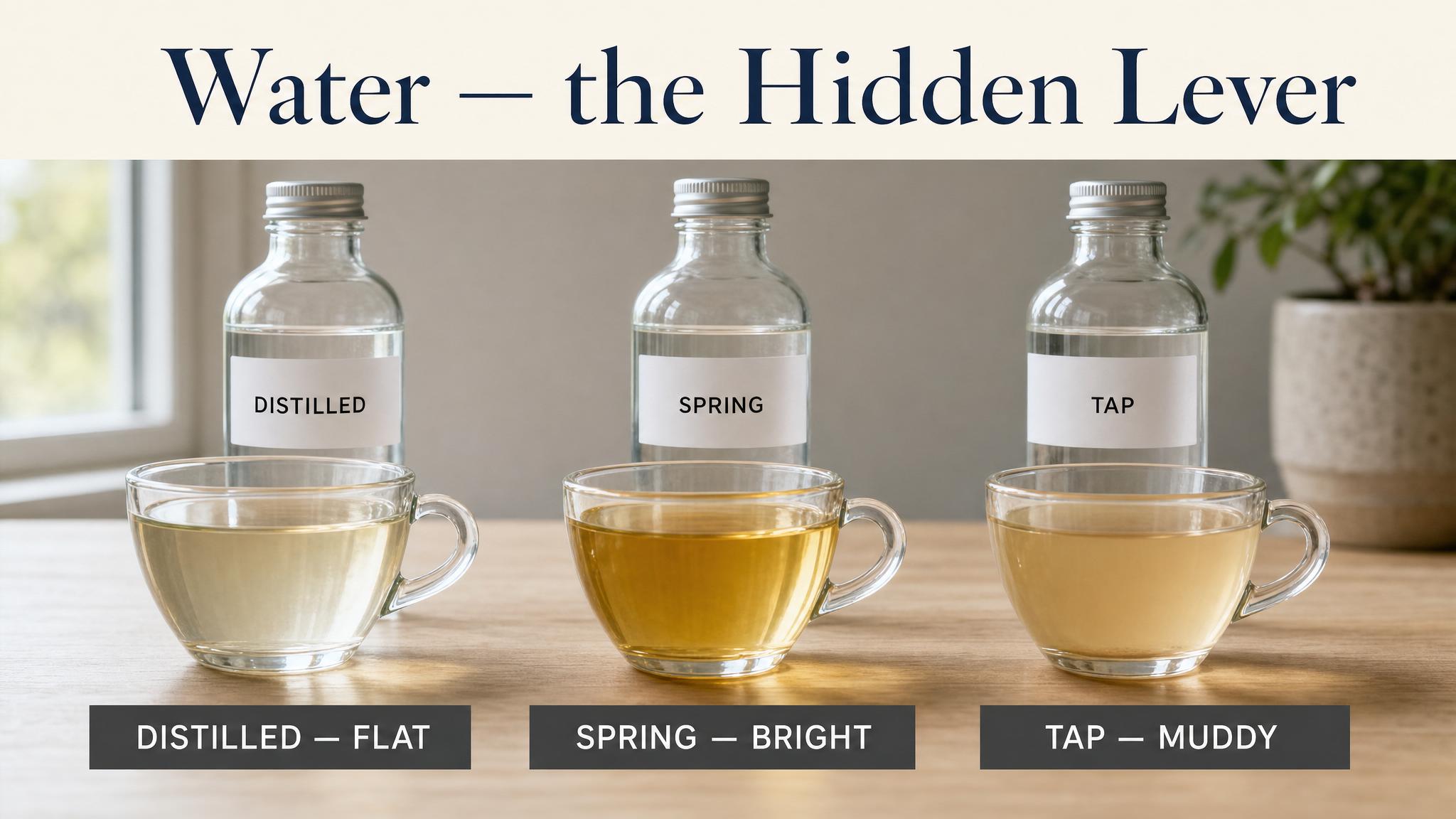
Franks and colleagues in 2019 conducted a pivotal study comparing green and black tea brewed with tap water, bottled water, and deionized water. The results were striking: brewing green tea with high-mineral tap water produced infusions with roughly half the E-G-C-G content of the same tea brewed with deionized or bottled water. The mineral content—particularly calcium—was binding with catechins and precipitating them out of solution, literally removing them from the drink. Paradoxically, this made the tap-water green tea taste less bitter and somewhat sweeter, because the compounds responsible for bitterness were no longer in the liquid. The chemistry was worse; the flavor, for some drinkers, was arguably better.
Three minerals matter most.
Calcium—at moderate levels, ten to forty parts per million, calcium can enhance perceived body and mouthfeel. At high levels, above eighty to one hundred parts per million, it complexes with polyphenols, forming insoluble precipitates that cloud the liquor and strip out flavor complexity, as Franks and colleagues found in 2019. Very hard water—London tap water, for instance, often exceeds two hundred parts per million calcium—can make delicate teas taste flat and muddy.
Magnesium—magnesium tends to brighten acidity and enhance perceived crispness. Bai and colleagues in 2023 found that mineral content and pH were the primary factors affecting volatile compound extraction, and magnesium's contribution to slightly lower pH environments may explain why certain mineral waters produce more aromatic cups.
Bicarbonates—bicarbonates raise pH, making water more alkaline, and have a pronounced dulling effect on aromatics. High-bicarbonate water tends to produce tea that tastes flat and one-dimensional, suppressing the bright, lifted notes that make great tea exciting. Bai and colleagues in 2023 concluded that water with a pH of six to seven and lower mineral content was most conducive to brewing green tea with full aromatic expression.
[short pause]
The practical takeaway is that the ideal brewing water occupies a Goldilocks zone: enough minerals to give the tea body and dimension, but not so many that they interfere with extraction or mute aromatics. For most teas, this means a total dissolved solids level of roughly fifty to one hundred fifty parts per million, a pH near neutral—six point five to seven point five—and relatively low bicarbonate content. Many dedicated tea drinkers in cities with hard tap water use filtered or lightly remineralized water for exactly this reason.
[short pause]
If high-calcium water reduces catechin extraction and makes green tea taste less bitter, could hard water actually be preferable for someone who finds green tea too astringent? What tradeoffs would they be accepting? Consider both flavor and nutritional extraction.
[short pause]
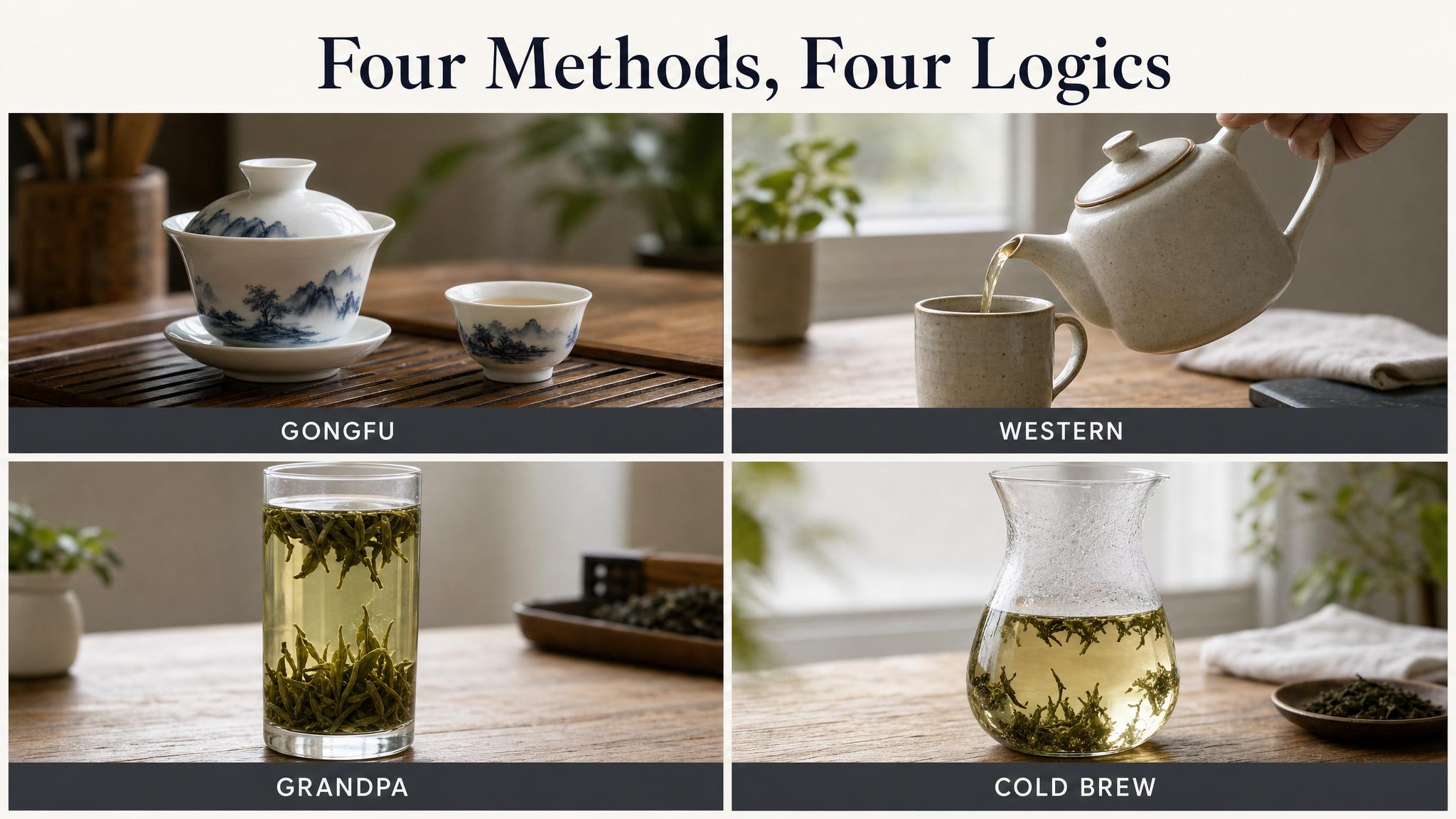
Every brewing method is, at bottom, a strategy for managing the extraction variables we've discussed. The world's tea traditions have arrived at strikingly different solutions—not because some cultures are right and others wrong, but because they are optimizing for different leaf types, different flavor goals, and different social contexts. Let's examine four major approaches.
Gongfu brewing—originating in the Chaozhou region of Guangdong province and refined across southeast China and Taiwan, gongfu brewing, meaning "brewing with skill," uses a high leaf-to-water ratio—typically five to eight grams per one hundred milliliters—small vessels like gaiwans or Yixing clay pots, near-boiling water, and very short steep times—often ten to thirty seconds for the first infusions, increasing gradually over many successive steeps. This approach is optimized for oolong and pu-erh teas, whose complex processing creates layers of flavor that reveal themselves sequentially across multiple infusions. Each steep extracts a slightly different balance of compounds as the leaf opens progressively.
Western-style brewing—the European tradition uses a lower leaf ratio—roughly two to three grams per two hundred milliliters—larger vessels like teapots or mugs, and a single steep of three to five minutes. This method aims to extract a complete, balanced cup in one go. It works well for C-T-C black teas and robust broken-leaf styles designed for exactly this kind of extraction, but can easily over-extract delicate whole-leaf teas if the brewer isn't careful with temperature and time.
Cold brewing—by removing heat from the equation entirely, cold brewing radically reshapes the extraction profile. Chen and Yen in 2014 demonstrated that cold-brewed green tea had significantly lower caffeine, E-G-C-G, and E-G-C content compared to hot-brewed versions—the cold water simply lacks the kinetic energy to dissolve these compounds efficiently. The result is a tea that is notably less bitter and less astringent, with a clean, sweet, and often surprisingly aromatic character. Cold brewing is not a lesser method; it is a different optimization that privileges smoothness and accessibility, making it ideal for teas with high inherent bitterness.
Grandpa style—perhaps the most unpretentious method of all: grandpa-style brewing involves placing a small amount of leaf directly into a tall glass, adding hot water, and drinking continuously—topping up with hot water as the level drops. The leaves sit in the liquid the entire time, creating a continuously evolving extraction. The first sips are light and aromatic; the middle is rich and full; as the leaf exhausts its soluble compounds, the later refills become gentle and sweet. It works best with teas that are forgiving of long steeping—many Chinese green teas, light oolongs, and white teas. It fails spectacularly with heavily catechin-rich teas that turn brutally bitter with continuous contact.
[short pause]
The key insight is that a tea's origin, explored in Chapter One, and processing, covered in Chapter Two, determine which method will best reveal its character. A heavily roasted Wuyi Da Hong Pao, with its deep, fire-transformed compounds, is built for gongfu: the sequential short steeps peel back layer after layer of mineral, caramel, and stone-fruit notes. The same method applied to a delicate Darjeeling first flush would overwhelm the leaf's muscatel brightness with excessive concentration. Conversely, cold brewing a shou pu-erh—a tea whose earthy depth depends on compounds that need heat to dissolve—would produce little more than faintly brown water.
[short pause]
Consider this: if you brewed the same sencha using Western style—three grams per two hundred milliliters, eighty degrees Celsius, three minutes—and gongfu style—five grams per one hundred milliliters, seventy degrees Celsius, thirty seconds—which method would produce a more bitter cup? Which would have more umami? Take a moment to think through your prediction based on what you've learned about extraction kinetics.
[short pause]
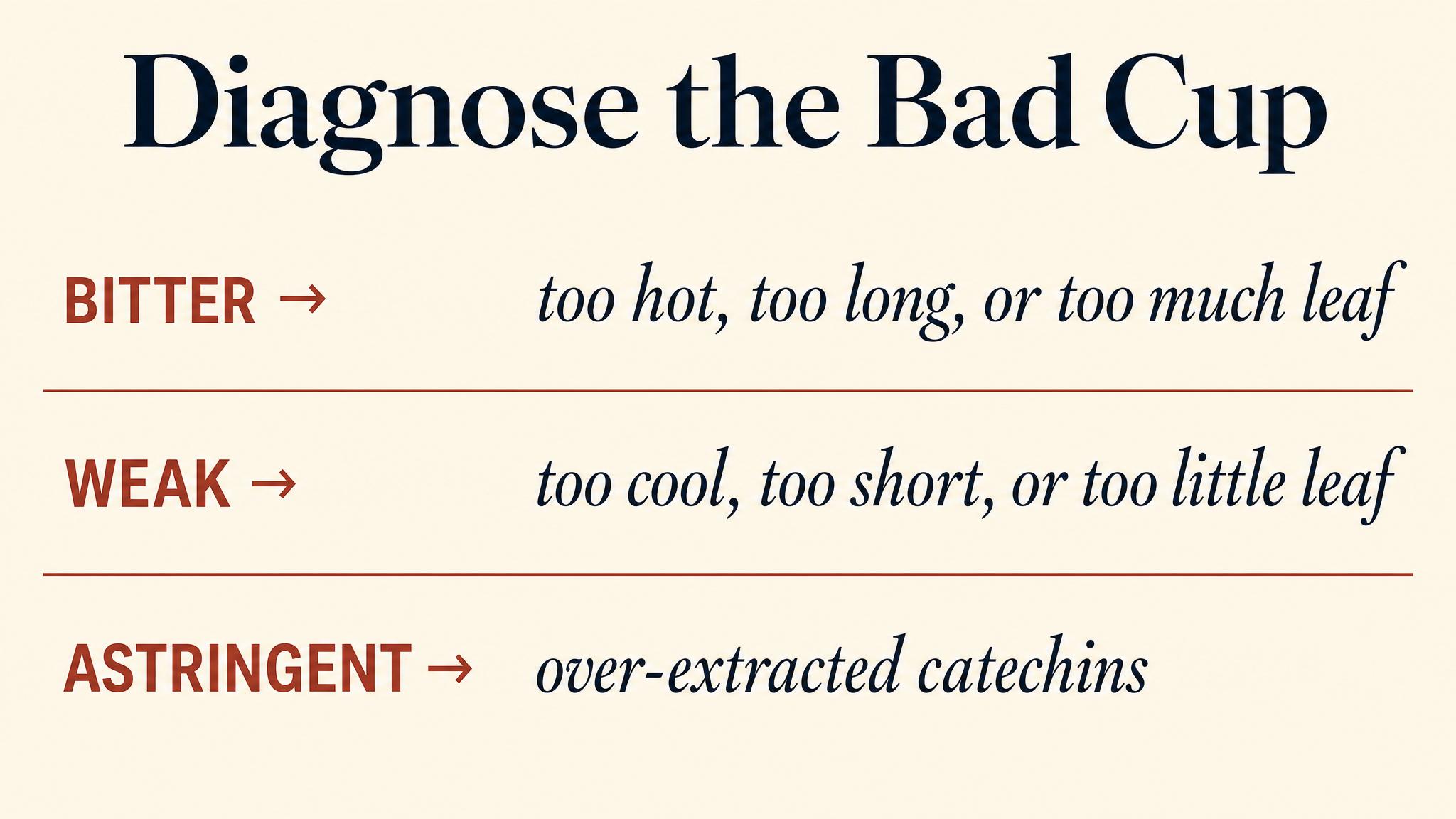
Armed with an understanding of extraction kinetics, you can now work backwards from a problem in the cup to its cause—and its fix.
Too bitter? You've extracted too many catechins. The most likely culprits are water that was too hot, a steep that was too long, or both. Lower your temperature by five to ten degrees Celsius, shorten your steep, or both. If you're using very hard water, the bitterness might actually be lower than it should be—calcium is precipitating catechins—which means the remaining bitterness is from caffeine. In which case, reduce temperature specifically.
Too thin or watery? You haven't extracted enough soluble material. Increase your leaf-to-water ratio first—the simplest fix—then consider raising temperature or extending time. If you're using very soft or distilled water, the lack of mineral content may be producing a flat character that reads as thin. Try water with moderate mineral content, as Bai and colleagues suggested in 2023.
Great aroma but no body? Volatile aromatics are often the first compounds released, while body-building polyphenols and sugars need more time and heat. Let the steep go slightly longer, or raise the temperature by five degrees Celsius. You may also be under-leafing.
Cloudy or murky? This often signals high calcium content in the water reacting with tea polyphenols to form insoluble complexes, as Franks and colleagues described in 2019. Switch to filtered or lower-mineral water. Cloudiness can also result from cooling—a phenomenon called cream down in black tea, where caffeine-tannin complexes precipitate as the liquid cools. This is cosmetic, not a flavor defect.
[short pause]
The mastery is not in following a recipe. The mastery is in tasting the result, understanding what happened, and knowing which variable to adjust.
[short pause]
The terroir of a tea, explored in Chapter One, shapes its raw chemical composition. Processing, covered in Chapter Two, transforms that composition through oxidation, heating, and shaping. Brewing—this chapter—is the final act: the moment when a brewer's choices about water, temperature, time, and ratio determine which of those chemicals actually end up in the cup. A great tea badly brewed is a waste. An ordinary tea brewed with understanding and care can be a revelation.
The variables are not independent. A tea grown at high altitude, rich in L-theanine from cool growing conditions and minimal oxidation, calls for lower temperatures and shorter times to preserve its sweetness—and moderate-mineral water that won't suppress its delicate aromatics. A fully fermented shou pu-erh, its compounds already deeply transformed by microbial activity, demands near-boiling water and sequential gongfu steeps to unlock its layered earthiness. The brewing parameters are not arbitrary; they are logical consequences of the leaf's history.
As Khokhar and Magnusdottir concluded in their comprehensive survey in 2002, the preparation method—more than the tea variety, more than the grade—is the dominant determinant of what ends up in the final beverage. The leaf provides the potential. The water and the brewer realize it.
[short pause]
Let's review the key takeaways.
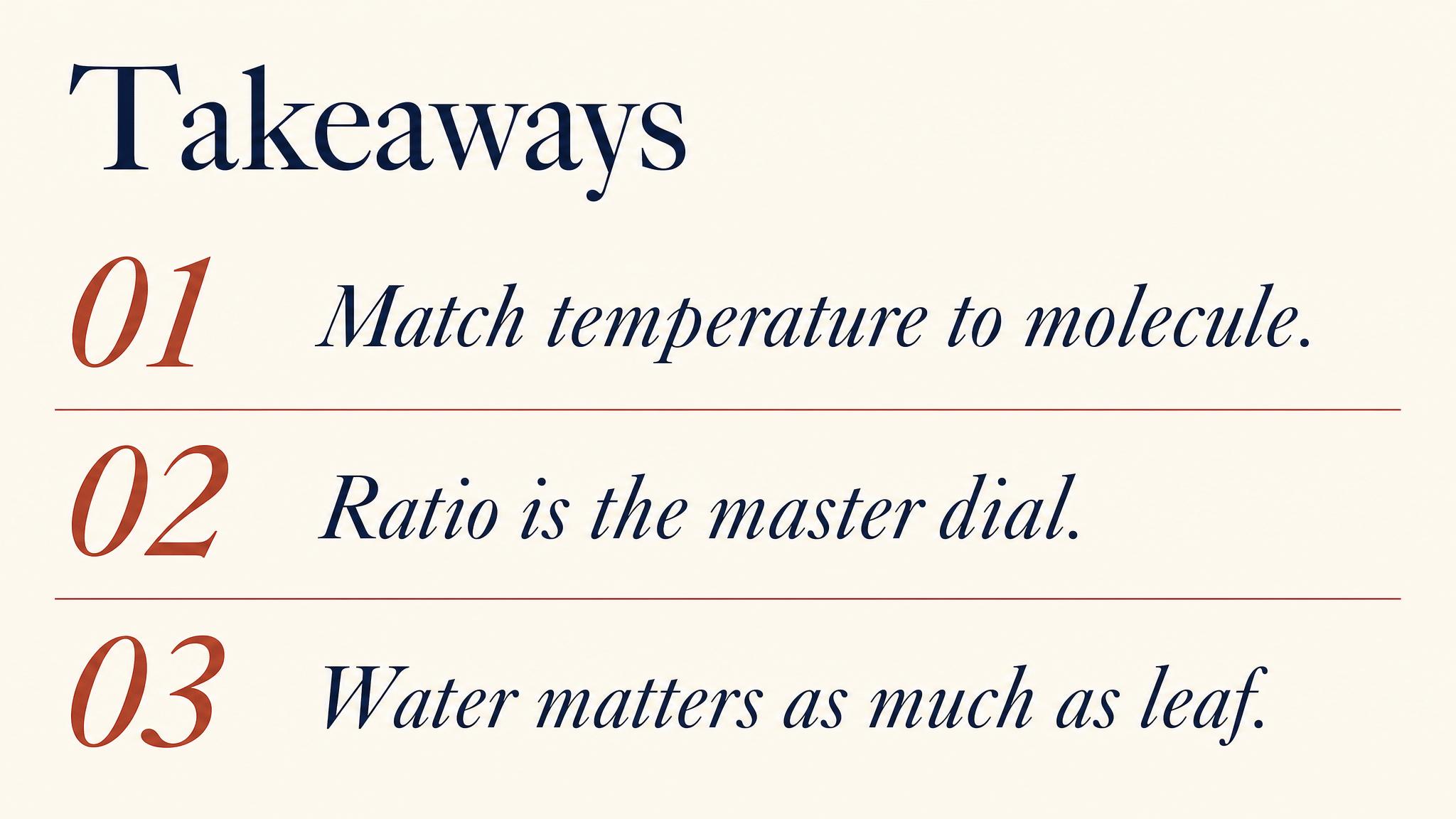
Tea compounds extract at different rates and temperatures: L-theanine dissolves quickly at low temperatures; catechins require more heat and time; caffeine sits between the two. This differential solubility is the foundation of all brewing strategy.
Temperature is the most powerful brewing variable, roughly doubling extraction rate for every ten degree Celsius increase—which is why delicate teas need cooler water and roasted teas need hotter water.
The leaf-to-water ratio determines concentration and extraction dynamics; gongfu brewing, with its high ratio and short time, and Western brewing, with its low ratio and long time, are inverse strategies for the same chemical puzzle.
Water mineral content profoundly affects extraction: calcium can precipitate polyphenols, magnesium brightens acidity, and bicarbonates dull aromatics. The ideal brewing water sits in a moderate mineral range—fifty to one hundred fifty parts per million total dissolved solids.
Every brewing method—gongfu, Western, cold brew, grandpa style—is a specific solution to the extraction equation, optimized for different leaf types and desired outcomes.
Brewing problems like bitterness, thinness, or cloudiness can be diagnosed and fixed by understanding which extraction variable is out of balance.
[short pause]
You now understand how to control extraction and optimize the cup. But what exactly are you tasting when you take that first sip? In Chapter Four, we turn to the science of sensory evaluation—how your tongue, nose, and brain collaborate to construct the experience of flavor, and how to develop a systematic vocabulary for describing what you perceive. You'll learn why aroma matters more than taste, what mouthfeel really is, and how to taste tea with the precision of a professional.
Training Your Tongue
You have now followed tea from mountain to cup. But the journey is incomplete until the liquid meets a human nervous system—and that system is astonishingly complex, deeply personal, and trainable. This chapter explores…
Black coffee drinkers: Do you actually enjoy the taste or are you just suffering for the aesthetic?
Hot take
Would you rather lose your sense of taste or your sense of smell for a week? (Choose wisely — one matters WAY more than you think)
Would you rather
If cilantro tastes like soap to you, is that your genes being broken or everyone else's taste buds being boring?
Unpopular opinion?
Your friend insists they can't tell the difference between cheap and expensive chocolate. Are they lying to themselves or just being honest?
Real talk
Can you actually train yourself to like bitter coffee and hoppy beer, or is that just Stockholm syndrome with extra steps?
Debate time
Is being a 'supertaster' a superpower or a curse? (Like, you can taste EVERYTHING but also you probably hate most vegetables)
Quick poll
The Genetic Lottery: PTC Taste Test
10-12 minutesStudents receive PTC/PROP test strips and taste them to discover their genetic taster status (non-taster, taster, or supertaster). After tasting, instructor conducts live polling (show of hands or phone poll) to visualize the genetic distribution across the room. Students then turn to neighbors (1-2 seats away) to compare experiences and discuss why some taste nothing while others find it unbearable. Instructor reveals the genetic basis and connects to tea tasting (why some people are sensitive to bitterness in green tea).
Nose vs. Mouth Showdown
8-10 minutesStudents receive a small tea sample (or flavor sample). First round: taste while pinching nose closed. Second round: release nose and taste again. Students immediately discuss with neighbors (turn to 1-2 people nearby) what changed. Instructor facilitates whole-class debrief asking 'Who experienced a dramatic difference?' and 'What flavors appeared when you released your nose?' This viscerally demonstrates that most 'taste' is actually retronasal smell. Instructor explains the anatomical pathway while students can still feel the sensation.
Triangle Test Detective
15-18 minutesStudents receive three coded tea samples (A, B, C) — two are identical, one is different. Working with immediate neighbors (2-3 people in adjacent seats), students taste all three and debate which is the odd one out. They must articulate WHY using specific sensory vocabulary (astringent, floral, grassy, umami, etc.). Instructor polls the room on their conclusions, then reveals the answer and discusses which compounds create the detectable differences. Groups that correctly identified AND used precise vocabulary can earn recognition.
Trigeminal Body Mapping
10-12 minutesStudents taste a highly astringent tea (or something with capsaicin/menthol). Instead of just 'tasting,' they map WHERE they feel sensations: tongue, cheeks, throat, nasal cavity, lips. Students mark locations on a simple mouth diagram (projected or in handout), using different symbols for different sensations (tingling, drying, heat, cooling). Students compare maps with neighbors, discussing variations. Instructor explains trigeminal nerve activation and why these sensations aren't technically 'taste' but crucial to flavor experience.
Vocabulary Auction: Describe to Win
12-15 minutesStudents taste a complex tea sample. The challenge: describe it using as many SPECIFIC, TECHNICAL terms as possible (not vague words like 'good' or 'nice'). Students write their descriptions (1-2 minutes), then share with neighbors to create a combined 'best description.' Instructor cold-calls on several groups to share their descriptions while projecting a vocabulary reference list. Class votes on which description is most precise and evocative. Instructor dissects winning descriptions to show how vocabulary captures specific sensory pathways (e.g., 'vegetal' = volatile aldehydes, 'astringent' = tannin-protein binding).
Cultural Flavor Time Machine
8-10 minutesStudents taste a specific tea or flavor (e.g., jasmine, pu-erh, matcha). Instructor asks: 'What does this remind you of? What memories or associations arise?' Students share with immediate neighbors their cultural or personal associations. Instructor then cold-calls on 5-8 students from different backgrounds to share with the whole class, writing key themes on the board. The goal: reveal how the SAME chemical stimulus creates wildly different experiences based on cultural context and memory. Instructor connects this to learned versus innate responses in taste perception.
Transcript
Imagine two friends sharing a pot of aged sheng pu-erh. One leans back and sighs: "It's like walking through a wet forest after rain — mushrooms, camphor, a sweet mineral finish." The other frowns: "All I get is bitter and musty." They are drinking the same tea, brewed identically, poured from the same pot. Neither is wrong. The liquid in their cups is chemically identical, but the nervous systems receiving that liquid are not — and the languages those nervous systems have been trained to use are worlds apart.
This chapter is about the space between the cup and the experience. You have traced tea from mountain terroir through withering, oxidation, and firing. Now we follow those hard-won chemical compounds on their final journey: across the tongue, up through the nasal passages, and into the brain. Along the way, you will discover that what you casually call "flavor" is actually a symphony performed by three distinct sensory systems, shaped by your genes, your culture, and your practice. The good news? The tongue — and the brain behind it — can be trained.
[short pause]
The Three Pillars of Flavor
When you sip a cup of high-mountain oolong and describe its "flavor," you are unconsciously integrating information from three independent sensory channels. Understanding these channels separately is the first step toward using them deliberately. The neuroscience of flavor perception reveals that what we experience as a single, unified sensation is actually a construction — an elaborate piece of neural engineering assembled in real time from taste, smell, and touch, as Hummel and Welge-Lüssen described in 2012.
The first pillar is GUSTATION — taste proper — which operates through receptor cells clustered in taste buds on the tongue and palate. These receptors detect only five basic qualities: sweet, bitter, sour, salty, and umami. That's it. Five channels. If you have ever wondered why pinching your nose makes food taste "flat," you have already intuited that taste alone is remarkably limited.
The second pillar is RETRONASAL OLFACTION — the aroma that reaches your olfactory epithelium not through your nostrils (that is orthonasal olfaction, the sniff before the sip) but from inside your mouth, rising up through the nasopharynx as you chew, swish, and swallow. This single pathway accounts for the vast majority of what we call flavor. Remarkably, the brain processes retronasal and orthonasal signals differently: retronasal odors are routed through the gustatory cortex alongside taste signals, binding them into a unified percept, while orthonasal odors are not, as Blankenship and colleagues showed in 2019. Your brain literally treats aroma-from-the-mouth as part of taste.
The third pillar is the TRIGEMINAL NERVE system, which detects mechanical and chemical irritation throughout the mouth and nasal cavity. This is not taste and not smell — it is the system responsible for the pucker of astringency, the cooling sensation of menthol, the body and weight of a full liquor, and the tingling warmth of certain spices. In tea, it is arguably the most distinctive pillar of all.
[short pause]
Taste: Five Channels, Infinite Teas
Let us begin on the tongue. Each of the five basic tastes corresponds to a distinct class of receptor proteins, and each plays a specific role in the tea experience.
Sweet and Umami: The T-one-R Family
Sweetness in tea — the lingering HUIGAN or returning sweetness prized in Chinese tea evaluation — is detected by the T-one-R-two plus T-one-R-three heteromeric receptor. UMAMI, the savory, brothy depth that defines shade-grown Japanese teas, is detected by a closely related pair: T-one-R-one plus T-one-R-three. These receptors share a subunit, T-one-R-three, which is why sweet and umami can interact and modulate each other, as Zhao and colleagues found in 2003. The discovery of these receptor families was a watershed moment: it proved that taste qualities are not emergent properties of neural patterns but are encoded at the very first molecular contact between food and body.
For tea lovers, the umami receptor holds particular significance. L-theanine, the amino acid unique to Camellia sinensis and most abundant in shade-grown leaves, directly activates the T-one-R-one plus T-one-R-three receptor. Narukawa and colleagues demonstrated this in 2014 using cell-based assays and site-directed mutagenesis, showing that L-theanine binds to the Venus flytrap domain of T-one-R-one — the same binding pocket used by glutamate, the prototypical umami compound. This is why a well-made gyokuro or competition-grade matcha can taste uncannily like dashi broth: the same receptor is firing.
Bitter: The Sentinel Sense
Bitterness in tea comes primarily from caffeine and certain catechins. Humans express approximately twenty-five different bitter taste receptors, known as the T-A-S-two-R family, each tuned to different molecular structures. This is evolution's broadest alarm system — bitterness signals "potentially toxic, proceed with caution." But as any tea drinker knows, bitterness is not simply negative. Balanced bitterness provides structure, complexity, and the contrast that makes sweetness more vivid. In fact, the interplay between the bitterness of catechins and the umami of L-theanine is one of the defining aesthetic tensions in tea, as Eldeghaidy and colleagues noted in 2021.
Sour and Salty
Sourness, or acidity, and saltiness play supporting roles in tea. Slight acidity brightens the cup — you notice it in Darjeeling's muscatel character or the lively tang of a sun-dried white tea. Mineral salts from soil contribute subtle salty notes that experienced tasters describe as part of a tea's "terroir signature." Neither dominates, but both shape the background against which other tastes emerge.
[short pause]
Consider your favorite tea. Can you isolate which of the five basic tastes are most prominent? Now think about what you usually call its "flavor" — the floral notes, the nuttiness, the earthiness. Those qualities are not taste at all. They are aroma, arriving through retronasal olfaction.
[short pause]
Retronasal Olfaction: Where Most of "Flavor" Lives
Here is a claim that surprises most people: if taste provides the skeleton of flavor, retronasal olfaction provides the flesh, the skin, and the clothing. Researchers estimate that seventy to eighty percent of what we perceive as flavor is actually aroma detected retronasally. The olfactory epithelium contains roughly four hundred types of odorant receptors, compared to taste's five modalities, giving it an enormous palette for discrimination.
When you take a sip of tea, warming the liquid in your mouth causes volatile compounds to vaporize. As you swallow or exhale, these vapors are pushed upward through the nasopharynx to the olfactory epithelium. The brain receives this signal simultaneously with taste input and fuses them into a single experience. Green and colleagues demonstrated in 2012 that congruent taste-aroma pairings enhance each other: a sweet taste makes a vanilla retronasal aroma smell sweeter, and the aroma in turn makes the taste seem more intense. These multisensory "flavor objects" are greater than the sum of their parts.
This has direct practical implications for tea tasting. The hundreds of volatile compounds generated during processing — linalool from withering, geraniol from oxidation, pyrazines from roasting — are detected almost entirely through retronasal olfaction. When a professional taster slurps tea loudly, they are not being rude; they are aerating the liquid to maximize volatile release across the palate. When they exhale slowly through the nose after swallowing, they are extending the retronasal window, allowing late-emerging aromatics to register.
[short pause]
The act of slurping forces air across the surface of the tea in the mouth, volatilizing aroma compounds and driving them into the retronasal passage. It is physics in service of perception.
[short pause]
Understanding the orthonasal-retronasal distinction also explains a common experience: a tea that smells intensely floral when you inhale the steam from your cup — that's orthonasal — may taste less floral than expected when you drink it — that's retronasal. The two routes activate different neural circuits, as Blankenship and colleagues showed in 2019, and may emphasize different components of a complex aroma blend. This is why professional tasters evaluate both the "lid aroma" and the "in-mouth flavor" as separate attributes.
[short pause]
The Trigeminal Dimension: Astringency, Body, and Texture
The third sensory pillar is often the least discussed but the most physically felt. The trigeminal nerve — the largest cranial nerve — threads through the entire oral and nasal cavity, detecting pressure, temperature, and chemical irritation. In tea, its signature sensation is ASTRINGENCY: that dry, puckering, gripping feeling that is emphatically not a taste.
For years, astringency was loosely classified as a tactile sensation caused by tannins precipitating salivary proteins, reducing lubrication in the mouth. That mechanical account is not wrong, but it is incomplete. Schöbel and colleagues provided the crucial evidence in 2014: using nerve block studies in human subjects, they demonstrated that astringency perception was abolished when the trigeminal nerve was anesthetized but persisted when taste nerves were blocked. Furthermore, they showed that tea catechins — particularly galloylated catechins like E-G-C-G — directly activate trigeminal ganglion neurons via G-protein coupled signaling. Astringency is an active neural signal, not merely a loss of lubrication.
Not all astringency is created equal. Liu and colleagues established in 2022 a hierarchy of astringent potency among tea catechins: E-C-G, then E-G-C-G, then G-C-G, then C-G, then E-G-C, then E-C, then G-C, then C. Galloylated catechins — those bearing a gallate ester group — are consistently more astringent than their non-galloylated counterparts. Even more intriguingly, different polyphenols create qualitatively different astringent sensations — catechins produce a "rough" or "grainy" astringency, while flavonol glycosides create a "velvety" or "silky" mouthfeel. This explains why two teas with similar total polyphenol content can feel completely different in the mouth: the ratio of catechin types matters enormously.
Beyond astringency, the trigeminal nerve contributes to the sensation of BODY — the weight or viscosity of tea in the mouth — and to cooling or warming sensations from certain volatile compounds. The "thick" mouthfeel of a dense aged pu-erh, the "thin" clarity of a high-elevation white tea, the cooling "menthol" finish of certain Wuyi yancha — all are mediated by this third sensory channel.
[short pause]
Try this at home: brew two cups of the same green tea, one steeped for thirty seconds and one for three minutes. The overbrewed cup will have more catechins extracted. Notice how the difference is primarily a trigeminal sensation — a drying, gripping astringency — not a change in the basic taste or aroma profile. You are feeling the trigeminal nerve at work.
[short pause]
Your Genes, Your Cup: Variation in Taste Perception
Understanding the three pillars of flavor raises a discomforting question: if two people possess the same receptor systems, why do they describe the same tea so differently? Part of the answer is genetic.
The most studied example is the T-A-S-two-R-thirty-eight gene, which encodes a bitter taste receptor sensitive to compounds containing a thiourea group. This gene has two common haplotypes: P-A-V, associated with high bitter sensitivity, and A-V-I, associated with low sensitivity. Individuals who are P-A-V slash P-A-V homozygotes — approximately twenty-five percent of many populations — are often called SUPERTASTERS. They experience certain bitter compounds with intense, sometimes overwhelming force. A-V-I slash A-V-I homozygotes — roughly twenty-five percent — are nontasters of these specific compounds. The remaining fifty percent are heterozygotes with intermediate sensitivity, as Campa and colleagues found in 2019.
Risso and colleagues analyzed T-A-S-two-R-thirty-eight variation in 2016 across five thousand five hundred eighty-nine individuals from one hundred five global populations and found evidence of ancient balancing selection — evolution has actively maintained both sensitivity and insensitivity variants in human populations for hundreds of thousands of years, suggesting both confer advantages in different ecological contexts. The global distribution of these haplotypes is not random: population-level differences in bitter sensitivity are real, measurable, and historically shaped.
What does this mean for tea? A supertaster encountering a heavily catechin-rich tea — a rough-processed Assam, an overbrewed sencha — may find the bitterness genuinely unbearable, while a nontaster sipping the same cup perceives only mild bitterness and may instead notice sweetness and body more prominently. Neither is "wrong." They are receiving different neural signals from the same molecules. This has implications for tea preference, brewing habits, and even the cultural evolution of tea preparation methods.
[short pause]
Beyond Genes: Culture, Context, and the Cup
Genetics sets the range; experience tunes the instrument. Cultural background profoundly shapes taste perception — not just preferences, but actual sensory thresholds. Trachootham and colleagues demonstrated this vividly in 2018 in a cross-cultural study comparing Thai and Japanese adults: the Thai group had significantly higher thresholds, meaning lower sensitivity, for all five basic tastes, likely shaped by lifelong exposure to intensely spiced, strongly flavored cuisine. The Japanese group showed markedly greater umami sensitivity — unsurprising in a culture that has cultivated umami-rich ingredients for centuries.
Context matters too. The color of the cup influences perceived flavor intensity. Expectation shapes perception: being told a tea is "rare" or "award-winning" genuinely alters the sensory experience by priming attention to positive attributes. Mood, fatigue, hydration, and the time of day all modulate receptor sensitivity. Even the altitude at which you are tasting — by affecting olfactory receptor function — can shift flavor perception.
None of this makes sensory evaluation unreliable. It makes it human. The solution is not to pretend these variations do not exist but to develop a shared vocabulary and structured method that allows people with different sensory equipment to communicate meaningfully about what they experience.
[short pause]
Have you ever strongly disagreed with someone about a food or drink? Consider whether the disagreement might reflect genuine differences in perception — different receptor genetics, different cultural calibration — rather than differences in "taste" or sophistication. How might this insight change how you discuss tea with others?
[short pause]
Building a Tasting Vocabulary
Professional tea evaluation traditions around the world converge on a common insight: subjective experience becomes communicable when structured by systematic vocabulary. The goal is not to replace personal experience with jargon but to give you tools for noticing more, remembering more, and sharing more precisely.
The Five Dimensions of Evaluation
Across Chinese gongfu evaluation, British trade cupping, and Japanese tea ceremony assessment, five dimensions appear consistently:
Appearance — the color, clarity, and viscosity of the liquor; the shape and color of dry and wet leaves.
Aroma — both orthonasal, that's lid aroma and steam aroma, and retronasal, the in-mouth fragrance. Described using analogy: floral, vegetal, roasted, fruity, earthy, marine, mineral.
Taste — the five basic tastes, their intensity, and their sequence over time.
Mouthfeel — trigeminal sensations: astringency, whether rough, silky, or velvety; body, whether thin, medium, or thick; and textural qualities like oily, crisp, or chalky.
Finish — the aftertaste and how it evolves. Chinese tasters prize huigan, or returning sweetness; chaqi, the bodily sensation of the tea; and the duration of flavor after swallowing.
[short pause]
Zhu and colleagues developed in 2019 a twenty-seven-term lexicon for Hunan fuzhuan brick tea using trained panelists and quantitative descriptive analysis, demonstrating that even complex, fermented dark teas can be consistently evaluated when assessors share a calibrated vocabulary. Their work showed that both traditional Chinese cupping methods and modern sensory science approaches achieved high inter-rater consistency when vocabulary was standardized.
Tradition-Specific Approaches
Chinese evaluation emphasizes the temporal arc of the experience — how the tea changes from first infusion to fifth, and from the initial sip through the lingering aftertaste. The concepts of huigan, yanyun or rock rhyme in Wuyi oolong, and chaqi or tea energy extend evaluation beyond the purely sensory into the bodily and even the aesthetic.
British trade cupping prioritizes consistency, defect detection, and grading. Leaves are weighed precisely, water is standardized, steeping time is exact. The vocabulary focuses on manufacturing quality: "brisk," a positive astringency indicating fresh oxidation; "bakey," overheated during firing; "malty," a desirable character in Assam.
Japanese evaluation places umami at the center. In competition gyokuro judging, a rich, savory, almost marine depth is the highest quality marker — a sensory ideal that directly reflects the L-theanine content built up through shade growing, which, as we have seen, activates the T-one-R-one plus T-one-R-three umami receptor, as Narukawa and colleagues demonstrated in 2014.
[short pause]
From Knowledge to Practice
Sensory literacy is a skill, not a talent. Research consistently shows that trained tasters do not have "better" taste buds — they have better attention and better vocabulary. Training reshapes the cognitive frameworks you apply to sensory data, not the data itself. A novice and a master tasting the same aged sheng pu-erh receive the same neural signals; the master has learned to parse those signals into meaningful categories, to notice the camphor note beneath the earthiness, to track the astringency as it softens across steepings.
This is good news. It means your sensory world can expand. Every time you taste tea deliberately — pausing to separate aroma from taste from mouthfeel, naming what you notice, comparing your notes with others — you are building the neural architecture of expertise. The compounds are already in the cup. The receptors are already on your tongue. What we are training is the bridge between sensation and understanding.
[short pause]
Key Takeaways
"Flavor" is not a single sense but a construction from three distinct systems: gustation, or five basic tastes; retronasal olfaction, hundreds of volatile compounds; and trigeminal sensation, astringency, body, and texture.
Retronasal olfaction — aroma rising from inside the mouth — contributes the majority of perceived flavor and is processed by the gustatory cortex, unlike orthonasal smell.
Specific tea compounds map to specific receptors: L-theanine activates T-one-R-one plus T-one-R-three for umami, catechins activate trigeminal neurons for astringency, and volatile compounds reach olfactory receptors retronasally.
Genetic variation in T-A-S-two-R-thirty-eight creates genuine differences in bitter perception — supertasters and nontasters experience the same tea differently at the receptor level.
Cultural exposure, context, and expectation further modulate perception across all five basic tastes, as demonstrated in cross-cultural research.
A structured evaluation framework — appearance, aroma, taste, mouthfeel, finish — enables meaningful communication about subjective sensory experience.
Sensory expertise is built through deliberate attention and vocabulary development, not through innately "better" taste buds.
[short pause]
Looking Ahead
Now that you can name what you taste and understand why others may taste differently, we turn in Chapter Five to the cultural architectures built around tea tasting. From the meditative silence of Japanese chanoyu to the raucous communality of Moroccan mint tea service, every tea culture has developed rituals that frame the sensory experience you've just learned to parse. The question shifts from "What am I tasting?" to "What does this tasting mean?"
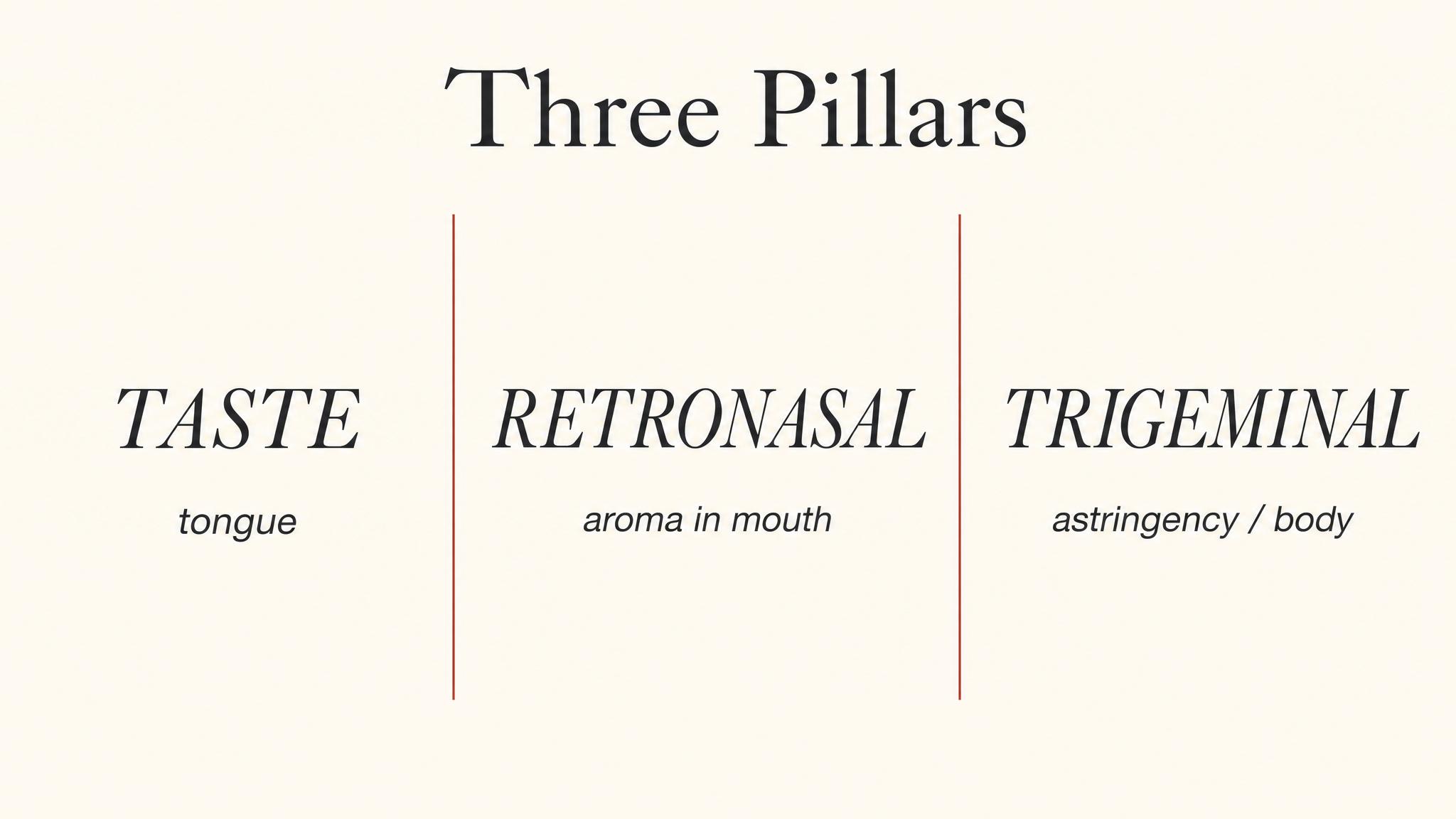
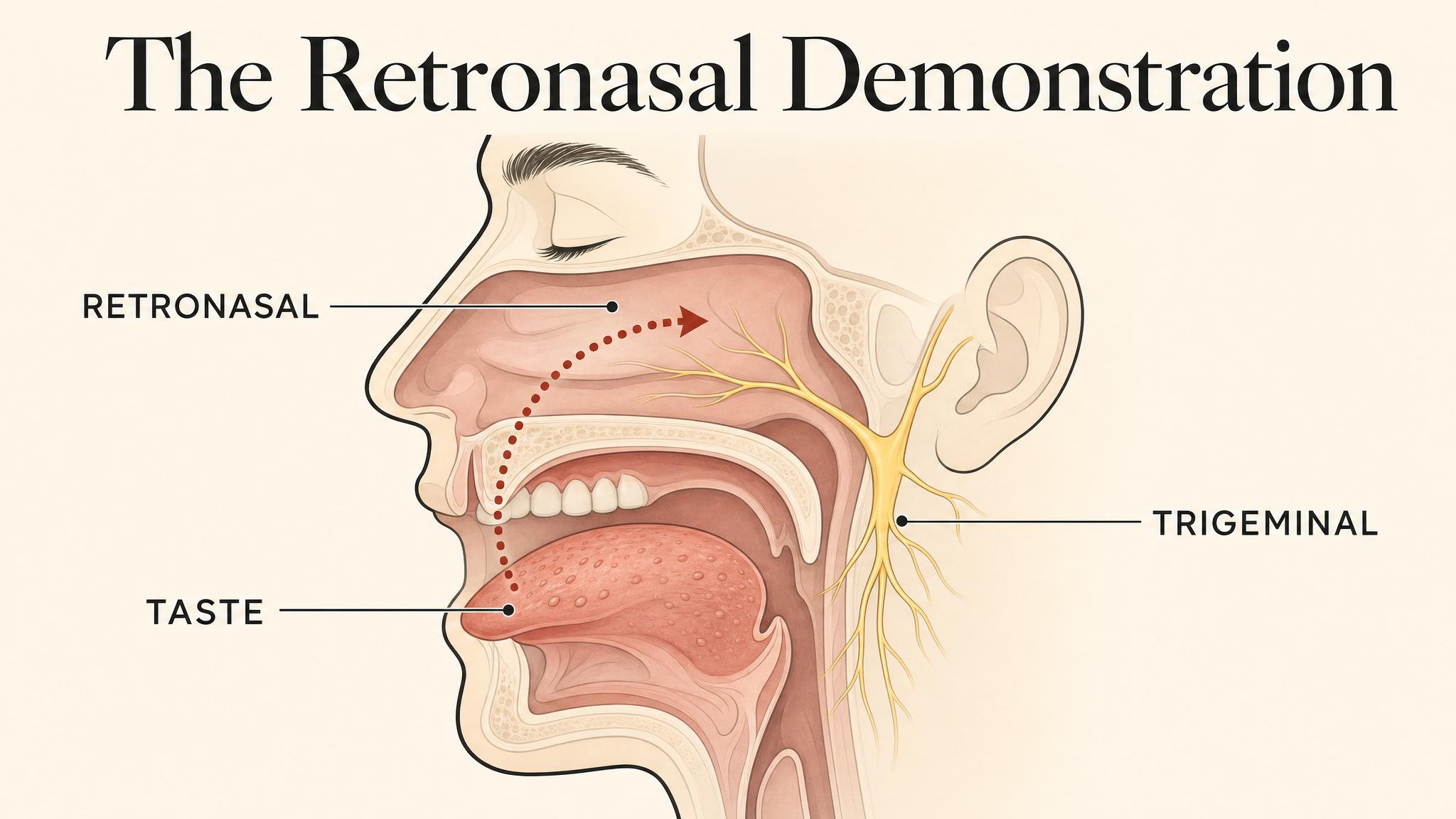
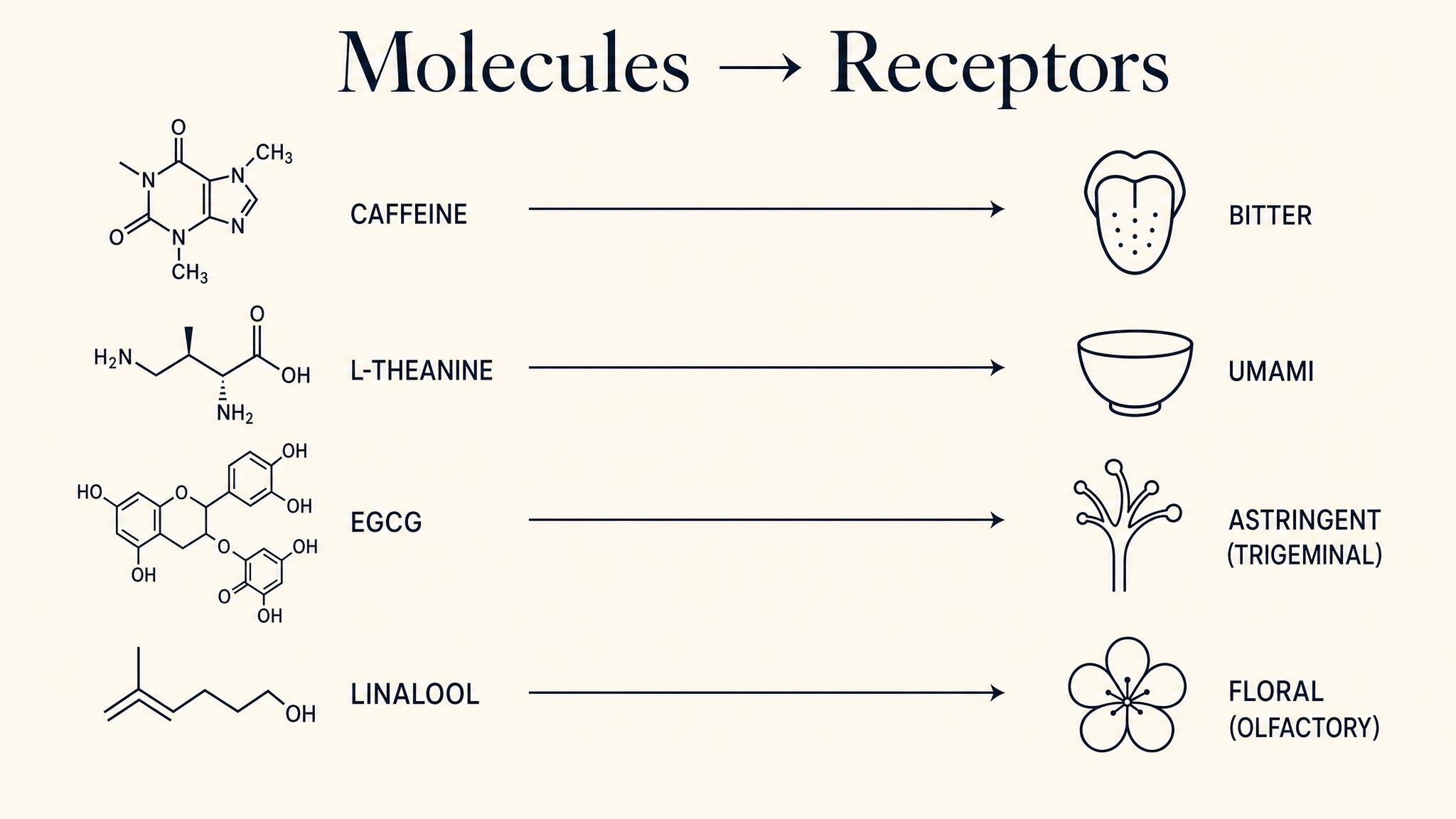
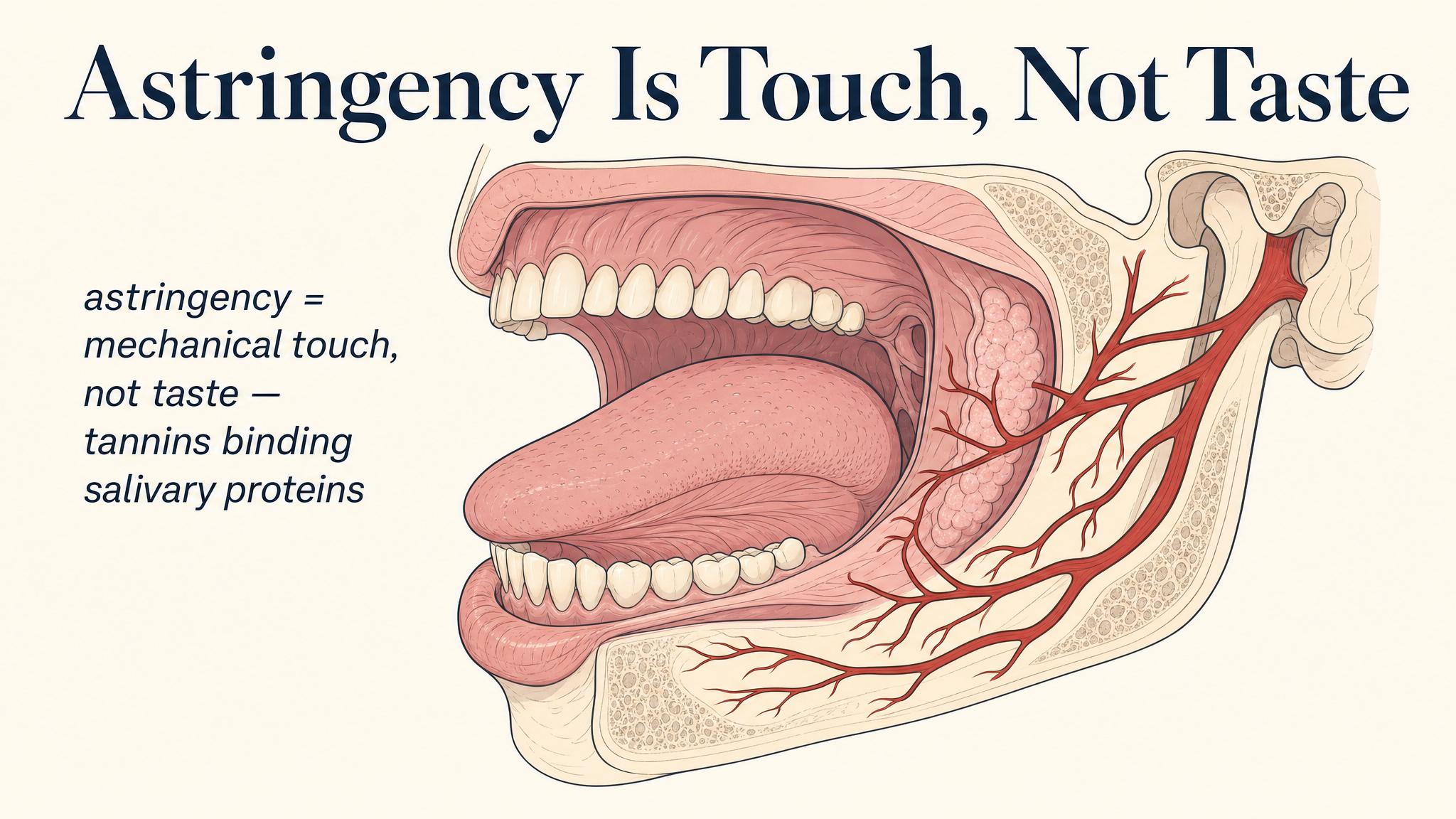
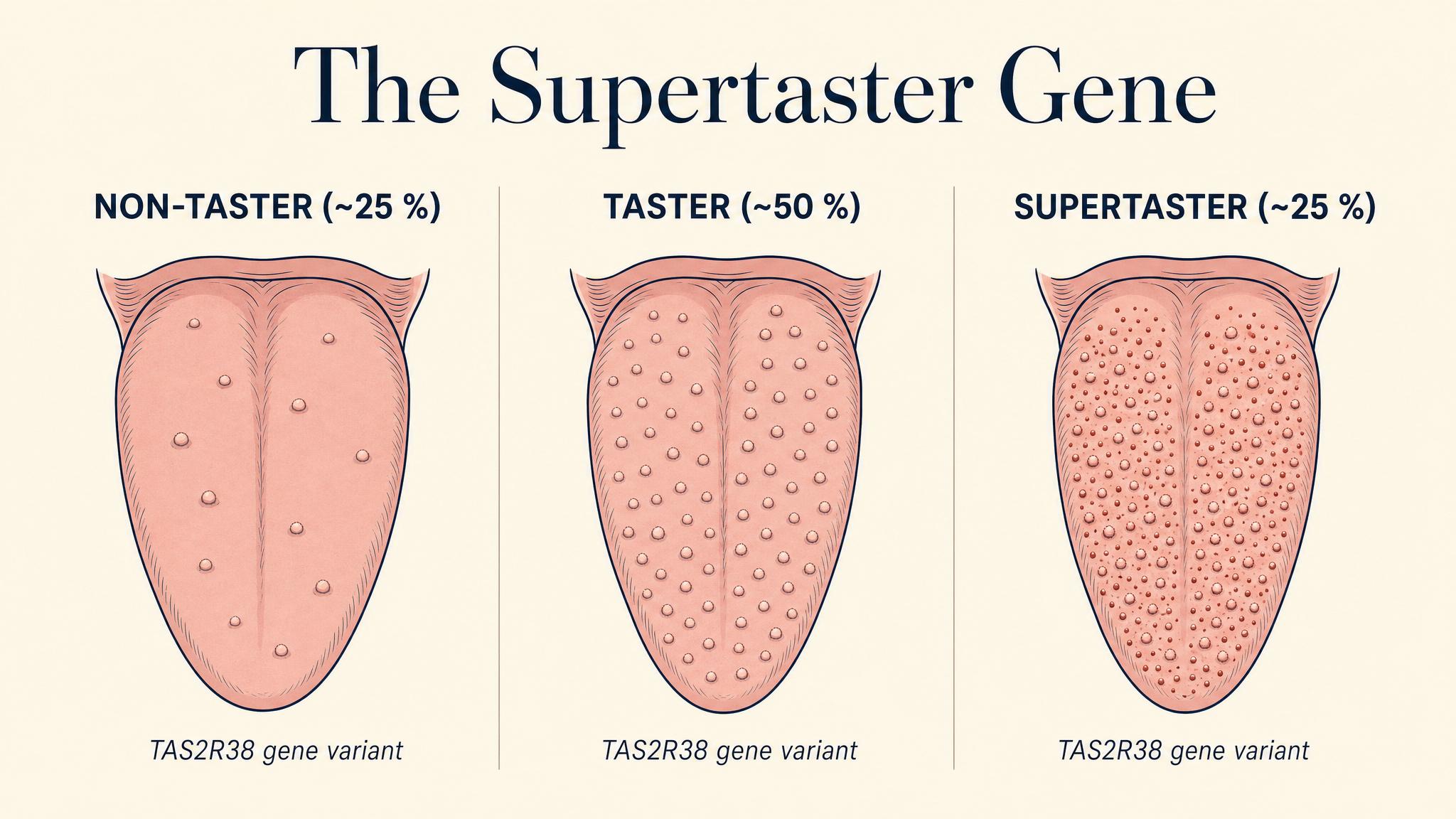
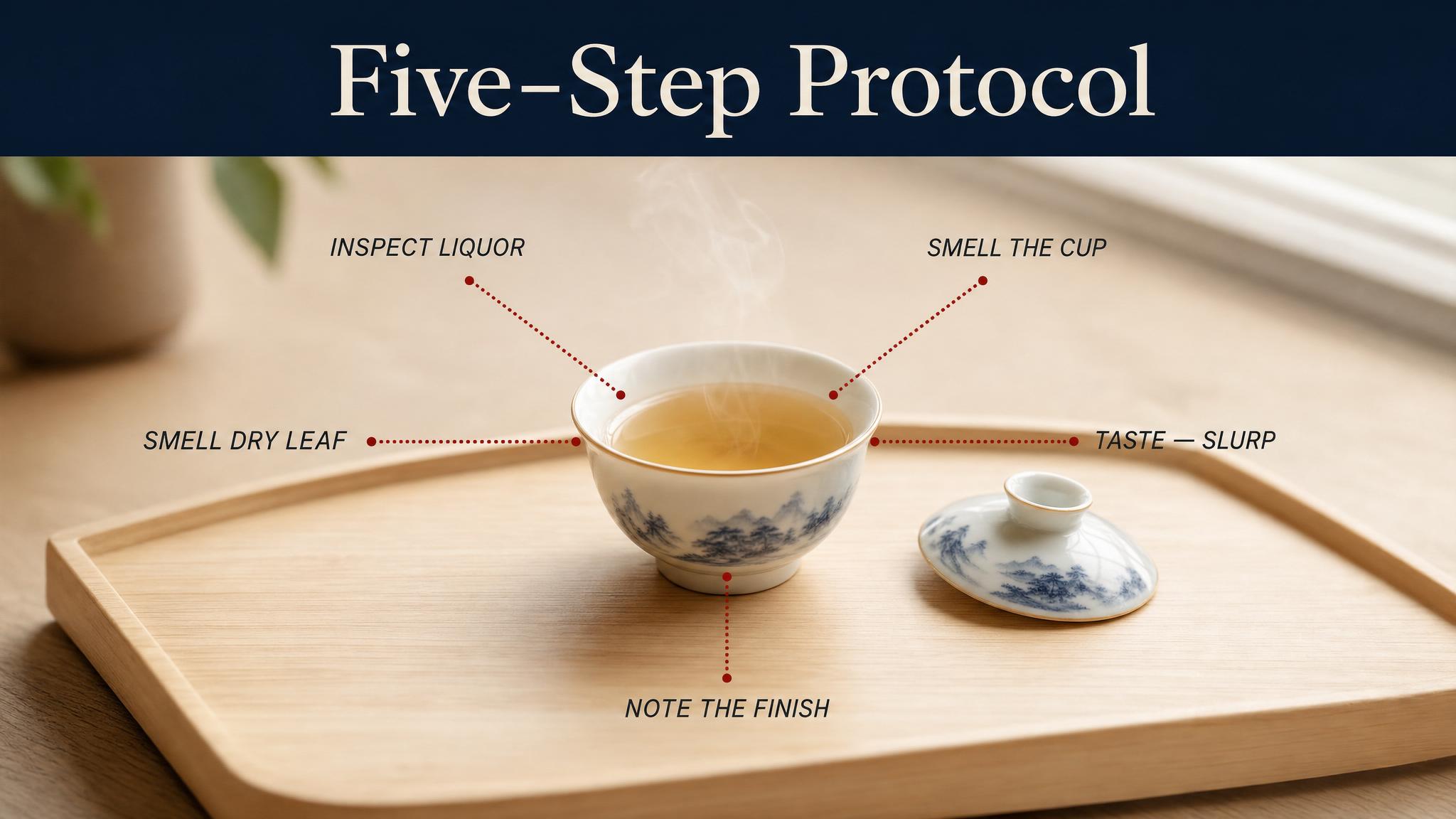
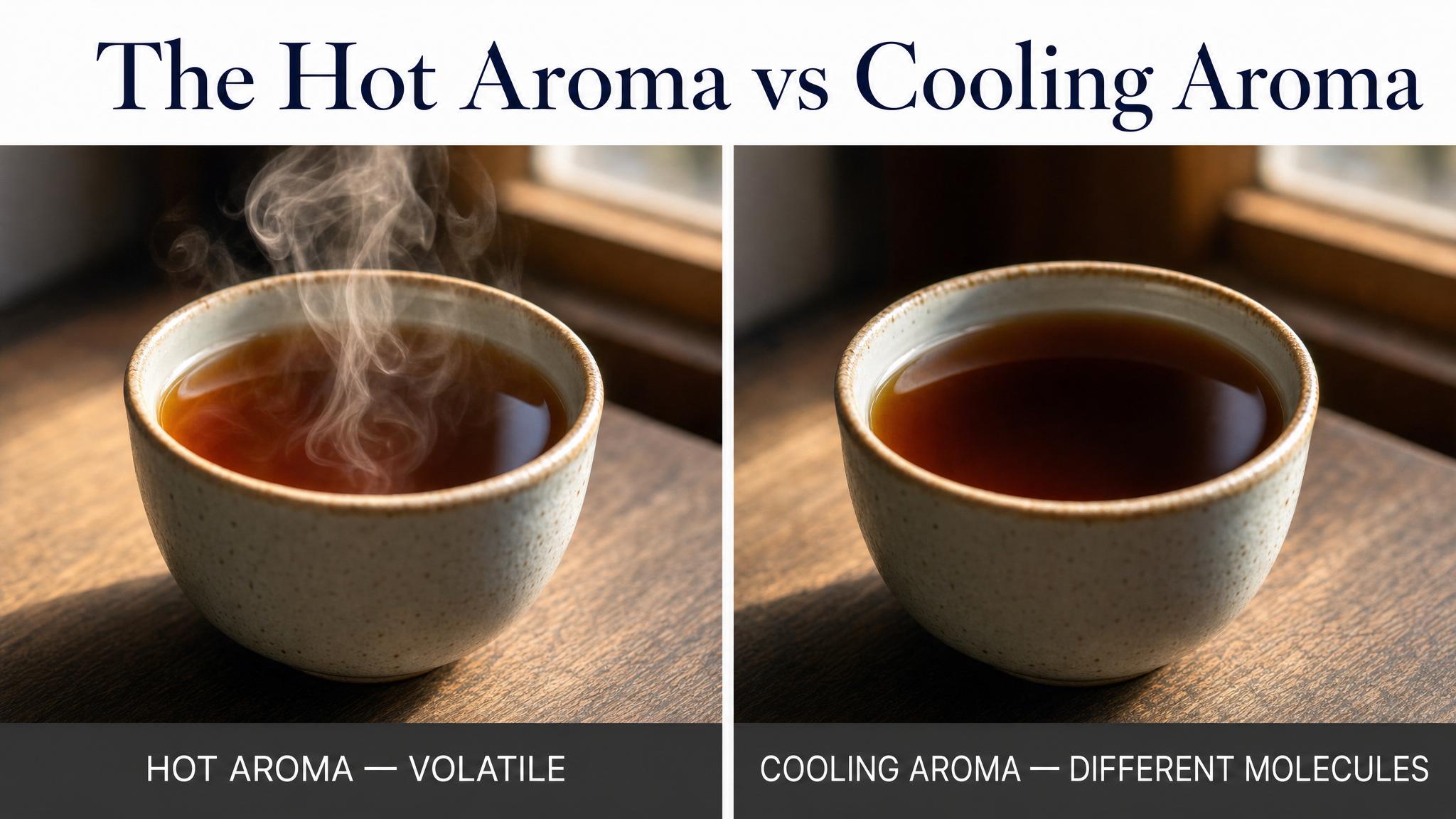
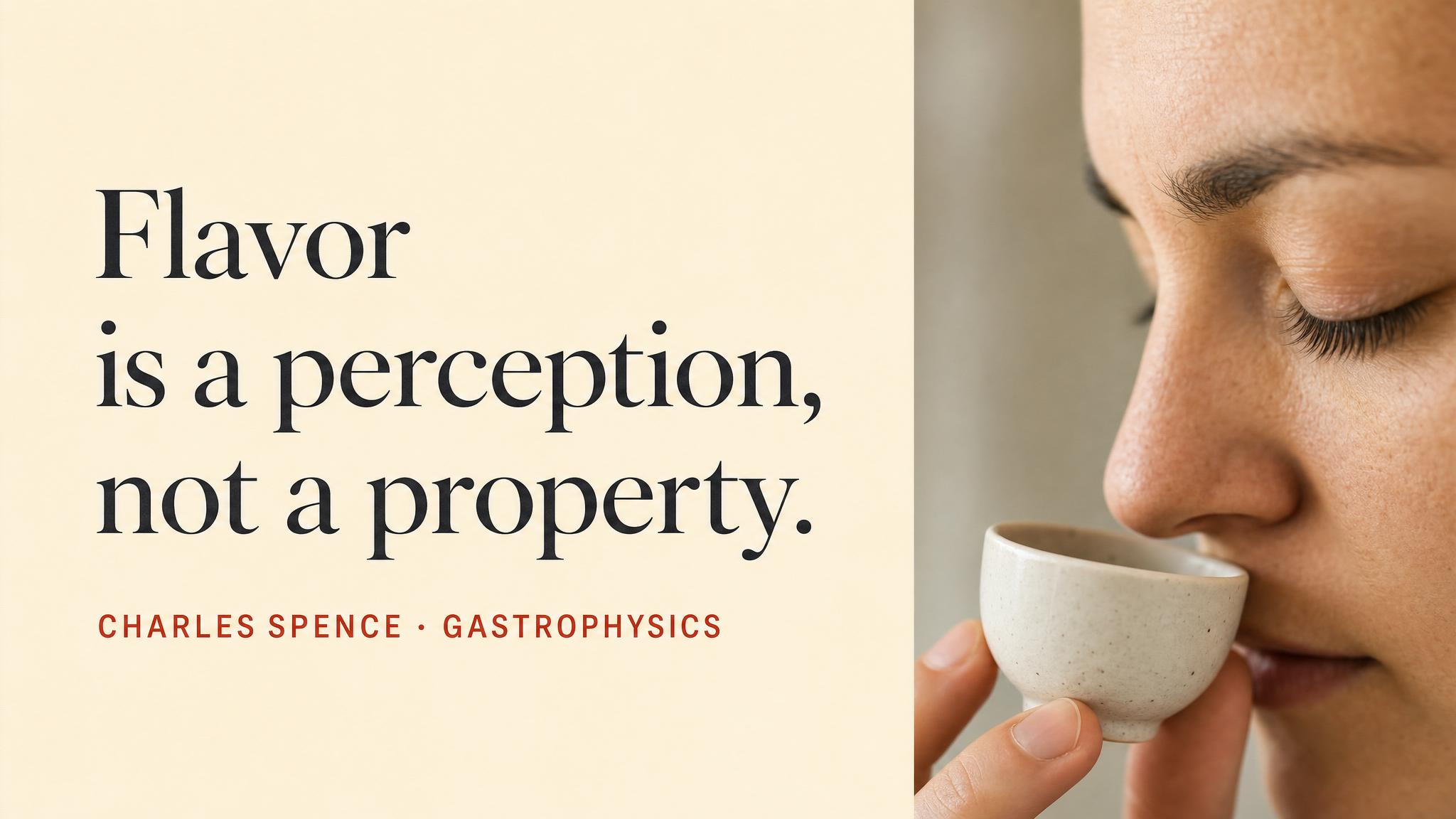
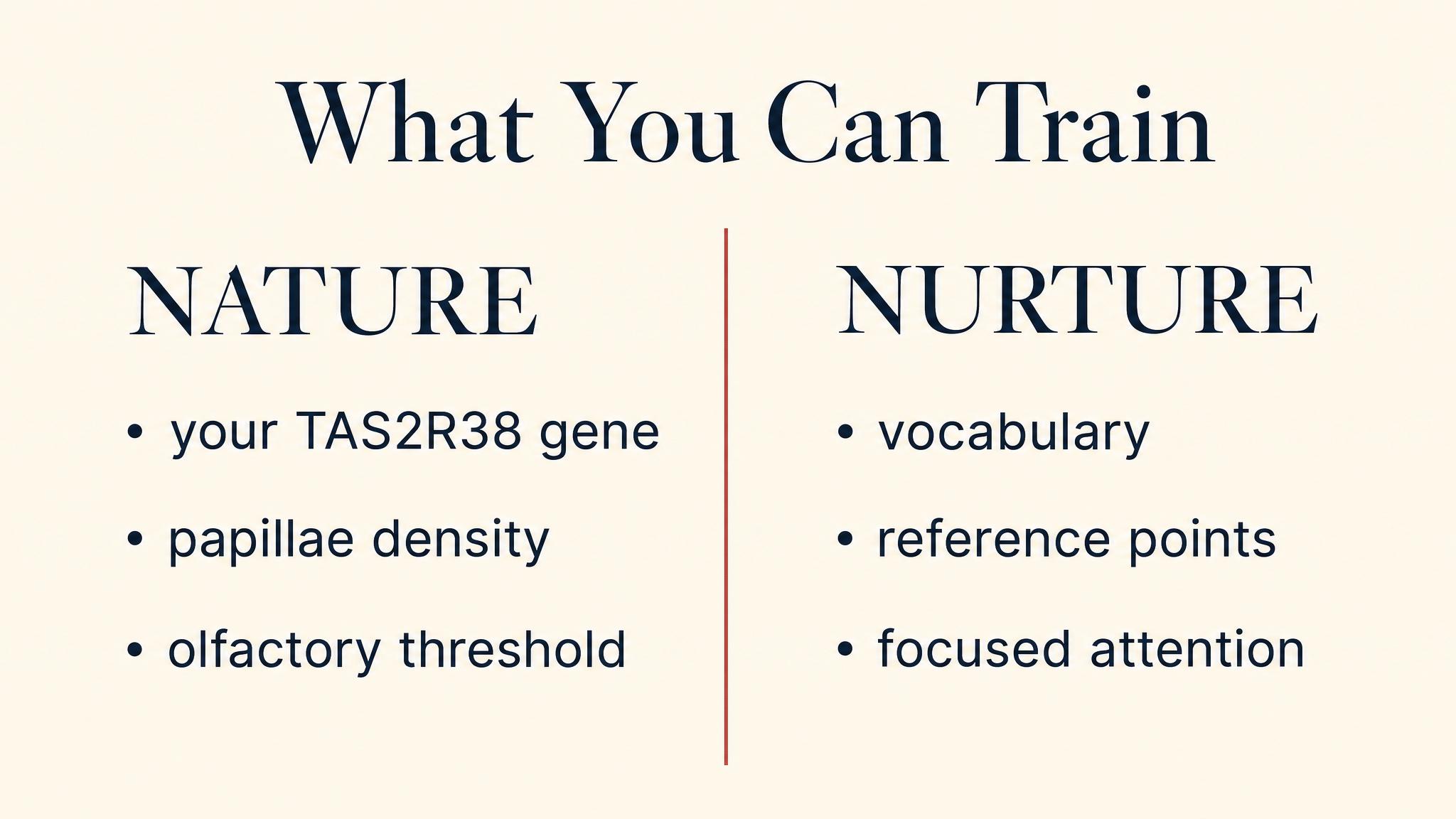
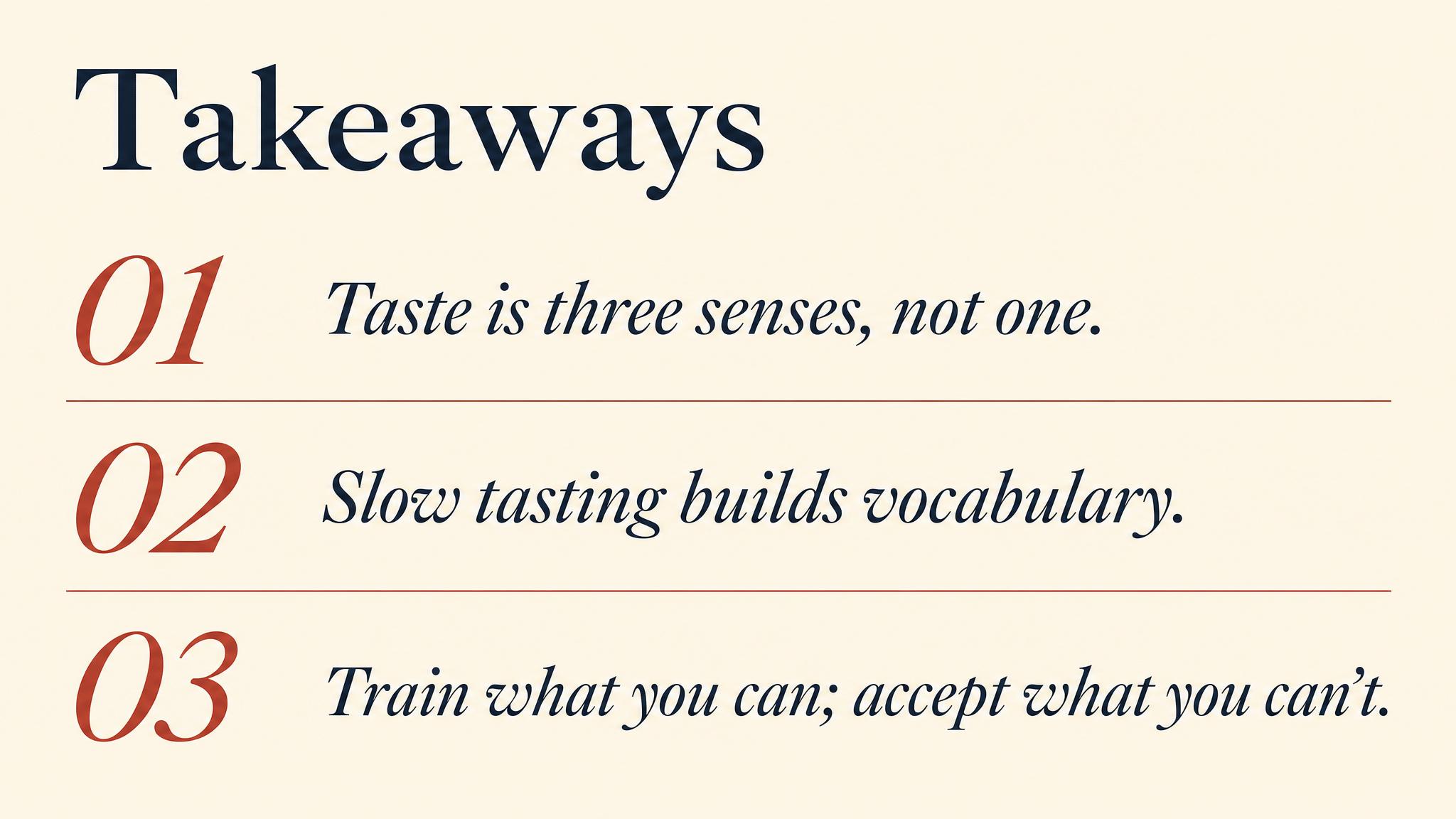
Leaves That Moved Empires
Tea is not merely a beverage—it is an agent of history. This chapter steps back from the cup to examine how this single plant reshaped economies, sparked revolutions, forged trade routes, and gave rise to some of the…
Coffee people vs tea people: is this actually a personality difference or are we all just pretending?
Hot take
Is bubble tea an innovation or an insult to 'real' tea culture? (Yes, this is a trap question.)
Debate time
The British are OBSESSED with tea but they stole the whole tradition through colonialism. Can you enjoy something with that history?
Real talk
Would you rather: attend a super formal Japanese tea ceremony where you'll definitely mess up, OR explain cryptocurrency to your grandparents for an hour?
Would you rather
Have you ever been judged for how you make/drink tea? What happened? (Milk? No milk? Microwaved water? GASP.)
Confession time
If tea had never existed, which country's history would be the MOST different? Britain? China? India? Japan?
Quick poll
Ceremonial Tea Tasting Diplomacy
15-20 minutesStudents receive small samples of 3 different tea styles (e.g., Japanese sencha, Chinese oolong, British breakfast). Instructor provides brief context for each. Students taste in sequence with 2-minute pauses, discussing with immediate neighbors (pairs/triads) what they notice. After tasting, instructor calls on pairs to share observations. Class votes on which tradition they'd choose for: a political negotiation, a meditation session, and a social gathering—with justification.
Tea Horse Road Trading Simulation
12-15 minutesDivide theatre into 4-5 geographic 'regions' by seating sections (e.g., Tibet, Yunnan, Sichuan, Mongolia). Each region receives a card listing resources they have and need. Students have 8 minutes to negotiate trades with other regions by shouting offers across the theatre or sending 'messengers' (1 person per region can move). Instructor tracks successful trades on screen. Debrief: What made trades succeed/fail? How does geography create power? What did horses and tea enable?
Empire Tea Shareholders Debate
15-18 minutesStudents assigned roles by seating section: British East India Company investors, Indian tea plantation workers, Chinese tea traders, British consumers, and independent historians. Present a historical scenario (e.g., 1830s: Should Britain expand tea cultivation in India?). Each group gets 3 minutes to caucus with neighbors, then 2 minutes to present their position. Open debate follows with students raising hands to contribute arguments from their role's perspective. Vote and debrief on whose interests prevailed and why.
Gongfu vs. Chanoyu Speed Analysis
10-12 minutesShow 2 silent video clips side-by-side: Chinese gongfu tea ceremony and Japanese chanoyu (1-2 minutes each). Students take notes individually while watching. Then turn to neighbors for 4 minutes to compare observations: What movements are similar/different? What do settings suggest about values? What social functions do they serve? Instructor cold-calls pairs to share one insight. Class collectively builds comparison chart on screen.
Modern Tea Innovation Pitch Competition
18-20 minutesIn pairs (with seat neighbors), students have 8 minutes to design a 'new' tea business/product that respectfully innovates on traditional tea culture (e.g., tea-pairing dinners, meditation tea apps, fair-trade cooperatives). Must address: What tradition inspires you? What contemporary need does it meet? How do you avoid cultural appropriation? Pairs volunteer to pitch (30-60 seconds each) to the class. Class votes on most compelling via show of hands, with 3 criteria: cultural respect, innovation, feasibility.
Tea Resistance Timeline Challenge
10-12 minutesPresent 6-8 historical 'tea resistance' moments shuffled out of order (Boston Tea Party, Indian tea workers' strikes, Fair Trade movements, etc.) on screen. Working with immediate neighbors (2-3 students), groups have 5 minutes to sequence events chronologically AND identify the form of resistance (boycott, labor action, political protest, etc.). Reveal correct order while discussing each event. Award points for accuracy. Conclude by asking: How did tea resistance strategies evolve? What patterns emerge?
Transcript
On the night of December sixteenth, 1773, a group of colonists disguised as Mohawk warriors boarded three ships in Boston Harbor and dumped three hundred forty-two chests of tea into the water. The act was symbolic, defiant, and viewed through the lens of this course, quietly revealing. The chests contained black tea, not green. Why? Because fully oxidized black tea, with its stable theaflavins and thearubigins, could survive the months-long sea voyage from Canton without spoiling. A leaf's chemistry shaped an empire's trade, which shaped a colony's fury, which shaped a nation's birth. Tea has always been more than a beverage.
[short pause]
This chapter steps back from the cup to ask a larger question: How did the leaves of Camellia sinensis become one of the most powerful agents of change in human history? The answer is not a single, tidy story. It is many stories, unfolding in parallel across continents and centuries, each shaped by the cultures that encountered this plant, and, in ways we can now appreciate, by the plant's own chemistry.
[short pause]
Every cup of tea traces its lineage to the misty highlands of southwestern China. The oldest wild tea trees still growing in Yunnan province are estimated to be over a thousand years old, their gnarled trunks testament to a relationship between humans and Camellia sinensis that stretches back millennia. Archaeological evidence now pushes this relationship far earlier than once thought: phytolith analysis of residues from tombs in both the Han dynasty capital of Chang'an and from sites in western Tibet has confirmed the presence of tea dating to approximately two hundred in the Common Era, as Lu and colleagues reported in 2016. This is remarkable. It means tea was already being traded across the Tibetan Plateau two centuries into the Common Era, centuries before the first written references to the Tea Horse Road.
The TEA HORSE ROAD was not a single path but a network of trading routes connecting Yunnan's tea-producing regions to Tibet, and from there into Central Asia and beyond. The trade was literal: compressed bricks and cakes of tea moved west and north on the backs of porters and mules, while Tibetan warhorses moved east into Chinese hands. This was no casual exchange. For Tibetan communities living at altitude on a diet rich in yak butter and barley, tea provided essential micronutrients and, critically, aided digestion. The polyphenols and caffeine in tea became dietary necessities, as the UNESCO Silk Roads Programme documented in 2023. The tea itself was typically a dark, heavily processed variety, often what we would now classify as heicha, or dark tea, a predecessor to modern pu'er. Recall from Chapter Two that these post-fermented teas undergo microbial transformation, which both preserves the leaf for long journeys and creates a smooth, earthy flavor profile that pairs naturally with the rich fats of Tibetan butter tea.
The Tea Horse Road reminds us that the history of tea is inseparable from geography and processing. Tea didn't spread randomly. It moved along routes where its particular chemistry made it valuable, and it was processed in ways that made such journeys possible. Compression into bricks and cakes wasn't merely convenient for transport; it slowed oxidation and created conditions for the beneficial microbial fermentation that defined heicha's character. The terroir of Yunnan's ancient tea forests, the elevation, the biodiversity of the soil microbiome, the large-leaf variety assamica cultivars, produced leaves with the robust polyphenol content necessary to withstand these transformations, as Ma described in 2023.
[short pause]
While tea traveled outward along trade routes, it was simultaneously undergoing a profound cultural transformation within China itself. Early references treated tea as medicinal, a bitter tonic. But by the Tang dynasty, from six hundred eighteen to nine hundred seven in the Common Era, tea had become something altogether more complex: a subject of philosophy, a medium of artistic expression, and a marker of civilized life.
The pivotal figure is Lu Yu, whose Cha Jing, or Classic of Tea, completed around seven sixty in the Common Era, remains one of the most influential texts in tea history. Lu Yu didn't simply describe how to prepare tea. He codified an entire aesthetic and ethical framework. He specified the ideal water sources, the correct vessels, and the proper mental state for tea preparation. His preferred method involved grinding compressed tea cakes into powder and whisking them into hot water, a method that would later profoundly influence Japanese practice.
By the Song dynasty, from nine sixty to twelve seventy-nine in the Common Era, tea culture had evolved further. Song-era tea competitions, known as doucha, judged the quality of whisked tea foam, an activity that required not only skill but also an understanding of how leaf processing affected the tea's ability to produce a stable, creamy froth. Think back to our discussions of leaf chemistry in Chapters Two and Four: the amino acid content, particularly L-THEANINE, the presence of saponins, and the particle size of the ground tea all contribute to foam stability. Song dynasty tea masters were empirical sensory scientists centuries before the formal discipline existed.
Lu Yu insisted that the best water for tea came from slow-moving mountain streams, not from fast rivers or stagnant wells. Using what you learned in Chapter Three about water chemistry and extraction, you might consider why he may have been right. Mineral content, dissolved oxygen, and how these affect extraction rate and flavor all play crucial roles.
The Song dynasty also saw the refinement of GONGFU tea preparation, literally, tea made with skill and care, which persists today, particularly in Fujian and Guangdong provinces and in Taiwan. Gongfu cha uses small vessels, a gaiwan or a Yixing clay teapot, a high leaf-to-water ratio, and multiple short infusions. This is not mere ritual for its own sake. As we explored in Chapter Three, multiple short steeps extract different compounds sequentially: the first infusion is rich in rapidly soluble amino acids and caffeine, while later infusions draw out deeper polyphenol and polysaccharide layers. The gongfu method was, and remains, an optimized extraction protocol disguised as ceremony.
[short pause]
When the Japanese monk Eisai returned from Song dynasty China in eleven ninety-one, he brought with him tea seeds and the whisked-powder preparation method. But what grew from those seeds on Japanese soil was something entirely new. Over the following centuries, Japanese tea culture diverged from its Chinese origins to become chanoyu, the Way of Tea, a practice inseparable from Zen Buddhism, architecture, ceramics, and a philosophical commitment to finding beauty in imperfection, as Varley and Kumakura explored in nineteen eighty-nine.
The central figure in chanoyu's mature form is Sen no Rikyū, who lived from fifteen twenty-two to fifteen ninety-one, and who radically simplified the tea ceremony to embody wabi, an aesthetic of rustic simplicity and quiet depth. Rikyū stripped away ornate Chinese-style tea rooms in favor of small, humble spaces. He championed rough, asymmetrical Korean-style tea bowls over perfect Chinese porcelain. He articulated principles: harmony, or wa; respect, or kei; purity, or sei; and tranquility, or jaku, that elevated tea preparation into a spiritual discipline, as Pitelka noted in two thousand three.
But here is where our course's interdisciplinary approach proves its worth: chanoyu's choice of MATCHA as its medium is not arbitrary. Matcha is made from tencha leaves, tea plants that are shade-covered for approximately three weeks before harvest. As we learned in Chapter One, shading reduces photosynthesis, which slows the conversion of L-theanine into catechins. The result is a leaf with an unusually high amino acid content, producing the deep umami sweetness that defines fine matcha, according to Graham in nineteen ninety-two. After harvest, the leaves are steamed, dried, and stone-milled into a fine powder. When whisked with hot water, the entire leaf is consumed, not just the soluble fraction, as with steeped tea. This means the drinker ingests the full complement of lipid-soluble compounds, chlorophyll, and fiber that would otherwise remain trapped in a discarded leaf. The intensity of this experience, its vivid green color, its creamy texture, its profound umami flavor, is inseparable from the meditative focus that chanoyu demands.
Japanese chanoyu uses whisked matcha. Chinese gongfu cha uses multiple short steeps of whole or semi-rolled leaves. Both are described as artful, intentional tea preparation. Consider how these different methods extract fundamentally different chemical profiles from the leaf, and how those profiles might shape the feeling of each experience. Think about L-theanine, caffeine, and catechin ratios.
[short pause]
Tea arrived in Europe through Portuguese and Dutch traders in the early seventeenth century. The Dutch East India Company, known as the V-O-C, began regular imports from China by the sixteen tens, and by the mid sixteen hundreds, tea was fashionable in Dutch, Portuguese, and soon British aristocratic circles, as the UNESCO Silk Roads Programme documented in 2023. But it was Britain that would build an empire around this leaf.
The British obsession with tea created an enormous economic problem. China produced virtually all the world's tea, and China wanted payment in silver. The resulting trade deficit was ruinous for Britain, which led the East India Company to a catastrophic solution: smuggling opium grown in colonial India into China to balance the books. When the Qing dynasty tried to stop this poison trade, Britain responded with military force. The First Opium War, from eighteen thirty-nine to eighteen forty-two, ended with the Treaty of Nanking, which ceded Hong Kong to Britain and forced open Chinese ports to foreign trade, as documented by the National Archives UK. The Second Opium War, from eighteen fifty-six to eighteen sixty, brought further humiliation and territorial concessions. It is essential to name what this was: a series of wars fought, at their root, because one nation's appetite for a beverage created economic pressures that led to industrial-scale drug trafficking and military aggression.
Britain simultaneously pursued another strategy to break China's monopoly: botanical espionage. In eighteen forty-eight, the Scottish botanist Robert Fortune was dispatched by the East India Company into China's closely guarded tea-growing regions, disguised as a Chinese merchant. He smuggled out tea plants, seeds, and crucially, the manufacturing expertise of experienced Chinese tea workers, whom he recruited under questionable pretenses. These plants and workers were transported to the colonial plantations of Darjeeling and Assam in India, and later to Ceylon, now Sri Lanka, establishing the colonial tea industry that would eventually surpass China's output, as Rose documented in twenty ten.
The chemistry matters here too. Indian plantation tea was overwhelmingly black tea. Why? Partly because the Camellia sinensis variety assamica plants native to Assam, with their larger leaves and higher polyphenol content, were well-suited to full oxidation. But there were also practical reasons rooted in what you learned in Chapter Two: fully oxidized black tea is chemically more stable than green tea. The catechins in green tea are susceptible to degradation from heat, light, and moisture during long sea voyages. The THEAFLAVINS and THEARUBIGINS formed during oxidation are more resilient compounds, as Stodt and colleagues found in twenty fourteen, and Wong and colleagues confirmed in twenty twenty-two. Black tea arrived in London tasting the way it was supposed to. Green tea often did not. Consumer preference and chemistry co-evolved: the British came to love black tea in part because black tea was what survived the journey.
[short pause]
It would be a distortion to tell tea's story only through the lens of European empires. Tea has been a vehicle for cultural expression and political resistance in every region it has touched.
In India, the nationalist movement of the early twentieth century grappled with a painful irony: tea was both a symbol of colonial exploitation, plantation workers labored under brutal conditions, and an increasingly central part of Indian daily life. After independence in nineteen forty-seven, the Indian Tea Board actively promoted CHAI, strong black tea boiled with milk, sugar, and spices like cardamom, ginger, and cinnamon, as a national drink, transforming a colonial commodity into an expression of Indian identity. The science of chai is the science of decoction rather than infusion: boiling the tea with milk allows casein proteins to bind with tannins, reducing astringency and creating the smooth, rich body that characterizes a well-made cup, according to Graham in nineteen ninety-two. The spices contribute their own volatile aromatic compounds, which interact with the tea's flavor matrix in ways that Chapter Four's discussion of retronasal olfaction helps us understand.
In Morocco, Moroccan mint tea, or atay, became central to hospitality and social life after Chinese gunpowder green tea was introduced through British trade in the eighteenth century. The preparation is specific and purposeful: the tea is brewed strong, sweetened heavily with sugar, and combined with large bunches of fresh spearmint. The tea is poured from a height into small glasses, a gesture that aerates the liquid, enhancing its aroma and creating a light froth. From an extraction standpoint, as discussed in Chapter Three, the high water temperature and long steeping time extract significant catechins and caffeine from the tightly rolled gunpowder leaves, while the sugar modulates perceived bitterness and the menthol from mint activates cooling receptors on the tongue, T-R-P-M-8, creating a complex sensory experience that is chemically engineered by tradition, as the UNESCO Silk Roads Programme noted in 2023.
In Taiwan, the invention of bubble tea, or boba, in the nineteen eighties represents one of the most significant tea innovations of the modern era. Though its exact origins are debated between two Taichung tea shops, bubble tea took the traditional Taiwanese practice of shaking iced tea with milk and added chewy tapioca pearls, creating a textural experience unlike any previous tea tradition. What began as a local novelty has become a global phenomenon and a powerful marker of Taiwanese cultural identity, and, for Asian diaspora communities, a touchstone of heritage and belonging, as National Geographic has documented. Bubble tea's success reminds us that tea history is not finished. Innovation continues.
[short pause]
The temptation in telling tea's story is to create a single timeline: origin in China, spread to Japan, discovery by Europe, colonial exploitation, modern globalization. But this linear narrative erases the agency and creativity of cultures that were developing their own relationships with tea independently and simultaneously. While the British were fighting the Opium Wars, the Japanese tea ceremony was entering a period of revival and democratization. While Indian plantation workers were harvesting tea under colonial management, Central Asian cultures along the old Silk Road maintained tea traditions thousands of years old. While Moroccan families were perfecting their mint tea ritual, Taiwanese tea farmers were developing the exquisite oolong processing techniques that would later inspire bubble tea's base.
These are not sequential developments but parallel histories, not as a single arrow pointing from East to West, but as multiple, simultaneous streams of human creativity, each shaped by specific ecological, chemical, and cultural conditions.
[short pause]
Throughout this chapter, we have seen how cultural choices about tea, which varieties to grow, how to process them, how to prepare them, how to trade them, are deeply entangled with the plant's chemistry. This is the central argument of this course: science and culture are not separate lenses for understanding tea. They are two aspects of a single, integrated reality.
The Japanese tea master who shade-grows tencha is manipulating the same L-theanine-to-catechin ratio that a food chemist measures in a laboratory. The Tibetan trader who chose compressed dark tea for the mountain crossing was intuitively selecting for microbial stability and shelf life. The British merchant who preferred black tea for the long voyage to London was, without knowing it, banking on the chemical resilience of theaflavins. The Moroccan host who pours tea from a height is aerating volatile aromatics just as a sommelier swirls a glass of wine. And the sensory experience that Ma describes in 2023 among Pu'er tea traders in Yunnan, where taste vocabulary becomes a site of cultural power and negotiation, reminds us that even the act of perceiving flavor is never purely biological. It is always cultural too.
Tea is not a thing that happened once and then was over. It is a relationship between a plant and the many peoples who have chosen to make it part of their lives, a relationship that continues to evolve.
Understanding this relationship requires both the vocabulary of Chapter Two's processing science and the humility to listen to what each culture's tea tradition means on its own terms. We resist romanticization: afternoon tea is charming, but it was funded by opium and colonial labor. We resist exoticization: chanoyu is profound, but it is also a living, evolving practice, not a museum piece. We resist simplification: bubble tea is playful, but it carries the weight of Taiwanese identity and diaspora longing. Every cup holds multitudes.
[short pause]
Tea's spread from Yunnan across the globe followed routes determined by geography, politics, and the plant's own chemistry. Compressed dark teas survived mountain crossings; oxidized black teas survived sea voyages. Classical Chinese tea culture, from Lu Yu's Cha Jing to Song dynasty tea competitions to gongfu cha, developed sophisticated preparation methods that optimized extraction centuries before modern food science. Japanese chanoyu transformed Chinese tea practices into a Zen-influenced spiritual discipline, with matcha's unique sensory profile, high L-theanine and full-leaf consumption, essential to the experience. British demand for tea drove the Opium Wars, botanical espionage, and the establishment of colonial plantations, a history of injustice inseparable from the story of black tea's global dominance. Modern tea cultures, from Indian chai to Moroccan mint tea to Taiwanese bubble tea, represent ongoing innovation, each analyzable through the sensory and chemical frameworks of earlier chapters. Tea's history is not a single linear narrative but many parallel stories; understanding each tradition on its own terms, while connecting cultural practices to scientific principles, yields the richest understanding.
[short pause]
Now that we understand both the science within the cup and the history that brought it to our hands, we are ready to turn our attention to the living present. In the next chapter, we will explore the contemporary tea industry, from farm to shelf, examining how modern agriculture, climate change, fair trade movements, and evolving consumer tastes are shaping the future of Camellia sinensis and the people who cultivate it.

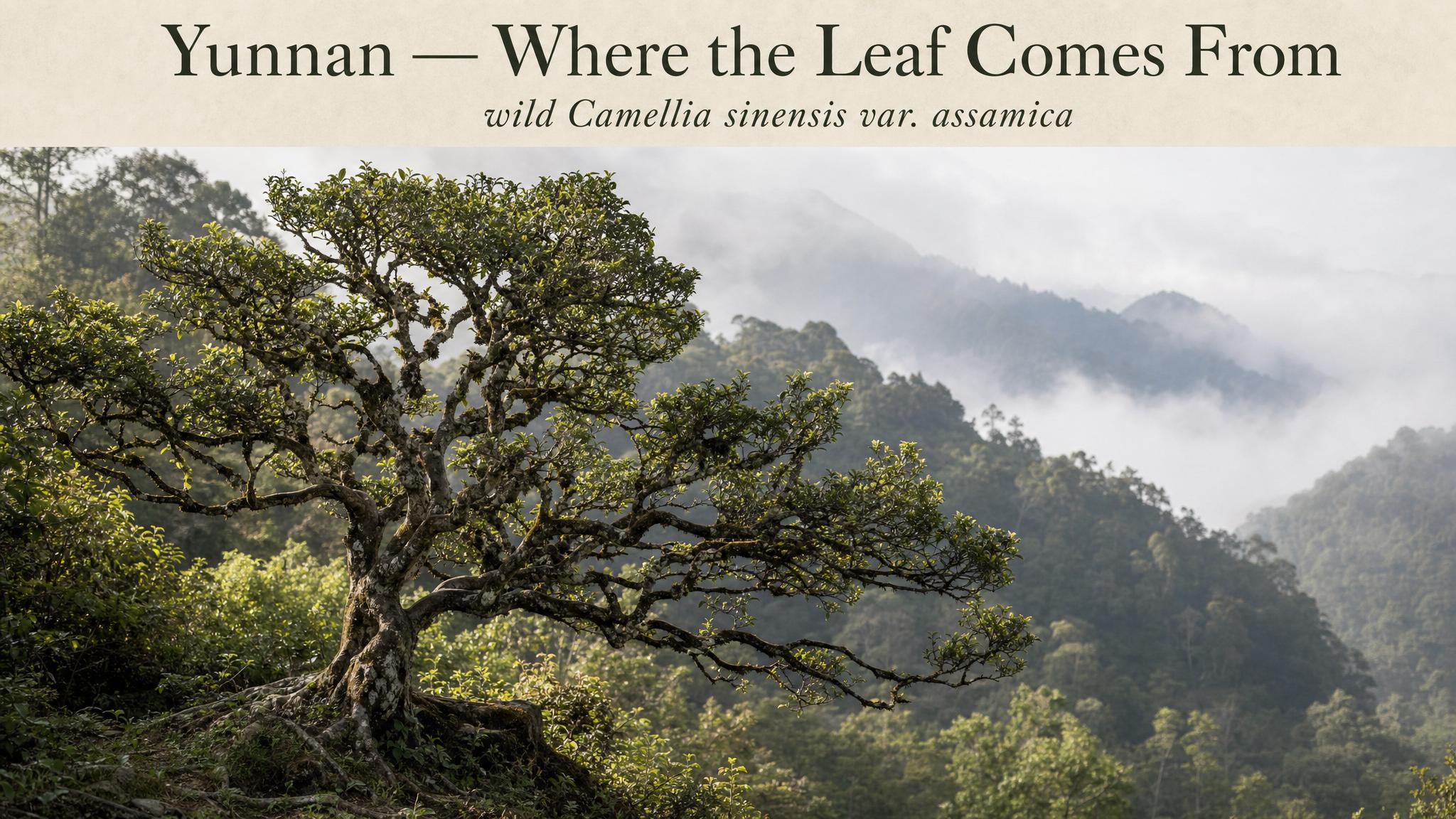
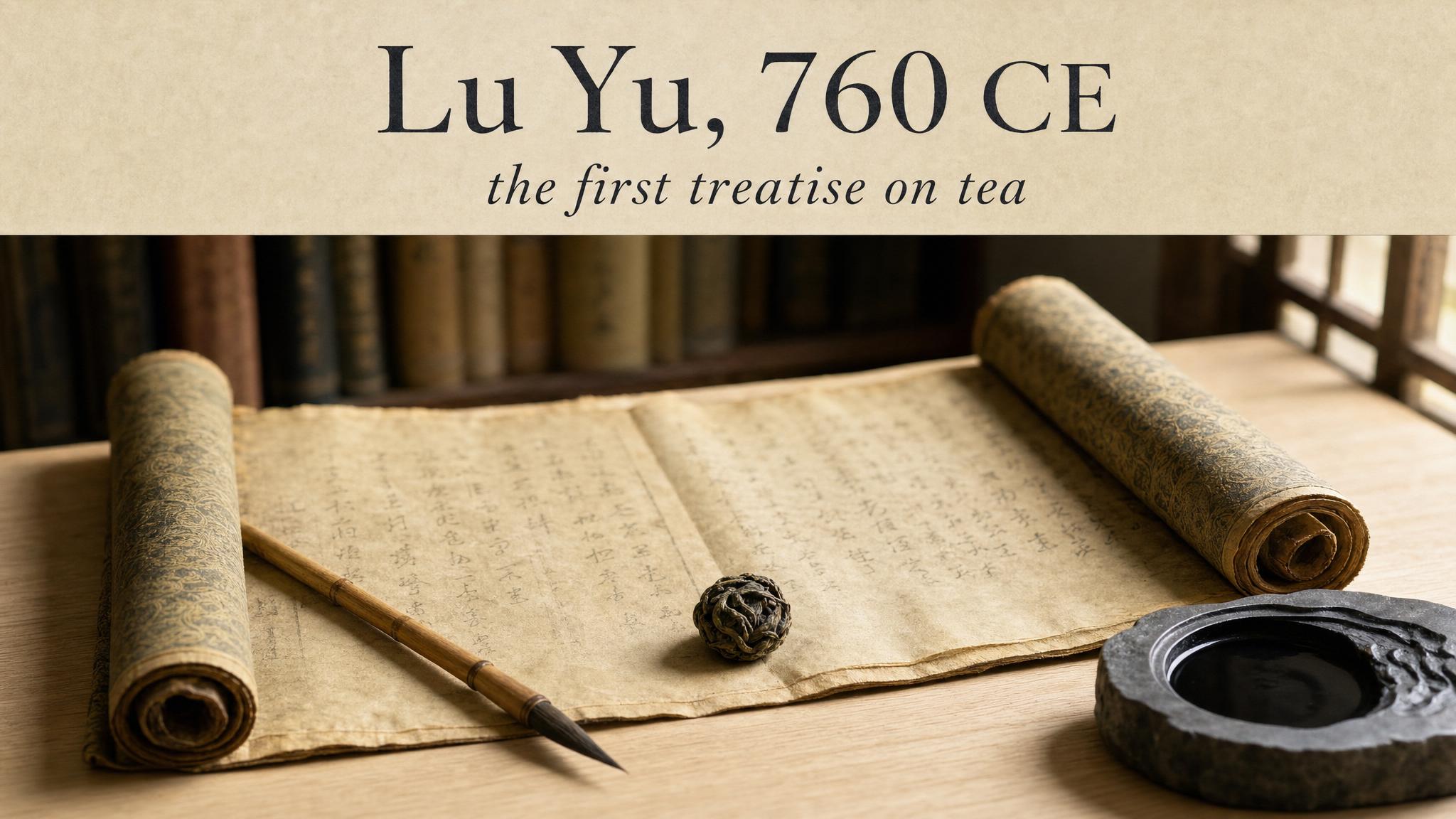
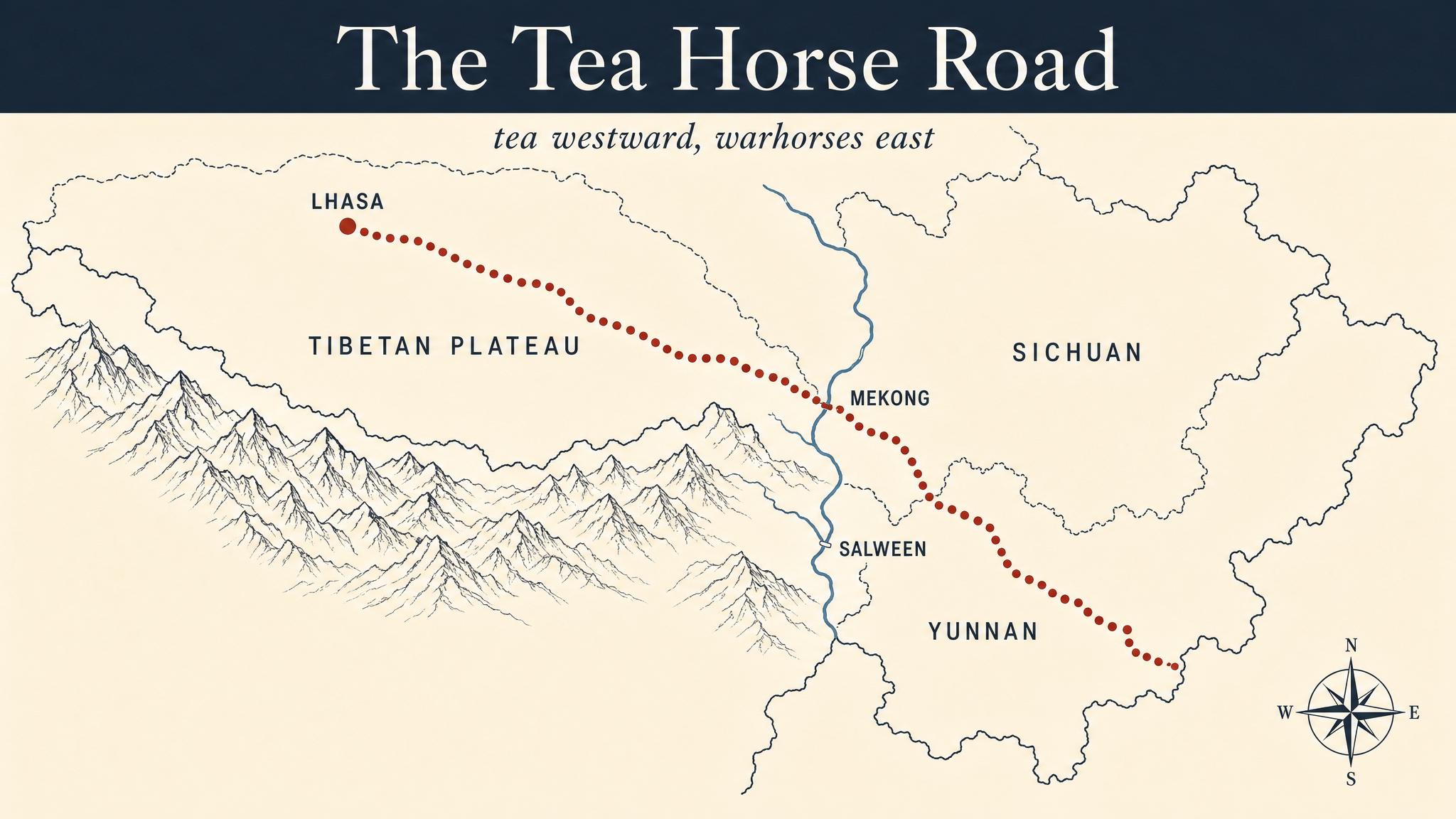
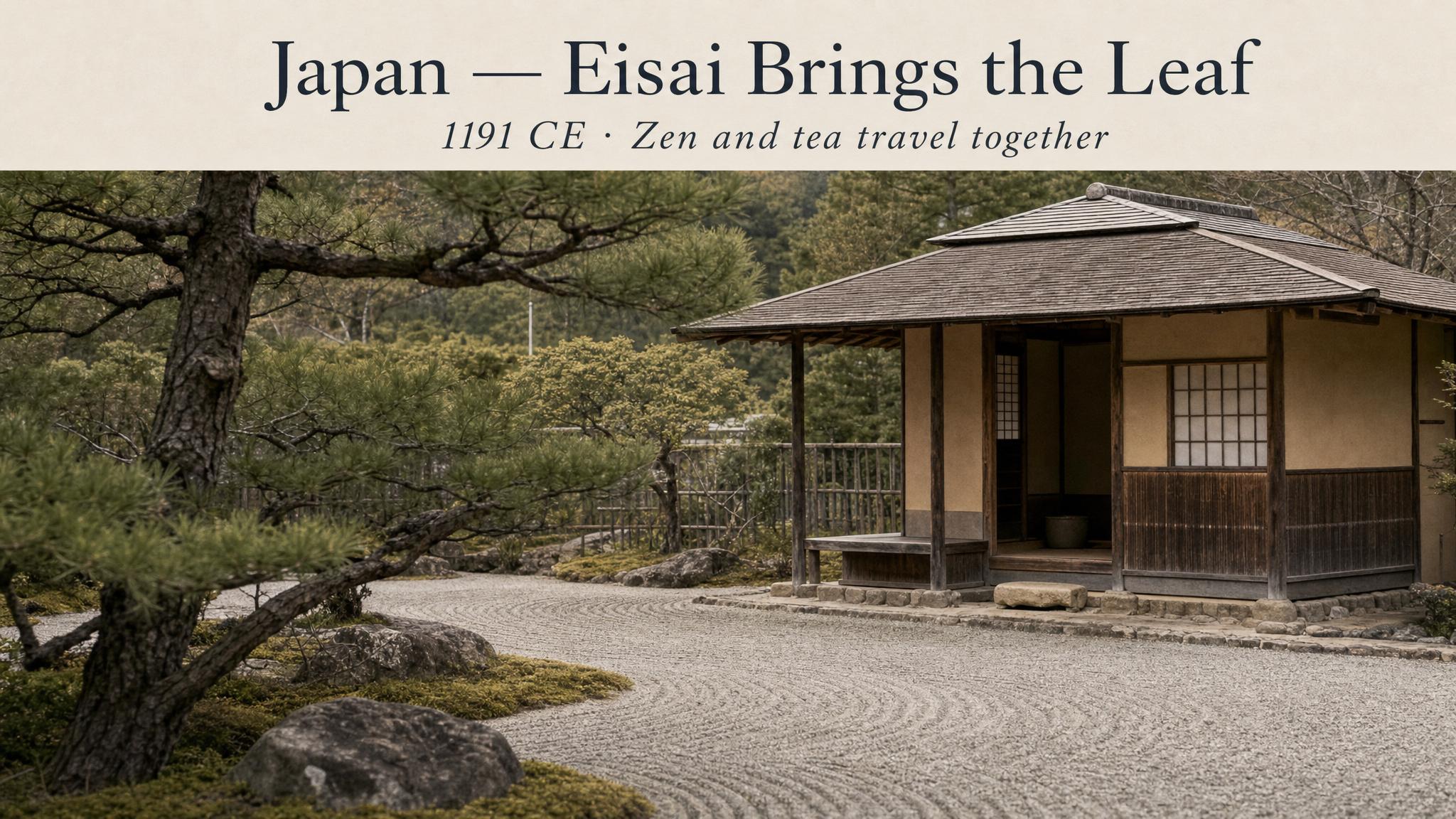

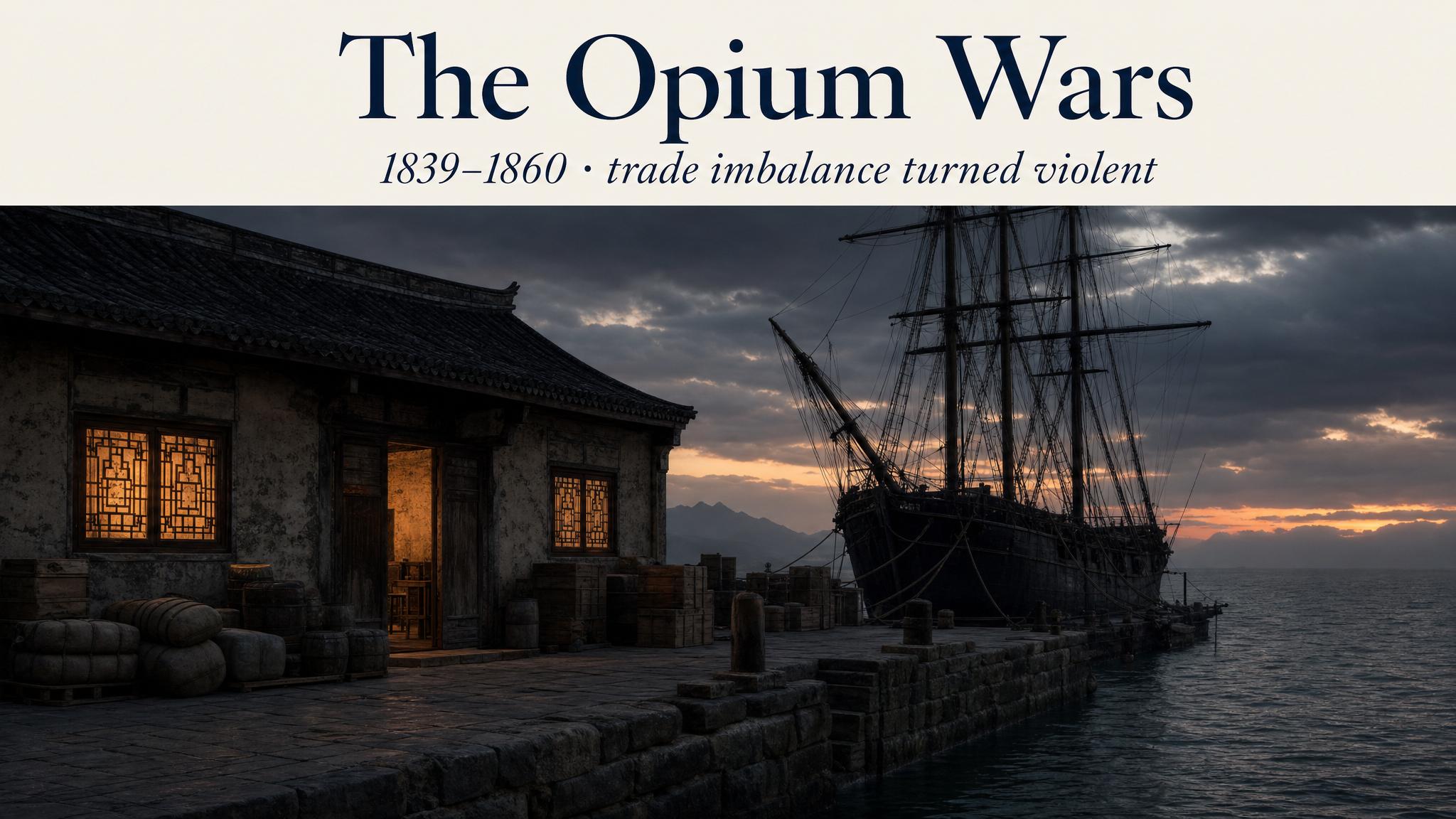
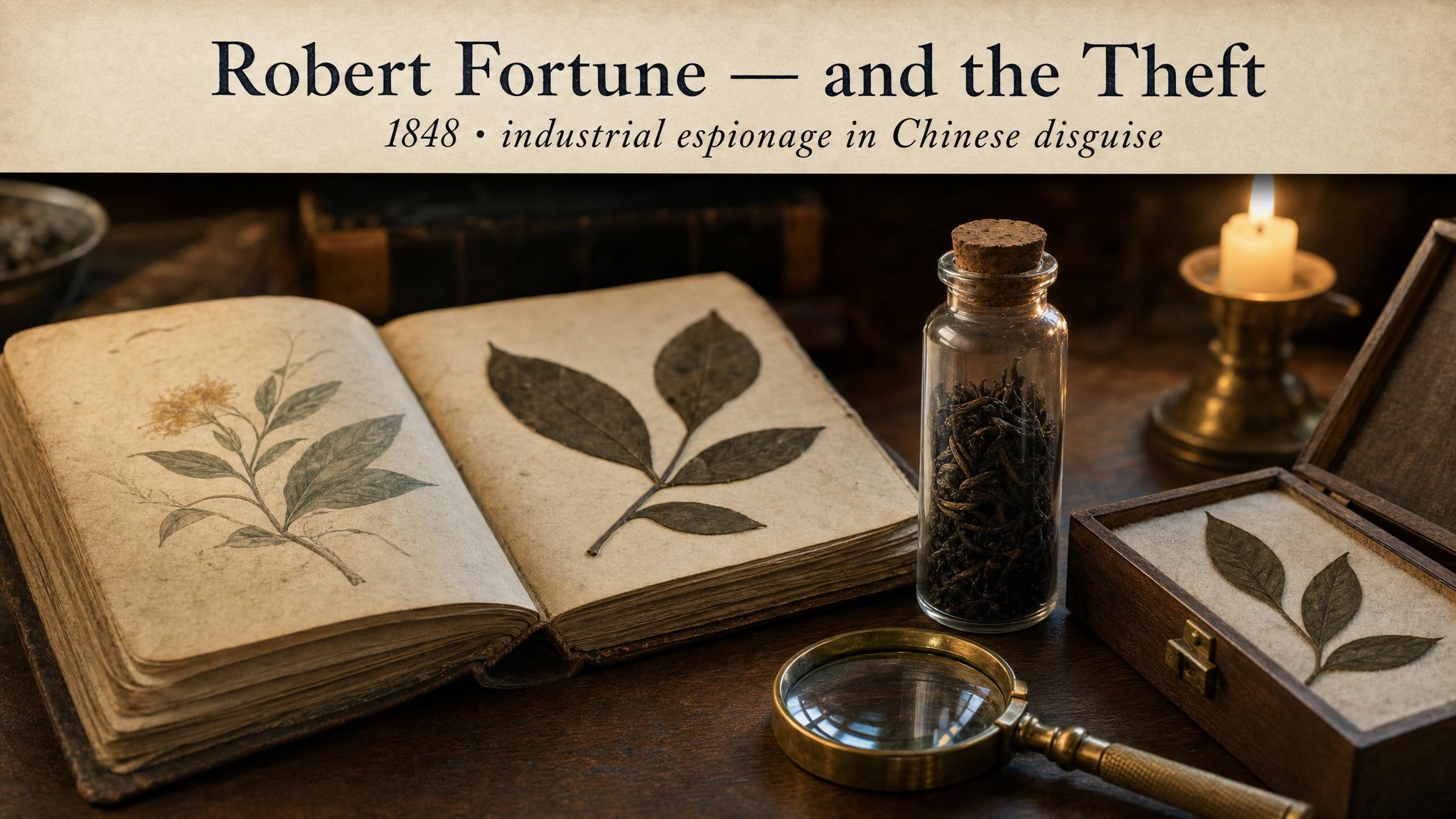
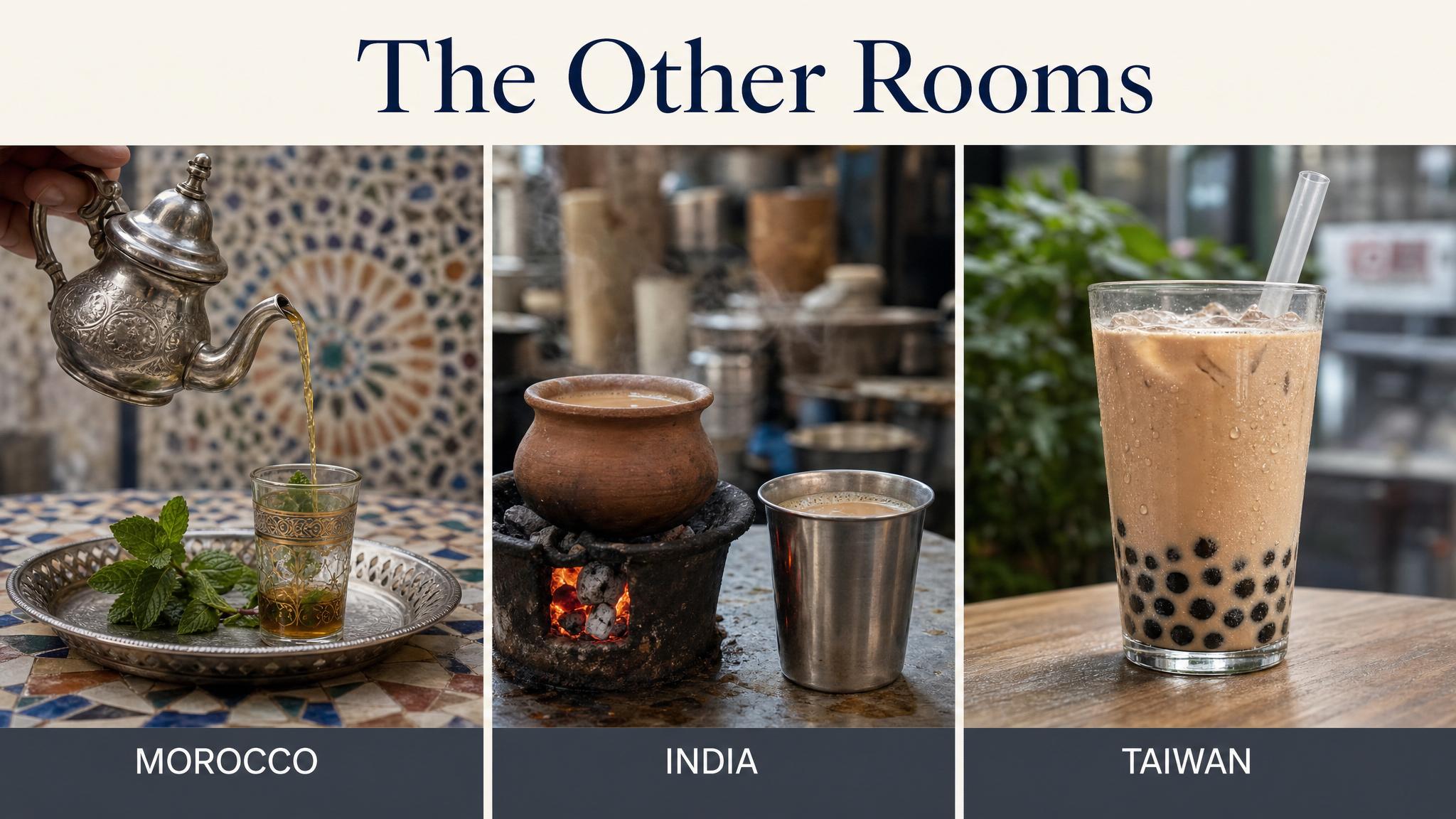
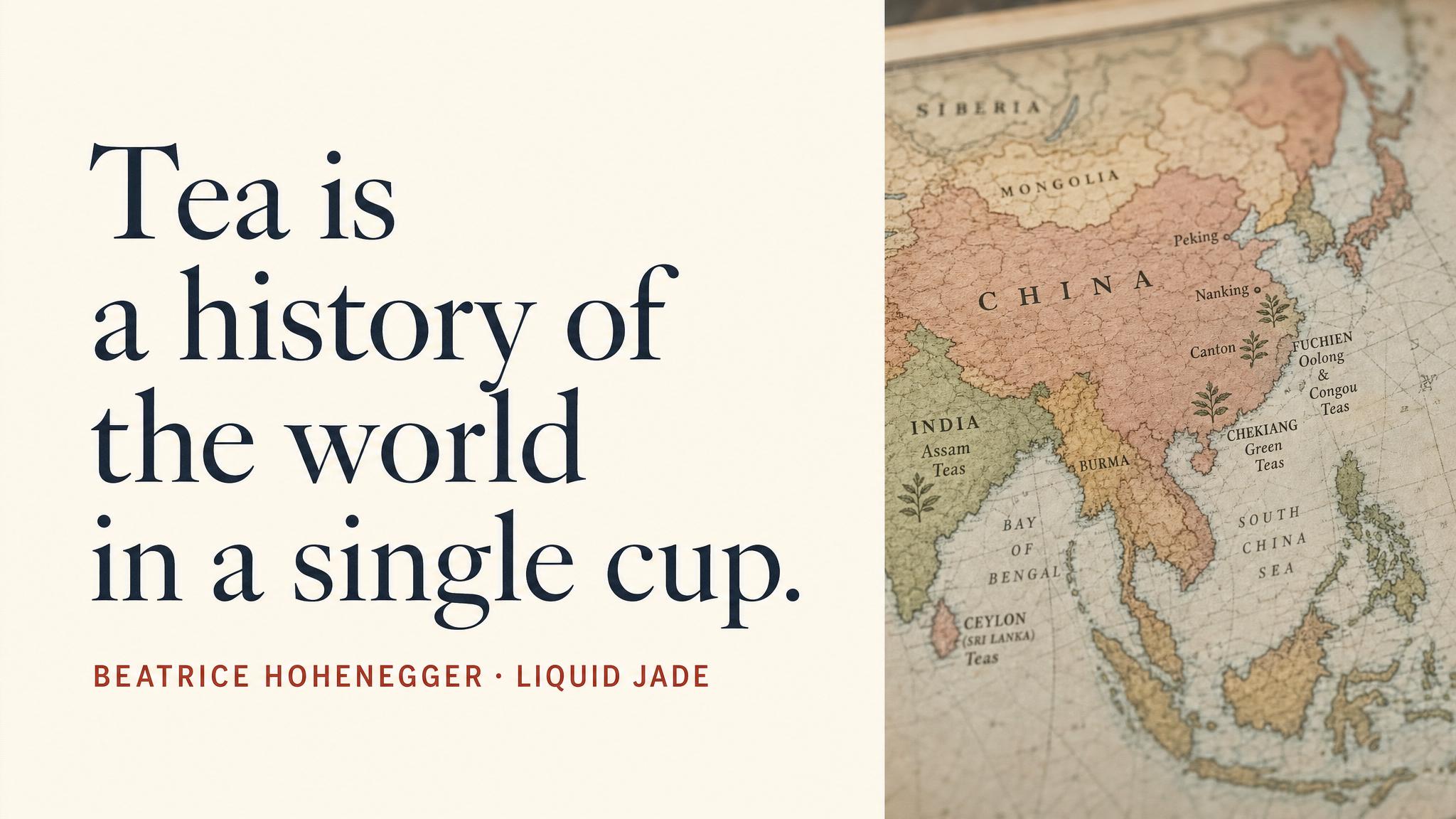
Your Cup, Your Way
The first five chapters gave you a foundation. This final chapter hands you the keys. We synthesize everything—botany, processing, extraction, sensory science, and cultural context—into practical frameworks for building…
Would you rather have unlimited mediocre tea forever or one perfect $100 cup per month?
Would you rather
If someone makes you tea completely wrong, are you obligated to drink it and say it's good?
Real talk
Do you have a tea/coffee hoarding problem? How many varieties are currently in your kitchen right now?
Confession time
Hot take: If you genuinely can't taste the difference between expensive and cheap tea, then quality doesn't matter for YOU.
Hot take
Is 'aged tea' actually better or is it just marketing for old product they couldn't sell?
Unpopular opinion?
Tea from a gas station or drive-through in a paper cup: totally fine or an absolute crime?
Quick poll
Tea Label Detective Challenge
12-15 minutesInstructor distributes 3-4 different tea packages/labels (or displays high-res photos on screen). Students work with immediate neighbors (2-3 people) to analyze labels for quality indicators, origin authenticity, grading terms, and red flags. Each group 'grades' one tea on a shared scale. Instructor then polls the room using hand raises for each tea ('Who rates this as premium? Mid-grade? Questionable?') and facilitates debate about why ratings differ. Reveal actual market positions/prices for surprise and discussion.
Blind Tasting + Neighbor Consensus
15-20 minutesInstructor provides 2-3 pre-brewed tea samples (distributed in small cups along rows). Students taste individually, make initial notes, then turn to neighbors to compare impressions (quality grade, possible origin, defects, price point). After 5 minutes of discussion, conduct a live poll: 'Which tea is highest quality?' Students vote by raising hands. Reveal identities/prices/origins and discuss why assessments varied. Highlight how tasting vocabulary and criteria improve consensus.
Storage Scenario Showdown
10-12 minutesInstructor presents 4 controversial tea storage scenarios on screen (e.g., 'Storing pu-erh in the fridge', 'Keeping green tea in clear glass', 'Aging tea in humid basements', 'Freezing expensive oolong'). Students discuss with neighbors (2 minutes per scenario): Good idea or disaster? After each scenario, conduct a live audience vote and call on volunteers from different 'camps' to defend their position. Instructor facilitates mini-debates, then reveals best practices and the science behind them.
Tasting Journal Speed Workshop
15-18 minutesInstructor demonstrates live journal entry creation (3 minutes) while students taste a provided tea sample. Students then complete their own entry in provided journals or notebooks (5 minutes). Next, students exchange journals with immediate neighbors, read each other's entries, and add a 'peer response' note (3 minutes): 'What I noticed differently...', 'A descriptor you used that I'll borrow...', 'A question about your observation...'. Instructor invites 3-4 volunteers to read their favorite peer observation aloud. Conclude with tips for maintaining a personal practice.
Modern Tea Landscape Gallery Walk (Seated Edition)
12-15 minutesInstructor displays 6-8 images/case studies on screen representing modern tea trends (e.g., single-origin micro-lots, climate-threatened regions, innovative processing, tea cocktails, tea tech startups). Each image appears for 90 seconds. Students quickly discuss with neighbors: 'Trend or fad?', 'Does this elevate or dilute tea culture?', 'Would you try/support this?' Instructor advances slides while calling on random students for rapid-fire reactions. Final poll: 'Which trend excites you most?' and 'Which concerns you?' with show of hands. Brief discussion of how personal practice intersects with industry changes.
Quality Assessment Relay Debate
15-18 minutesInstructor presents 3 teas (or detailed descriptions with photos if physical samples unavailable) and announces: 'You're advising a tea shop on which ONE to stock.' Students discuss with neighbors (3 minutes) weighing quality, value, customer appeal, sourcing ethics. Instructor divides theatre into 3 sections (left/center/right rows) and assigns each section a tea to advocate for. Each section has 2 minutes to build their case together (shouting ideas is encouraged!). Three volunteers (one per section) present 90-second pitches from their seats. Audience votes on winning argument. Debrief: multiple factors beyond 'objective quality' matter in real decisions.
Transcript
Imagine you're standing in a specialty tea shop you've never visited before. Shelves hold hundreds of canisters, each labeled with names that range from the poetic, like "Moonlight White," to the cryptic, such as "SFTGFOP1 CL TIPPY." The vendor offers you three teas to taste. Six weeks ago, you might have smiled politely, sipped, and said "nice." Today, you notice the wiry, silver-tipped leaves of the first sample and recall what you know about bud-heavy plucks and their amino acid profiles. You observe the pale gold liquor, inhale vegetal sweetness layered with stone fruit, and feel a silky viscosity that signals L-THEANINE concentration. You're not guessing anymore—you're reading.
[short pause]
This final chapter is about making that scenario real. We've built a foundation across five chapters: the living plant and its terroir, the transformative chemistry of processing, the physics and chemistry of extraction, the neuroscience of taste and aroma, and the cultural traditions that give tea its meaning. Now we synthesize it all into a practical framework for evaluating, sourcing, storing, and enjoying tea on your own terms. The goal isn't to turn you into a tea snob—it's to make you a confident, curious, lifelong tea learner.
[short pause]
Professional tea evaluation is one of the oldest forms of sensory analysis still practiced at industrial scale. Every day, in tasting rooms from Kolkata to Mombasa to Shizuoka, trained assessors cup hundreds of teas using standardized protocols, making purchasing decisions worth millions of dollars. What's remarkable is that despite advances in analytical chemistry—H-P-L-C for catechin profiling, G-C-M-S for volatile identification, even electronic noses and tongues—SENSORY EVALUATION by trained humans remains the gold standard, as multiple researchers reported in 2024. Machines can quantify individual compounds, but they still can't reliably integrate the totality of a tea experience the way a skilled palate can.
That said, sensory evaluation is only as good as its method. The Chinese Traditional Sensory Evaluation Method, documented by Liu and colleagues in 2025, follows a precise five-stage protocol: assessment of dry leaf appearance, liquor color, aroma, taste, and infused, or wet, leaf. Each stage has specific environmental requirements—controlled lighting at thirty-five hundred to four thousand Kelvin, room temperature between twenty-two and twenty-five degrees Celsius, humidity below seventy percent—because these factors materially affect perception. The evaluation room should be free of strong odors, and assessors should avoid perfume, spicy food, and smoking before tasting, according to Liu and colleagues in 2025. You may not replicate laboratory conditions at home, but understanding why these controls exist deepens your awareness of how environment shapes your experience of tea.
[short pause]
Let's walk through the five dimensions systematically, connecting each to the knowledge you've built across this course.
First, dry leaf appearance. Before water ever touches the leaves, you're already gathering data. Look at the size, shape, color, and uniformity of the dry leaf. Tightly rolled oolongs tell you about the mechanical processing that shapes volatile retention. Silver tips indicate young buds rich in amino acids and caffeine. Broken or fannings-grade leaf signals either C-T-C processing or lower-grade sorting—and predicts a faster, more astringent extraction. The dry leaf is a record of every decision made from garden to shelf.
Second, aroma. Aroma assessment happens at multiple points: the dry leaf, the warmed empty vessel after pouring—called lid aroma or gai xiang in Chinese practice—and the liquor itself. Each stage reveals different volatile compounds based on their boiling points and concentrations. Remember that we detect aroma both orthonasally, that is through sniffing, and retronasally, during swallowing, and that our olfactory system can distinguish thousands of odorants. When you detect "orchid" in a Tieguanyin or "muscatel" in a Darjeeling second flush, you're identifying specific volatile compound families—terpenoids, aldehydes, linalool oxides—that were shaped by cultivar genetics, terroir, and processing.
Third, liquor color. The color of the brewed tea is a direct window into its oxidation chemistry. The progression from pale green, indicating minimal oxidation, through gold, amber, and copper to deep reddish-brown tracks the conversion of catechins to theaflavins and thearubigins. Clarity matters too: a bright, translucent liquor typically indicates clean processing, while cloudiness can signal either a desirable "cream down" effect—theaflavin-caffeine complexes forming as the liquor cools—or problematic over-extraction.
Fourth, taste profile. Here you apply the full sensory framework. Sweetness from free amino acids and soluble sugars. Astringency from catechins and their polymerized forms. Bitterness from caffeine and certain flavonoids. UMAMI from L-theanine. Professional evaluators also attend to what the Chinese tradition calls HUIGAN, or returning sweetness—a pleasant sweet aftertaste that lingers after an initially bitter or astringent sip, indicating high-quality leaf with balanced compound ratios.
Fifth, mouthfeel and body. Beyond taste, attend to the tactile sensations. Is the tea thin and watery or thick and coating? Does it feel silky, velvety, or rough? Mouthfeel is shaped by polysaccharides, protein-tannin interactions, and the overall concentration of dissolved solids—all factors you can influence through your brewing parameters.
[short pause]
The critical insight is that evaluation isn't about memorizing the "right" descriptors—it's about building a personal vocabulary that's consistent and meaningful to you. The Chinese and Western tasting traditions use different terminology, but both aim at the same goal: reliable, reproducible assessment that connects sensory experience to leaf quality, as Liu and colleagues noted in 2025. Over time, your evaluations become more precise not because you learn the "correct" answer, but because you accumulate reference points. Your hundredth Darjeeling gives you context your first one couldn't.
[short pause]
A tea's label is your first and often only source of information before purchase. Learning to read it critically is one of the most practical skills you can develop. Some labels overflow with meaningful detail; others are masterclasses in vague marketing. Knowing the difference protects both your palate and your wallet.
If you've ever encountered a tea labeled FTGFOP1 and felt your eyes glaze over, you're not alone. This is the Western orthodox grading system, primarily used for black teas from India and Sri Lanka. The base grade is Orange Pekoe, or O-P—not a flavor description but a leaf size standard indicating whole leaves of a certain maturity. From there, prefixes add specificity: F, meaning Flowery and indicating some bud content; G for Golden, indicating golden-tipped buds; T for Tippy, meaning abundant tips; S for Special or Finest; and the trailing one indicating the highest sub-grade. So FTGFOP1 translates to Finest Tippy Golden Flowery Orange Pekoe, Grade One, as multiple sources documented in 2025.
Here's the crucial caveat: grading tells you about leaf appearance, not necessarily flavor quality. A beautifully graded FTGFOP from a mediocre garden may produce a less compelling cup than a lower-graded tea from an exceptional terroir. Grading is a useful first filter—whole leaf generally extracts more gradually and complexly than broken leaf or fannings—but it's one data point among many, according to multiple industry sources in 2025.
Chinese, Japanese, and Taiwanese teas use entirely different classification systems, often based on processing method, harvest season, and specific cultivar rather than leaf size. A label reading "Alishan High Mountain Oolong, Qing Xin cultivar, Spring 2024, fourteen hundred meter elevation" tells you far more about what to expect in the cup than any letter grade could.
[short pause]
When evaluating a tea vendor or label, look for these green flags: specific garden or estate name, harvest date or season, also called flush, cultivar identification, elevation or growing region, processing details, and clear origin—not just "China" but "Wuyishan, Fujian Province." Red flags include vague origin claims like "Oriental blend," absence of harvest dates, superlative marketing language without specifics such as "the finest tea in the world," health claims not supported by evidence, and the word "premium" used as if it were a grade.
The distinction between single-origin and blended teas matters here too. Single-origin teas, like single-estate Darjeelings or specific mountain oolongs, offer traceability and terroir expression. Blended teas—including most English Breakfast, Earl Grey, and chai formulations—prioritize consistency across seasons and batches. Neither is inherently superior; they serve different purposes. But you should know which you're buying and why.
[short pause]
Once you've sourced good tea, how you store it determines how long it stays good—or, in some cases, whether it gets even better. The science of tea storage connects directly to the oxidation and fermentation chemistry we explored earlier, but now applied over months and years rather than hours.
Most teas are best consumed fresh. Green teas, with their minimal oxidation, are particularly vulnerable to degradation: exposure to oxygen, light, heat, and moisture accelerates the breakdown of catechins and the loss of delicate volatile compounds. Within months of production, an improperly stored green tea can taste flat and stale, as multiple researchers documented between 2020 and 2023.
But certain teas are designed to age. Pu-erh, both sheng and shou, some white teas, and heavily roasted oolongs can transform remarkably over years and even decades. Research on aging white tea has demonstrated that over a five to thirteen year period, levels of theabrownins, soluble sugars, and specific flavonoids increase significantly through a combination of slow oxidative degradation of catechins and microbial bioconversion, according to multiple authors in 2021. Polysaccharide decomposition releases simple sugars, contributing to the increasingly mellow sweetness that aged white tea enthusiasts prize. The aroma profile shifts too, as fresh floral volatiles give way to deeper, woodier, honey-like compounds.
For storage, the key variables are the same ones that govern all chemical kinetics: oxygen exposure, temperature, humidity, light, and odor contamination. Fresh teas should be sealed in opaque, airtight containers and consumed within months of opening. Aging teas require more nuanced conditions—some air exchange for microbial activity, moderate humidity of sixty to seventy-five percent for pu-erh, stable temperatures, and absolute isolation from foreign odors. Your tin of pu-erh should never sit next to your spice rack.
[short pause]
The contemporary tea landscape is undergoing a transformation that closely mirrors what happened in coffee over the past two decades. The specialty tea movement—sometimes called "third-wave tea"—emphasizes single-origin sourcing, artisanal processing, transparency in the supply chain, and a shift from quantity and convenience toward freshness and quality, as multiple industry sources documented between 2017 and 2025. Where first-wave tea was commodity-grade bags in every supermarket and second-wave introduced premium brands and flavored blends, third-wave tea asks you to care about the specific garden, the specific season, the specific cultivar, and the specific person who made your tea.
This movement has opened extraordinary access. Twenty years ago, sourcing a single-garden Wuyi yancha or a competition-grade Taiwanese high-mountain oolong required personal connections and physical travel. Today, online vendors connect consumers directly with small producers worldwide. But access alone isn't enough—it creates a new responsibility to evaluate claims critically, which is why the label-reading skills we just discussed matter so much.
[short pause]
No honest discussion of the modern tea landscape can ignore the human cost of production. Tea remains one of the most labor-intensive agricultural products in the world, and conditions in many producing regions are troubling. Van der Wal's 2008 comparative analysis across six major producing countries documented persistently low wages for tea pickers—often below living-wage thresholds—along with job insecurity, gender discrimination, inadequate protective gear against pesticide exposure, and limited union representation. Smallholder farmers frequently receive prices below their cost of production.
As informed consumers, we face a genuine tension. The specialty tea movement's emphasis on direct trade and transparency can channel more revenue to producers—but only if we actively seek out vendors who demonstrate verifiable commitments to fair compensation and sustainable agriculture, rather than simply printing "ethical" on their packaging. Certifications like Fair Trade, Rainforest Alliance, and organic designations are imperfect tools, but they provide a starting framework. The best approach combines certification awareness with direct engagement: ask vendors where their tea comes from, who picked it, and what relationship they maintain with producers.
[short pause]
A tea practice isn't a rigid routine—it's an intentional relationship with tea that evolves as you learn. It encompasses how you source, store, prepare, taste, and reflect on tea over time. Let's build one from the ground up.
Equipment shapes experience. The core choice is between Western-style brewing—larger vessel, single longer infusion—and gongfu-style brewing—smaller vessel, multiple short infusions—each revealing different aspects of the same tea. A one hundred fifty milliliter gaiwan or small Yixing teapot is the most versatile starting point for exploring the full range of Chinese and Taiwanese teas. A good-quality glass or ceramic mug with an infuser basket handles everything else. Start simple. The vessel doesn't make the tea—your attention does.
Of all the tools in a tea practice, the TASTING JOURNAL may be the most powerful. It transforms passive drinking into active learning. A useful entry includes: the tea's name, origin, and vendor; brewing parameters such as water temperature, leaf-to-water ratio, and steep times; and systematic notes on each of the five evaluation dimensions. Over weeks and months, your journal becomes a personal reference library—a record of your evolving palate, your preferences, and the patterns you've noticed.
Don't chase objectivity. Record what you perceive, even if it seems idiosyncratic. If a Longjing reminds you of fresh-cut grass and buttered toast, write that down. Your personal associations are valid sensory data, and they'll become more precise and communicable with practice. The structured tasting framework, enriched by everything you now know about why a tea tastes the way it does, gives your journal entries depth that pure description alone cannot.
[short pause]
Once you've developed confidence in evaluating single-origin teas, blending opens a creative dimension. The foundational principle is the forty-thirty-twenty-ten ratio: approximately forty percent base tea, providing the body and primary character; thirty percent supporting tea, complementing and deepening the base; twenty percent accent, adding a distinctive note; and ten percent catalyst—a small addition that transforms the whole, like a pinch of smoked lapsang souchong in an otherwise straightforward black blend, as multiple expert sources noted between 2023 and 2025.
Successful blending draws on everything you've learned. You understand that high-oxidation teas contribute theaflavins and body, while less-oxidized teas offer brightness and floral complexity. You know that extraction rates differ by leaf size and cell structure, so you select components that brew compatibly at the same parameters. You can anticipate how bitter and sweet compounds interact on the palate. Blending isn't random mixing—it's APPLIED TEA SCIENCE.
[short pause]
Throughout this course, we've treated each dimension of tea—botany, chemistry, physics, neuroscience, culture—as a distinct lens. The real magic happens when these lenses converge on a single cup. When you taste a high-elevation Taiwanese oolong, you're simultaneously experiencing the effects of U-V stress on polyphenol production, partial oxidation followed by skilled roasting, your specific water chemistry and brewing parameters, the neural processing of hundreds of volatile compounds hitting your olfactory receptors, and a cultural tradition of mountain tea appreciation stretching back centuries. No single chapter explains that cup. All of them together begin to.
This INTEGRATIVE THINKING is what separates a knowledgeable tea drinker from someone who merely knows facts about tea. Facts are inert; frameworks are generative. When you encounter a tea you've never tried before—and the tea world guarantees you will, again and again—your frameworks let you ask the right questions, form testable hypotheses, and refine your understanding with each sip.
[short pause]
No six-chapter course can encompass the tea world. We haven't touched Japanese matcha cultivation, Korean tea ceremony, the wild tea trees of Yunnan's ancient forests, the emerging tea industries of Nepal and Georgia, or the biochemistry of shade-growing. What we have built are the mental models that let you engage with any of these topics meaningfully when you encounter them.
Your toolkit now includes: a botanical understanding of what Camellia sinensis is and how terroir shapes its chemistry; a processing framework that explains how the same leaf becomes green, white, oolong, black, or pu-erh tea; extraction principles that put you in control of your brewing; a sensory vocabulary grounded in neuroscience; cultural awareness that respects tradition while thinking critically; and now, a practical framework for evaluation, sourcing, storage, and practice.
[short pause]
The best cup of tea is the one you make with understanding and drink with attention. Everything else is just hot leaf water.
[short pause]
Go make your cup. Make it informed, intentional, and entirely your own.